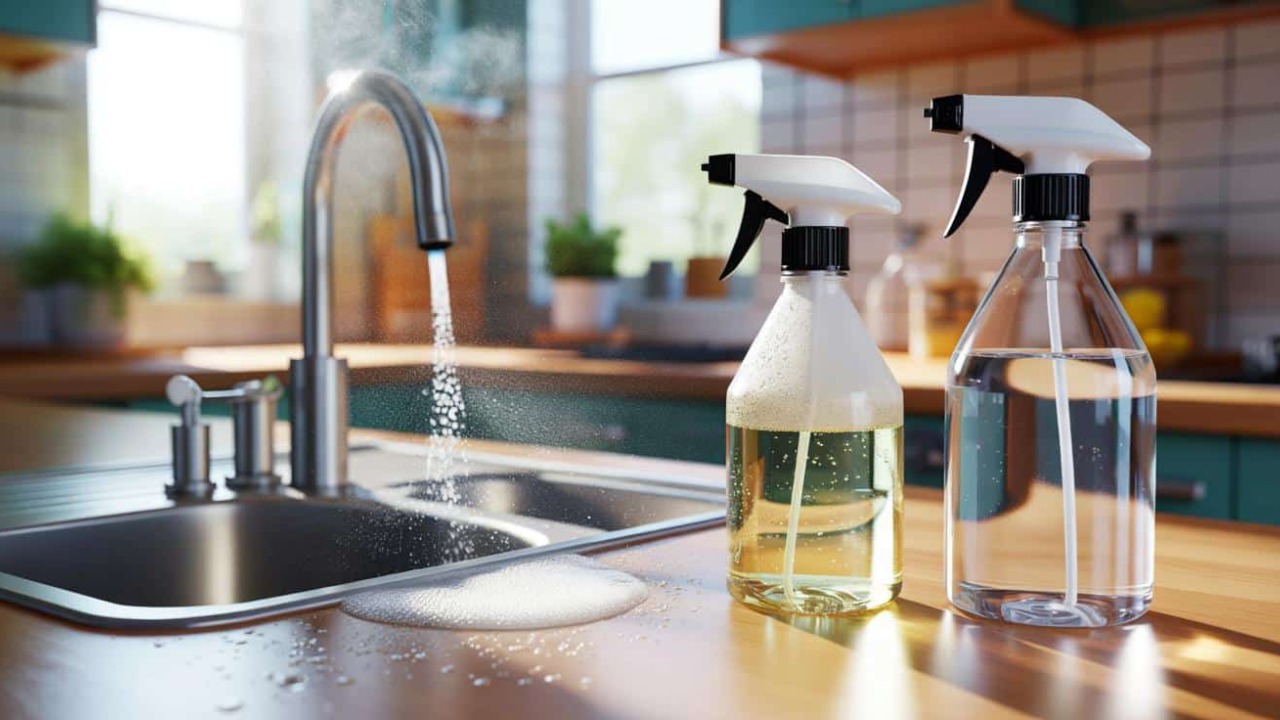
The spray bottle slipped from her hand and hit the tile with a hollow clack. A fine mist rose into the air, carrying two familiar smells at once: sharp vinegar and that unmistakable “clinic-clean” note of hydrogen peroxide.
She froze.
Somewhere in the back of her mind, her mother’s voice echoed: “Never mix cleaning products. You’ll gas yourself.” One hand hovered near the window, the other clenched around the cloth. For a second, she wondered if she’d just made a serious mistake.
Then she looked down.
The grout line she had scrubbed for months—bleach, foam sprays, expensive promises—was suddenly lighter. Not masked. Not perfumed. Actually cleaner, as if something had quietly undone years of buildup.
So what just happened on that bathroom floor?
The Cleaning Combo People Whisper About (But Rarely Explain Properly)
Vinegar and hydrogen peroxide have lived side by side in cupboards for decades. One smells like pickles. The other like a first-aid kit. Neither looks impressive.
Yet lately, people are rediscovering them—not as rivals, but as a two-step team.
Scroll through cleaning forums or short videos and you’ll see the same routine repeated: spray vinegar, wipe, then spray hydrogen peroxide. Grime disappears. Boards brighten. Handles lose that invisible sticky film we all pretend isn’t there.
What sounds like a risky experiment is actually something professionals have used quietly for years—especially in clinical and food-safe environments.
The trick is how they’re used.
Why This Works (Without Being Dangerous)
Here’s the important part most posts skip:
You never mix vinegar and hydrogen peroxide in the same container.
Used together incorrectly, they can form peracetic acid—a strong, irritating compound you don’t want in your lungs or on your skin.
But used one after the other, they behave very differently.
- Vinegar is a mild acid (mostly acetic acid). It loosens mineral deposits, soap residue, and biofilm.
- Hydrogen peroxide is an oxidizer. It releases oxygen that breaks down organic matter and damages microbial cell walls.
When vinegar goes first, it destabilizes grime and shifts the surface chemistry. When hydrogen peroxide follows, it finishes the job—breaking apart what’s left at a microscopic level.
Experts describe it as chemical teamwork, not mixing.
Why It Feels Like a “Deeper” Clean
Most household dirt isn’t just visible mess. It’s layers:
- oils from hands
- food residue
- bacterial films
- mineral buildup
Soap removes surface dirt.
Bleach kills microbes but often leaves residue behind.
This two-step method disrupts dirt in stages, which is why surfaces don’t just look cleaner—they feel cleaner the next day.
That faint tacky feeling on fridge handles or light switches? Gone.
The dull look of old tile? Lifted, not coated.
How Experts Say to Use It Safely at Home
The recommended method is simple and low-drama:
- Clean visible dirt first
Soap and water if the surface is greasy or dusty. - Spray white vinegar
Let it sit for 2–5 minutes. Wipe. - Spray 3% hydrogen peroxide
(Standard pharmacy strength.)
Let it sit again. Wipe or rinse.
That’s it. Two bottles. Two steps. Never combined.
This works especially well on:
- cutting boards
- sink areas
- fridge shelves
- trash can lids
- bathroom fixtures
- high-touch surfaces like handles and switches
Many people turn it into a weekly reset ritual rather than a daily chore.
Where People Go Wrong
Experts consistently warn about three common mistakes:
- Mixing both liquids in one bottle
This creates irritating compounds and removes the safety margin. - Using it on the wrong materials
Vinegar damages natural stone like marble, travertine, and some granites. - Scrubbing only when things are already awful
The method works best as maintenance, not rescue.
One chemist summed it up simply:
“Respect the chemistry, and it’s both effective and gentle.”
Why This Old-School Method Feels Modern Again
There’s something reassuring about recognizing every ingredient you’re using. No fluorescent foam. No mystery fragrance that lingers for hours.
People who adopt this routine often say the same thing:
their homes don’t just look cleaner—they feel calmer.
It’s not about perfection or replacing every product under the sink. Grease still needs degreasers. Heavy stains still need effort.
What this combo offers is control.
A science-backed way to clean everyday surfaces without harsh fumes or complicated routines.
Key Takeaways
| Key Point | What It Means | Why It Matters |
|---|---|---|
| Use separately | Vinegar first, peroxide second | Avoids irritating reactions |
| Best on clean surfaces | Works after basic washing | Deeper disinfecting effect |
| Material awareness | Avoid natural stone | Protects finishes |
| Low effort routine | Weekly use is enough | Sustainable habit |