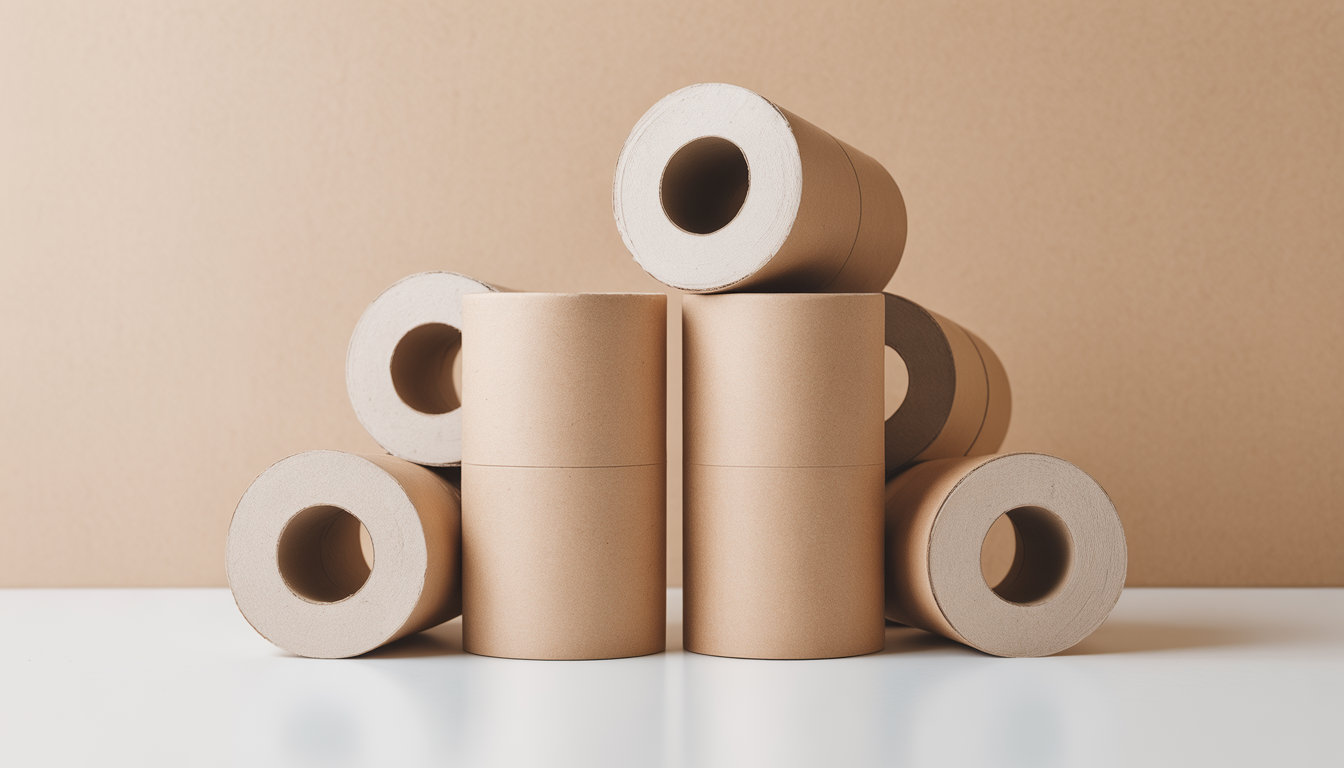
What used to be tossed without a second thought is now being stacked in drawers, craft boxes and cleaning caddies.
Cardboard toilet paper tubes — once pure rubbish — are becoming a small but surprisingly clever tool for people trying to spend less, waste less and bring a little order to chaotic homes.
It’s not glamorous. It’s not high-tech.
But it works.
From Bin to Organiser: The Tube’s Second Life
For years, the cardboard core of a toilet roll went straight into recycling — or worse, the trash.
Now, rising prices, smaller living spaces and the popularity of low-waste living have changed that habit.
Many households see the humble tube as:
- A free cable organiser
- A flexible drawer divider
- A disposable cleaning tool
- A children’s craft essential
Its shape, light weight and surprising strength make it useful in dozens of small ways — no tools or special skills required.
And that simplicity is exactly why it’s catching on.
1. Cable Management Without Buying Anything
One of the most common uses? Untangling everyday wires.
Phone chargers, earbuds and USB leads often become a knot at the bottom of a drawer.
Here’s the quick fix:
- Loosely roll the cable.
- Slide it into a cardboard tube.
- Write the device name on the outside.
Done.
Some people stand multiple tubes upright inside a shoebox to create instant cable compartments.
Benefits:
- Less strain on charging ends
- No plastic organisers needed
- Easier to find what you need
It’s low effort — but surprisingly effective.
2. Instant Drawer Dividers That Actually Fit
Kitchen drawers, bathroom drawers, office drawers… they all collect small chaos.
Instead of buying rigid plastic organisers that never quite fit, people are cutting toilet paper tubes to size.
You can:
- Lay tubes side-by-side to create slots
- Cut them in half lengthwise for flatter dividers
- Trim edges to match awkward drawer shapes
Unlike fixed organisers, cardboard adapts to you.
If your storage needs change, you adjust it in seconds.
3. Cleaning Tool for Awkward Gaps
Radiator fins. Window tracks. Sliding door grooves.
They all trap dust in narrow places.
A cardboard tube can be reshaped to reach them.
Simple tricks:
- Flatten one end to create a narrow scraper
- Wrap a microfibre cloth around it
- Twist it to fit specific grooves
It’s firm enough to push grime out — but soft enough not to scratch surfaces.
And when it gets too dirty?
You recycle it.
No washing fiddly brushes. No special attachments.
4. Small Household Supports
Some families are using tubes for:
- Supporting bin bags inside small bins
- Holding cleaning sprays upright in boxes
- Organising gift wrap ribbons
- Separating scarves or belts in drawers
It’s not revolutionary — but it replaces small plastic solutions people would otherwise buy.
Over time, those little savings add up.
5. Parents and Teachers Love Them
Cardboard tubes have long been craft staples — but now they’re central again.
Popular projects include:
- DIY binoculars (two tubes taped together)
- Mini rocket ships
- Desk organisers for crayons
- Seed starter pots
Because the material is free and replaceable, children can experiment without pressure.
That freedom often boosts creativity.
6. Teaching Reuse and Waste Awareness
For families trying to raise eco-aware children, this small habit carries a bigger message:
Not everything is “finished” when its first purpose ends.
A toilet paper tube on the craft table becomes a daily reminder that waste can often be reimagined.
It’s practical sustainability — not theoretical.
The Environmental and Budget Angle
Keeping a few tubes won’t solve climate change.
But it fits into a wider mindset shift:
- Reusing jars instead of buying containers
- Turning old T-shirts into cleaning cloths
- Choosing refill packs over new bottles
People feel limited in influencing big environmental systems — so they focus on daily, controllable habits instead.
From a financial perspective, cardboard tubes replace:
- Plastic cable holders
- Drawer organisers
- Craft kits
- Small storage dividers
Each saving is tiny. Together, they matter.
When Reuse Makes Sense — and When It Doesn’t
Cardboard has limits.
It’s not waterproof.
It can collect dust.
It breaks down over time.
Good Uses
- Cable storage
- Drawer organisation
- Craft projects
- Cleaning dry, narrow spaces
- Temporary seed pots
Less Suitable Uses
- Holding unpackaged food
- Long-term use in damp rooms
- Heavy-load storage
- Tasks requiring waterproof material
For hygiene, it’s best to:
- Keep only a small number
- Replace worn tubes regularly
- Recycle damaged ones immediately
Especially for people with allergies, storing large dusty stacks isn’t ideal.
A Simple 30-Day Test
Curious whether this trend makes sense for you?
Try this:
- Save 5–6 tubes over a month.
- Keep them in one drawer.
- When something annoys you (messy cables, cluttered drawer, dusty track), test whether a tube can help.
If it works, keep the system.
If not, recycle them.
No cost. No commitment.
Why This Trend Is Growing Now
This shift isn’t really about cardboard.
It’s about:
- Smaller living spaces
- Tighter household budgets
- Growing waste awareness
- Frustration with overconsumption
People are re-evaluating everyday objects.
And sometimes, the most ordinary item — a simple cardboard tube — turns out to be quietly useful.
The Bigger Picture
Behind the growing pile of saved toilet paper tubes is a wider movement:
- Less automatic disposal
- More creative reuse
- Fewer impulse purchases
- Practical, low-cost problem-solving
It’s not aesthetic.
It’s not viral because it’s beautiful.
It’s viral because it’s practical.
And in 2026, practicality is having a moment.
Key Takeaway
Cardboard toilet paper tubes are being kept not because they’re special — but because they’re simple.
They:
- Organise clutter
- Replace plastic gadgets
- Support creative play
- Save small amounts of money
Sometimes sustainability doesn’t look like solar panels or electric cars.
Sometimes it looks like a drawer with a few cardboard tubes inside — waiting to solve the next small problem.