Every autumn, gardens transform into postcard-perfect landscapes for a brief moment. Leaves turn golden, hedges look freshly trimmed, and flowerbeds appear tidy and calm. Then, almost overnight, those same gardens become buried under piles of branches, dead leaves, and plant debris.
Across many households, this seasonal cycle ends the same way. Gardeners fill dozens of waste bags, load cars with green debris, and spend hours waiting in lines at recycling centers or dumping grounds. But a simple, cost-effective trick is gaining attention among experienced gardeners — a homemade shredding method that turns garden waste into a valuable resource without leaving home.
The Hidden Burden of Garden Waste
During late autumn and early winter, even small gardens can generate surprising amounts of plant waste. Hedge trimming, fallen leaves, and dried plants can quickly fill bins and storage spaces. Many homeowners find themselves repeating the same exhausting routine — collecting, transporting, and disposing of green waste multiple times during the season.
Although dumping garden waste at recycling centers appears responsible, it comes with hidden costs. Fuel expenses increase with repeated trips. Loading and unloading heavy branches causes physical strain. Vehicles often end up scratched or filled with dirt and unpleasant odors. More importantly, organic garden waste contains nutrients and carbon that could naturally enrich garden soil if reused locally.
The Simple DIY Solution Many Gardeners Are Discovering
Instead of transporting garden waste away, some gardeners are using homemade shredders to transform branches and leaves into mulch or compost material. The concept is surprisingly simple and requires only basic tools found in many households.
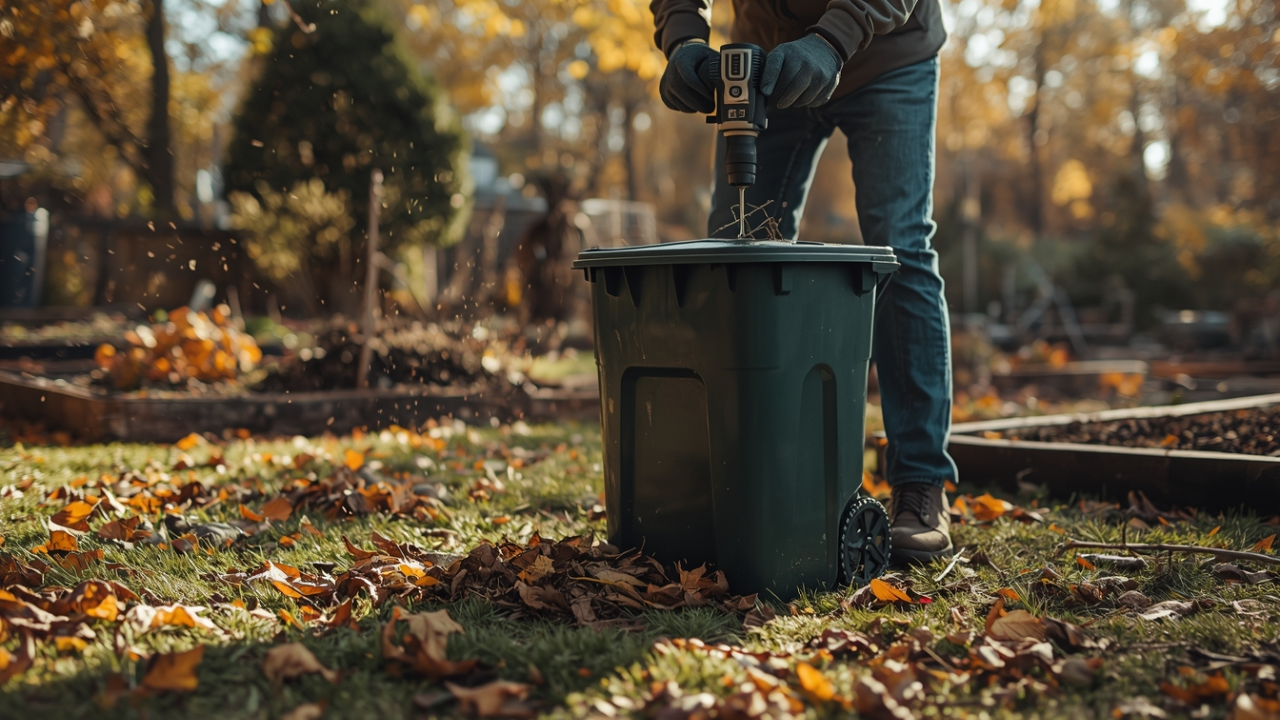
The core idea involves converting a sturdy plastic dustbin into a shredding chamber. Using a power drill and recycled metal blades, gardeners can create a low-cost shredding tool capable of breaking down small branches and plant material.
Unlike expensive commercial shredders, this homemade version allows gardeners to recycle organic waste immediately within their own property.
How the Homemade Shredder Works
The homemade shredder functions similarly to a kitchen food processor but designed for garden debris. The setup includes a strong plastic dustbin with a secure lid, several flat metal blades, bolts and washers for stability, and a cordless or corded power drill.
The lid acts as the rotating cutting mechanism. Metal blades are securely attached underneath the lid, arranged in a cross or star shape to maximize cutting coverage. The dustbin serves as the containment chamber where branches and leaves are shredded.
When the drill spins the lid, the blades rotate rapidly, slicing and crushing plant material inside the bin. The shredded output collects at the bottom, ready to be used as mulch or compost material.
What Materials Can Be Shredded
This homemade system works best for lightweight garden waste such as thin hedge trimmings, small fruit tree branches, perennial plant stems, and fallen leaves. The ideal thickness for branches is generally below two centimeters.
Hard or thick wood, stones, or hidden metal objects should be avoided because they can damage the blades or drill. While not designed to replace heavy-duty industrial shredders, the homemade version handles most seasonal garden waste effectively.
Why This Method Remains Relatively Unknown
Despite its practicality, the homemade shredder method remains mostly shared through word-of-mouth among gardening communities. One reason is hesitation toward do-it-yourself mechanical projects. Many homeowners assume creating tools with rotating blades requires technical expertise or specialized equipment.
Another factor is the perception that homemade tools are less reliable than commercial machines. However, experienced gardeners often report that carefully assembled shredders perform efficiently when used responsibly.
Safety concerns also limit widespread discussion online. Social media posts about homemade machinery frequently attract warnings and legal concerns, encouraging gardeners to share knowledge privately instead.
Turning Waste into Valuable Garden Resources
The biggest advantage of shredding garden waste at home appears after the process is complete. The shredded material becomes highly beneficial for soil health and plant growth.
Spread across flowerbeds, trees, or shrubs, shredded plant matter forms organic mulch. This natural layer protects soil by reducing moisture evaporation, regulating soil temperature, and preventing erosion during heavy rainfall.
Unlike artificial mulch materials, organic mulch gradually decomposes. As it breaks down, it feeds soil microorganisms, earthworms, and beneficial fungi, improving soil fertility over time.
Improving Compost Efficiency
Compost piles often struggle with imbalance between nitrogen-rich kitchen waste and carbon-rich plant material. Shredded branches provide essential carbon content, helping maintain compost structure and airflow.
Smaller shredded particles decompose faster, preventing compost heaps from becoming compacted or producing unpleasant odors. Mixing shredded plant matter into compost accelerates decomposition and creates nutrient-rich compost for gardening.
Practical Benefits Beyond Soil Health
Gardeners who adopt this shredding technique frequently notice additional lifestyle improvements. Eliminating repeated dumping trips saves fuel costs and reduces environmental impact. Shredding waste directly in the garden minimizes physical strain by reducing heavy lifting and transportation.
Working in short shredding sessions also allows gardeners to manage waste gradually instead of handling large piles all at once. Over time, the method encourages a more sustainable gardening routine.
Safety Considerations When Using DIY Shredders
Although effective, homemade shredders require careful handling. Protective gloves and safety goggles are essential when operating the drill. Children and pets should be kept away during shredding sessions.
Regular inspection of bolts, blades, and plastic containers ensures structural safety. If cracks or loosened parts appear, repairs should be completed before reuse. Operating the drill in short intervals prevents overheating and prolongs tool lifespan.
A Real-Life Weekend Comparison
Imagine two neighbors pruning their gardens on a cold autumn weekend. One spends hours packing branches into his car and waiting at the recycling center. By evening, the garden is clean, but the effort has been exhausting and time-consuming.
Next door, another neighbor uses a homemade shredder to process waste directly in the garden. Within a few hours, the branches become mulch for flowerbeds and compost material for future planting. Both gardens appear neat, but one homeowner gains long-term soil benefits without leaving home.
Rethinking the Idea of Waste
The homemade shredding technique reflects a growing shift toward sustainable gardening. Instead of treating plant debris as waste, many gardeners are beginning to view it as a valuable resource that supports natural ecological cycles.
Small innovations like this contribute to reduced landfill waste, healthier soil ecosystems, and lower household carbon footprints. Although less glamorous than advanced gardening technologies, simple recycling methods can create lasting environmental and financial benefits.
As sustainable living practices continue to evolve, the homemade shredder stands as a reminder that effective solutions are sometimes found in everyday tools and creative thinking.
Key Takeaways
DIY Shredders Reduce Garden Waste Trips
Homemade shredders allow gardeners to recycle organic waste directly at home.
Shredded Material Improves Soil Health
Mulch and compost created from garden waste enhance plant growth and soil structure.
Saves Time, Money, and Effort
Reducing transportation and disposal costs makes gardening more efficient and environmentally friendly.
FAQ
Is a homemade shredder safe to use?
Yes, when built securely and operated with protective gear and caution.
What materials can be shredded?
Thin branches, leaves, hedge trimmings, and plant stems work best.
Does shredding improve compost quality?
Yes, smaller particles accelerate decomposition and improve compost airflow.
Is this method cheaper than buying a shredder?
Homemade shredders use common household tools, making them significantly more affordable.
Can shredded material replace store-bought mulch?
Yes, organic shredded plant waste works effectively as natural mulch.