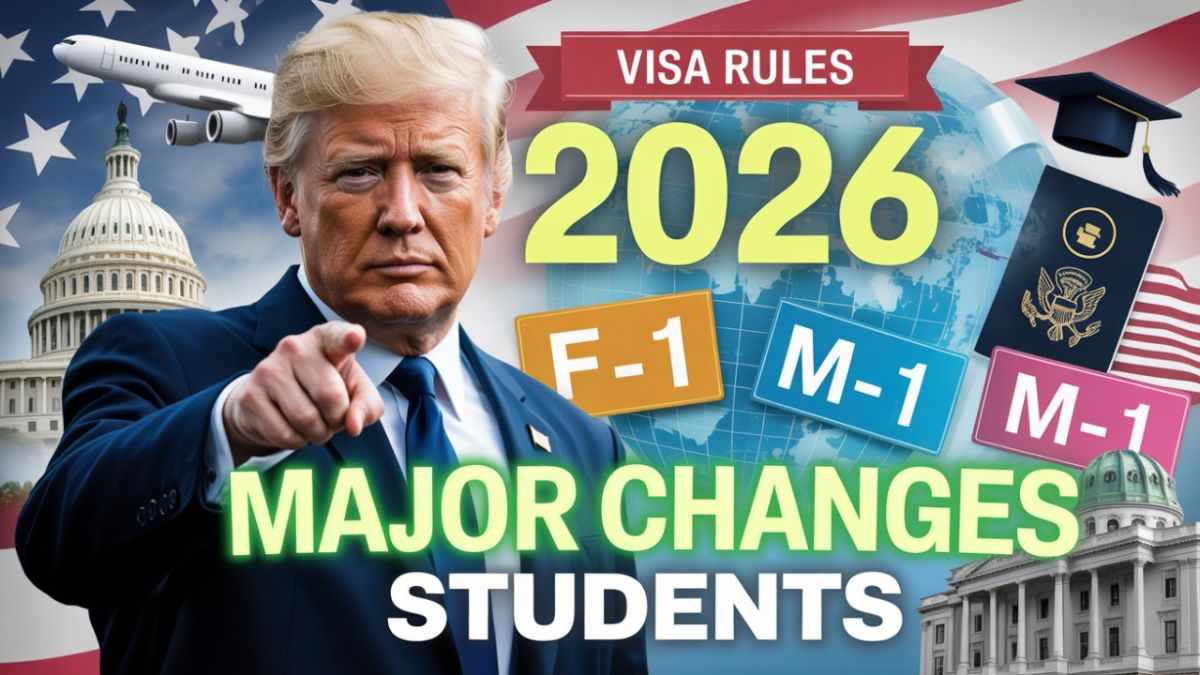
International students have always played a crucial role in the United States’ education system, contributing not only to universities but also to the economy, research, and cultural exchange. With discussions around Trump’s new 2026 student visa rules, anxiety and curiosity are growing among students planning to study in the U.S. or already enrolled under F-1, J-1, and M-1 visas. These proposed changes signal a shift toward stricter oversight, stronger compliance, and a renewed focus on national interest policies. For many students, understanding what these rules could mean is essential for future planning, academic continuity, and career goals.
Background: Trump’s Immigration Approach and Student Visas
During Donald Trump’s previous term, immigration policies focused heavily on border security, compliance, and tightening visa regulations. Student visas were not excluded from this approach. Increased scrutiny, reduced flexibility, and stronger enforcement mechanisms became key features of that era. The proposed 2026 student visa rules appear to build on the same philosophy, aiming to ensure that student visas are used strictly for educational purposes and align more closely with U.S. labor and security priorities. While supporters argue these measures protect domestic interests, critics fear they may discourage international talent.
Overview of F-1, J-1, and M-1 Visas
The F-1 visa is the most common student visa, issued to international students enrolled in full-time academic programs at U.S. institutions. The J-1 visa focuses on exchange visitors, including students, researchers, and scholars participating in approved cultural and educational exchange programs. The M-1 visa is designed for students pursuing vocational or technical training rather than traditional academic degrees. Each visa category serves a distinct purpose, and the 2026 changes are expected to impact all three in different ways.
Proposed Changes to F-1 Student Visa Rules in 2026
Under the new 2026 framework, F-1 visa holders may face stricter enrollment monitoring and academic performance requirements. Universities could be required to report student progress more frequently, ensuring that visa holders remain actively engaged in their studies. There may also be tighter limits on online or hybrid learning, reinforcing the idea that F-1 visas are intended for in-person academic participation.
Additionally, work-related benefits such as Optional Practical Training (OPT) could see revisions. While OPT has long been a pathway for international students to gain U.S. work experience after graduation, the new rules may shorten eligibility periods or restrict participation to fields considered critical to the U.S. economy. This could significantly affect students in non-STEM disciplines.
How J-1 Exchange Visitor Visas Could Be Affected
The J-1 visa has always emphasized cultural exchange rather than long-term employment or immigration. The 2026 rules may reinforce this distinction even further. Exchange programs could face enhanced vetting, with sponsors required to demonstrate stronger educational and cultural value. Participants may experience stricter time limits and reduced opportunities to transition into other visa categories.
For students and scholars, this could mean fewer chances to extend programs or switch to employment-based visas. The two-year home residency requirement, already a feature of many J-1 programs, may be applied more broadly, ensuring participants return to their home countries before pursuing other U.S. opportunities.
Major Shifts Expected for M-1 Vocational Students
M-1 visa holders often receive less attention than F-1 or J-1 students, but the 2026 rules could bring notable changes. Vocational programs may be subjected to heightened accreditation standards, ensuring that institutions offering technical training meet strict quality benchmarks. This could reduce the number of eligible schools but improve overall program credibility.
Employment opportunities for M-1 students, already limited compared to F-1 holders, may become even more restricted. The emphasis is likely to remain on skill acquisition rather than post-study employment, reinforcing the temporary nature of the M-1 visa.
Increased Compliance and Monitoring Measures
One of the most significant aspects of Trump’s proposed 2026 student visa rules is the emphasis on compliance and enforcement. Digital tracking systems may be expanded, allowing immigration authorities to monitor enrollment status, address changes, and academic progress in real time. While supporters see this as a way to prevent misuse of student visas, critics worry about privacy concerns and increased pressure on students.
Universities and colleges may also face penalties for non-compliance, making them more cautious when admitting international students. This could indirectly reduce admission opportunities for students from certain regions or academic backgrounds.
Impact on International Students’ Career Opportunities
Career planning is a major concern for international students, and changes to visa rules can directly affect long-term goals. If OPT and other work pathways are limited, students may find it harder to gain U.S. work experience after graduation. This could influence decisions about where to study, with some students choosing countries offering more post-study work options.
However, students in high-demand fields such as science, technology, engineering, and healthcare may still find opportunities, as policies often prioritize skills that support national economic growth. Understanding these trends will be critical for students choosing majors and institutions.
How Universities and Colleges May Respond
U.S. educational institutions rely heavily on international students for diversity and revenue. In response to the 2026 visa changes, many universities may strengthen their international student support services, offering better compliance guidance and legal assistance. Institutions could also adjust recruitment strategies, focusing on students more likely to meet the new requirements.
At the same time, some colleges may reduce international admissions due to increased administrative burdens. This shift could reshape the landscape of U.S. higher education, particularly for smaller institutions that depend on global enrollment.
Global Reactions and Student Sentiment
The announcement of potential 2026 student visa changes has already sparked global discussions. Students from countries like India, China, South Korea, and Nigeria, which send large numbers of students to the U.S., are closely watching developments. Many express concerns about uncertainty, rising costs, and limited flexibility.
At the same time, some view the changes as manageable with proper planning. Clear communication, early applications, and compliance awareness can help students adapt. The global education market is competitive, and how the U.S. positions itself will influence whether it remains a top destination for international study.
Preparing for the 2026 Student Visa Environment
For students planning to study in the U.S. in 2026 or later, preparation is key. Staying informed about policy updates, choosing accredited institutions, and maintaining strong academic records will be more important than ever. Financial planning may also play a larger role, as stricter rules could include higher proof-of-funds requirements.
Students already in the U.S. should remain vigilant about maintaining status, reporting changes promptly, and seeking guidance from designated school officials. Proactive compliance can reduce the risk of visa complications under the new rules.
Conclusion
Trump’s new 2026 student visa rules represent a significant moment for international education in the United States. With major changes expected for F-1, J-1, and M-1 students, the focus is shifting toward stricter oversight, limited flexibility, and stronger alignment with national priorities. While these changes may create challenges, they also highlight the importance of informed decision-making and strategic planning.
For international students, the U.S. remains a land of opportunity, but navigating the evolving visa landscape will require awareness, adaptability, and resilience. As 2026 approaches, staying updated and prepared will be the key to turning uncertainty into opportunity.
FAQs
Q1. Who will be affected by the 2026 student visa changes?
The new rules may impact international students applying for or holding F-1, J-1, and M-1 visas, including those already studying in the U.S.
Q2. Will post-study work options like OPT be affected?
Yes, the 2026 rules may introduce stricter limits on OPT and other work opportunities, especially for non-priority fields.
Q3. Should current students worry about losing their visa status?
Current students can remain safe by maintaining full-time enrollment, strong academic progress, and strict compliance with visa rules.