You open the fridge on a Wednesday night and immediately feel it — that small wave of guilt. The coriander has collapsed into itself. The strawberries look tired. The half onion tucked in the door carries a smell that suggests it has overstayed its welcome. You didn’t shop carelessly. You had every intention of cooking. But between work, family, and exhaustion, time moved faster than your meal plans.
Fresh food often feels like it disappears quicker than our free time. And every week, we throw away not just wilted produce, but money, flavor, and good intentions. The frustrating part? Most of us were never taught how to store food properly in a normal home kitchen.
The good news is that keeping ingredients fresh longer doesn’t require special containers, expensive vacuum sealers, or trendy storage systems. It requires one small shift in habit.
The Low-Tech Habit Hiding in Plain Sight
The trick is simple: use your fridge like a humidity control station rather than a cold storage cave. Instead of tossing groceries onto random shelves, think of your refrigerator as a small climate system where each ingredient needs a slightly different environment.
Every time you unpack groceries or store leftovers, pause for thirty seconds and ask one question:
Does this need air, a barrier, or dryness?
That small mental check changes everything. Some foods need airflow. Some need protection from moisture. Others need to stay completely dry and out of the fridge. When you match the environment to the ingredient, spoilage slows dramatically.
This one shift stretches the life of herbs, leafy greens, berries, cheese, bread, and even cut vegetables — all without buying a single new tool.
Why Food Really Goes Bad
Food doesn’t simply “expire.” It loses water, absorbs surrounding odors, oxidizes when exposed to too much air, and reacts to natural gases released by nearby produce. Trapped moisture turns crisp greens into slime. Poor airflow suffocates delicate herbs. Strong smells migrate silently across shelves.
Once you understand that spoilage is often about moisture imbalance and airflow, you stop blaming time and start adjusting storage.
Your fridge already provides different zones. The crisper drawer is more humid. The middle shelves are more stable in temperature. The door fluctuates slightly but is convenient. When you combine these natural zones with basic household items like cloth towels, jars, and loose covers, you create mini-environments suited to each food.
The Three-Minute Unpack Ritual
The most powerful moment is when groceries first enter your home. Instead of placing bags straight into the fridge, set them on the counter and take three minutes to assign each item a “home.”
Leafy greens, herbs, and berries need gentle airflow and moisture control. Onions, garlic, and whole potatoes need dryness and should stay outside the fridge in a cool, dark space. Cut or opened foods require coverage and a stable shelf.
This isn’t meal prepping. It’s simply preventing ingredients from suffocating in supermarket plastic.
Protecting Leafy Greens the Right Way
One of the most common storage mistakes is leaving lettuce in its sealed plastic bag. Condensation builds up inside, creating the perfect environment for decay. Instead, line a container with a clean, dry cloth or paper towel. Place washed and thoroughly dried leaves inside. Add another dry cloth on top and close the lid without sealing it too tightly.
The cloth absorbs excess moisture while allowing slight airflow. This small adjustment can add three to five extra days of freshness.
When you open the container later in the week and see leaves that still look alive, the difference feels almost surprising.
Treating Herbs Like Flowers
Fresh herbs are especially delicate. Most people store them in crinkled plastic packaging, only to find them limp two days later. A better method is almost embarrassingly simple.
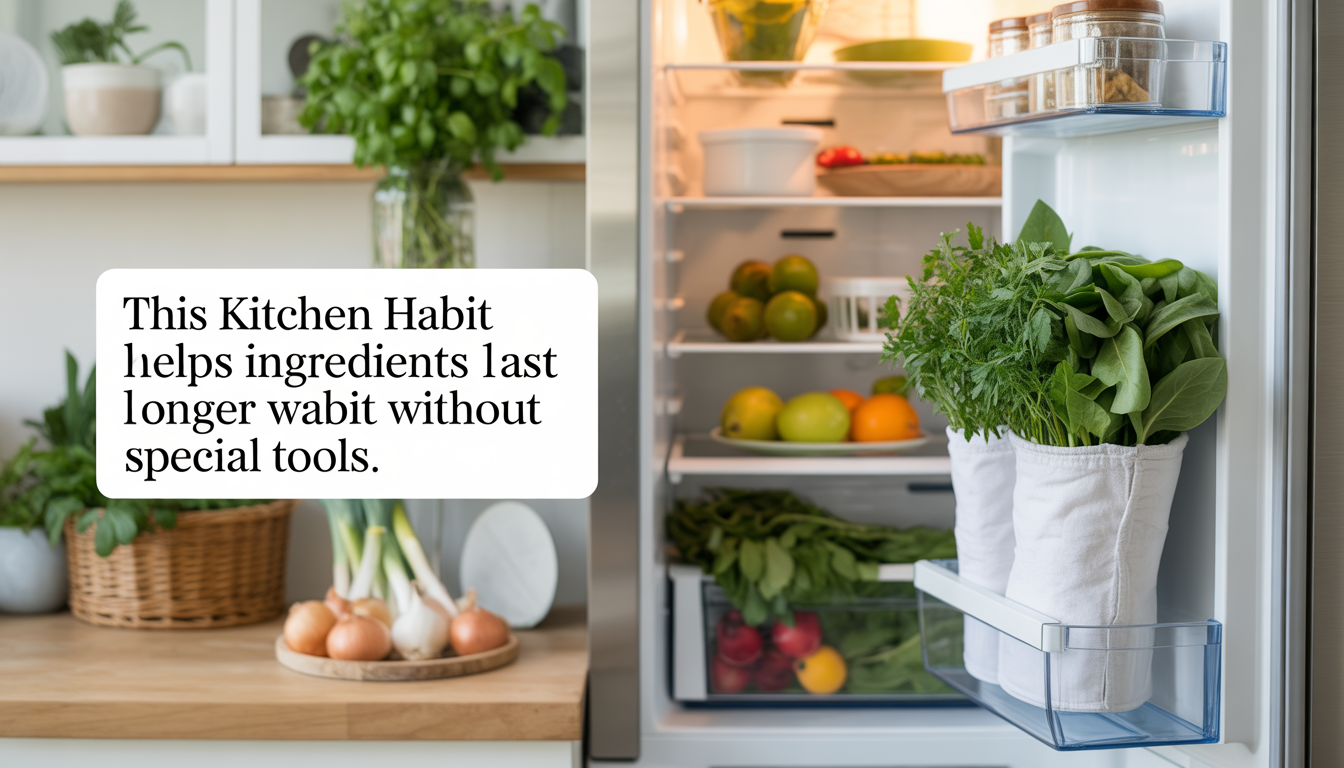
Trim the stems slightly and place the herbs upright in a small glass with a bit of water, like a bouquet. Loosely cover the leaves with a produce bag or lightweight wrap and store the glass in the fridge door. The stems stay hydrated while the leaves remain protected but not suffocated.
Parsley, coriander, and mint often stay vibrant for five to nine days this way. No special herb keeper required.
Keeping Dry Foods Truly Dry
Not everything belongs in the refrigerator. Onions, garlic, and whole potatoes deteriorate quickly in humid environments. Store them in a breathable basket or open container in a cool, dark cabinet. Avoid sealed plastic bags that trap moisture.
Sometimes the best storage method is simply restraint.
Covering Cut Foods Immediately
Another common mistake is leaving cut produce uncovered on a plate. Exposure leads to drying, oxidation, and odor transfer. The moment you slice a lemon, avocado, or onion, cover it. A reusable container, a bowl with a plate on top, or simple wrap will do.
This quick action preserves flavor and prevents the fridge from becoming a mixture of competing smells.
Avoiding the “Wrong Neighborhood” Problem
Fruits and vegetables influence each other. Some fruits release ethylene gas, which speeds up ripening. When stored next to leafy greens, they can accelerate spoilage. Strong-smelling foods can transfer odors into nearby ingredients.
Grouping similar foods together helps maintain balance. Keep fruits together. Protect greens from direct airflow. Store cheese wrapped rather than exposed.
You don’t need to memorize food science — just avoid random placement.
The Emotional Shift of an Organized Fridge
Adopting this habit does more than preserve ingredients. It changes how your kitchen feels. Opening the fridge becomes less chaotic and more intentional. You begin noticing what you actually use and what consistently goes to waste.
When food lasts longer, cooking feels less urgent and more flexible. A half pepper doesn’t turn into a forgotten science experiment. It becomes tomorrow’s omelet. Salad on Thursday feels just as possible as pasta on Monday.
There’s also a quiet relief in wasting less. The weekly guilt of throwing away slimy greens slowly disappears. The habit doesn’t require you to become hyper-organized or love meal prepping. It simply asks for attention during one small window of time.
Like brushing your teeth, it’s repetitive and ordinary. But the long-term effect is significant.
Starting Small Makes It Sustainable
If changing everything at once feels overwhelming, begin with one category — herbs or leafy greens. Practice the cloth method or the jar method for two weeks. Notice the difference. Then gradually expand the habit to other foods.
Consistency matters more than perfection.
Over time, you’ll find yourself naturally grouping foods better, covering items faster, and thinking about airflow and moisture without effort.
The Real Luxury in a Busy Week
The biggest reward isn’t just saving money. It’s opening your fridge on a hectic evening and finding ingredients still fresh, still usable, still waiting.
This habit doesn’t transform your kitchen into a magazine spread. It doesn’t require expensive upgrades. It simply respects how food behaves.
Air where needed.
Barrier where helpful.
Dryness where essential.
That’s the system.
And in a busy life, that small system feels like a quiet luxury — ingredients that stay alive long enough for you to actually enjoy them.
Key Takeaways
| Key Point | Detail | Value |
|---|---|---|
| Use fridge as humidity control | Match foods with air, barrier, or dryness | Ingredients last longer |
| 3-minute unpack ritual | Assign each food a proper spot | Less waste and frustration |
| Respect storage zones | Group fruits, protect greens, keep dry foods out | Better taste and fewer odors |
FAQ
Does this work in a small fridge?
Yes. It’s about smarter grouping and moisture control, not extra space.
Do I need special containers?
No. Use jars, bowls, takeaway boxes, cloth towels, or original packaging with minor adjustments.
How long can herbs last using the jar method?
Often five to nine days, depending on the herb and fridge temperature.
Should I wash greens before storing them?
Yes, but dry them thoroughly. Excess water causes spoilage.
What’s the easiest change to start with?
Begin with herbs or lettuce. The improvement is immediate and motivating.