In the northern Chinese city of Harbin, winter is not a season — it’s a survival test. Temperatures routinely plunge to –22°F (–30°C) and remain there for months. Yet for generations, families stayed warm without central heating, thermostats, or electric systems.
Their solution was simple, brilliant, and remarkably efficient.
It’s called the kang — and it may hold lessons for the future of sustainable heating.
A Heated Bed Built Into the House
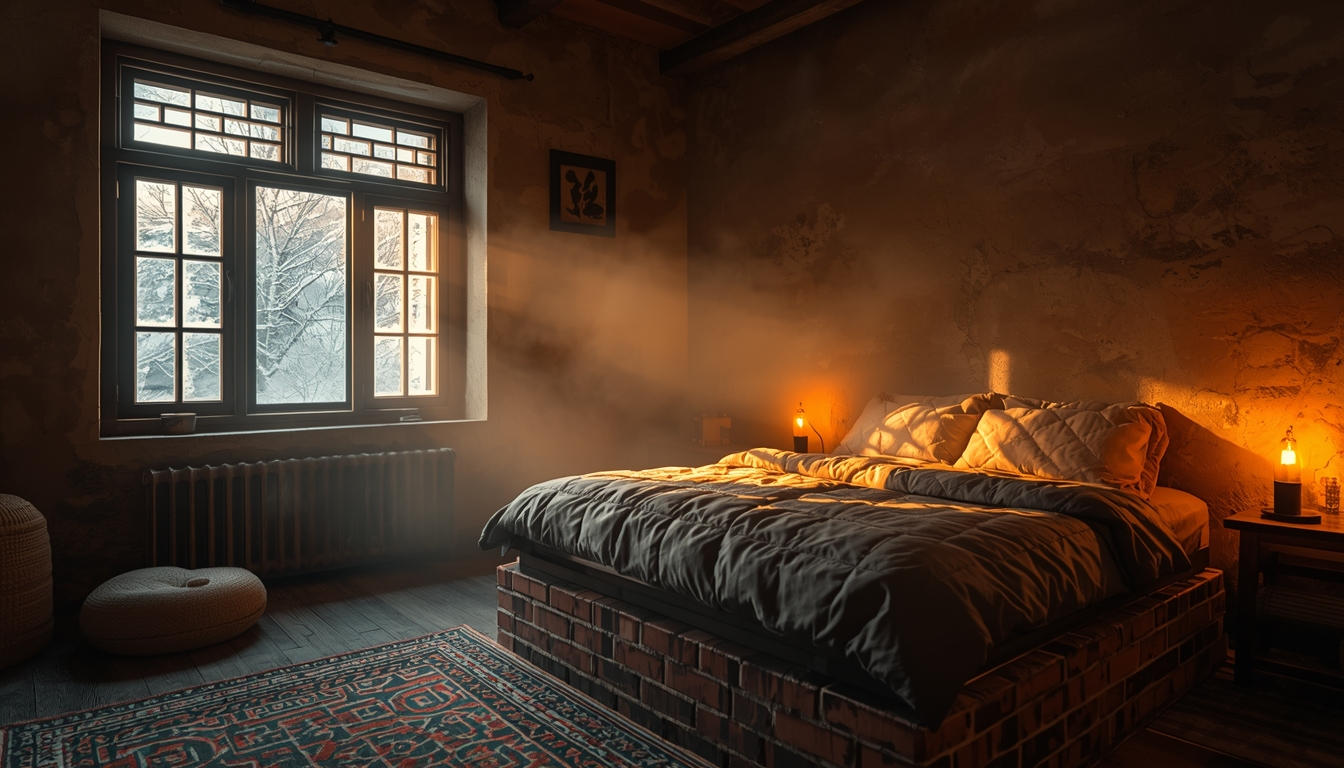
The kang is not just a bed. It is a raised platform made of compacted earth or brick, integrated directly into the home’s structure. Beneath it runs a network of flues connected to the kitchen stove.
When the family cooks, hot smoke and air travel through channels under the platform, heating the thick masonry mass. By bedtime, the surface reaches around 104°F (40°C) and slowly releases warmth for up to eight hours — long after the fire has burned out.
No electricity.
No continuous fuel supply.
No wasted heat filling empty rooms.
Instead of heating the entire house, the kang heats the surface where people actually rest.
Why It Works So Well
Modern heating systems warm air. But warm air rises, collects near ceilings, and escapes through cracks and poor insulation.
The kang works differently:
- It heats thermal mass (earth and brick).
- The mass stores energy and releases it gradually.
- Heat radiates upward from the surface directly into the body.
- Minimal energy is wasted heating unused space.
It’s a design that prioritizes human comfort over room temperature.
Recent studies on improved kang models have shown fuel savings between 36% and 60% compared to older versions. As recently as 2004, an estimated 67 million kangs were still in use across northern China, warming roughly 175 million people.
A System Built Around the Body
China wasn’t alone in this philosophy.
Korea’s Ondol
In Korea, the Ondol system channels hot air beneath thick stone floors, warming the entire surface from below. Traditionally wood-fired, modern versions now use electricity or gas — but the principle remains unchanged: warmth radiates upward directly into people sitting or sleeping on the floor.
Japan’s Kotatsu
Japan developed an even simpler approach: the Kotatsu.
A low wooden table is covered with a heavy blanket, trapping heat from a small heater underneath. You slide your legs inside and create a microclimate around your body. The rest of the room can remain cool.
Again, the logic is identical:
Heat the person — not the building.
Europe Once Used Similar Ideas
This philosophy wasn’t limited to Asia.
The ancient Romans built the Hypocaust, a system that circulated hot air beneath floors in bathhouses and villas.
Medieval Europe relied on:
- Enclosed canopy beds
- Heavy tapestries across doorways
- Thick layered bedding
Homes were not uniformly heated. People created insulated pockets of warmth.
What Changed?
The 20th century brought cheap fossil fuels and widespread central heating. It became normal to warm entire buildings — even empty rooms.
For decades, that felt like progress.
Now, with rising energy costs and climate instability, full-house heating looks less efficient. Many homes in the UK and US were built before energy efficiency standards existed. Retrofitting them is expensive and slow.
Meanwhile, the kang’s approach seems quietly modern.
The Kang’s Core Principle
The genius of the kang is simple:
- Place heat where people are physically located.
- Store warmth in heavy materials.
- Allow gradual release over time.
- Use existing household energy (like cooking fires).
It does not attempt to eliminate cold air in unused corners. It accepts that the room may remain cool — while ensuring the body stays warm.
That distinction matters.
Radiant heat from below is often perceived as more comfortable than forced warm air. It reduces drafts, limits heat loss, and maintains warmth longer without continuous fuel input.
Could This Work Today?
Modern architects and engineers are revisiting similar concepts through:
- Radiant floor heating systems
- Thermal mass design in passive homes
- Zoned heating technologies
- Microclimate-based comfort systems
The difference is that the kang achieved this centuries ago — using clay, brick, and fire.
While traditional kang systems required careful ventilation to avoid carbon monoxide risks, updated versions incorporate safer flue designs and cleaner fuels.
The core idea remains strikingly relevant:
Efficient warmth does not require heating everything.
It requires heating intelligently.
A Lesson From Harbin
In cities like Harbin, survival shaped architecture. Families built heating systems that were practical, resourceful, and energy-conscious long before sustainability became a global priority.
The kang was never marketed as innovation. It was simply what worked.
Today, as energy prices rise and winter extremes grow less predictable, this 2,000-year-old method offers something surprisingly modern:
Targeted comfort.
Thermal efficiency.
Minimal waste.
Sometimes the future of heating isn’t about smarter thermostats or bigger systems.
It’s about remembering what already worked.
FAQs
What is a kang?
A kang is a traditional heated brick platform used in northern China. It connects to a stove, storing heat in masonry and radiating warmth for hours after the fire goes out.
How long does a kang stay warm?
Typically up to eight hours, depending on the amount of fuel used and the mass of the structure.
Does a kang heat the entire room?
No. It heats the platform surface, not the air in the entire room.
Is the kang still used today?
Yes. Millions of kang systems remain in use across rural northern China, though modern heating systems are increasingly common in cities.
How is it different from modern radiant heating?
Modern radiant heating systems use electric or water-based systems beneath floors. The kang uses fire-heated air and thermal mass for heat storage.
Is it safe?
Traditional kang systems required proper ventilation to prevent carbon monoxide buildup. Modern designs include improved safety measures.