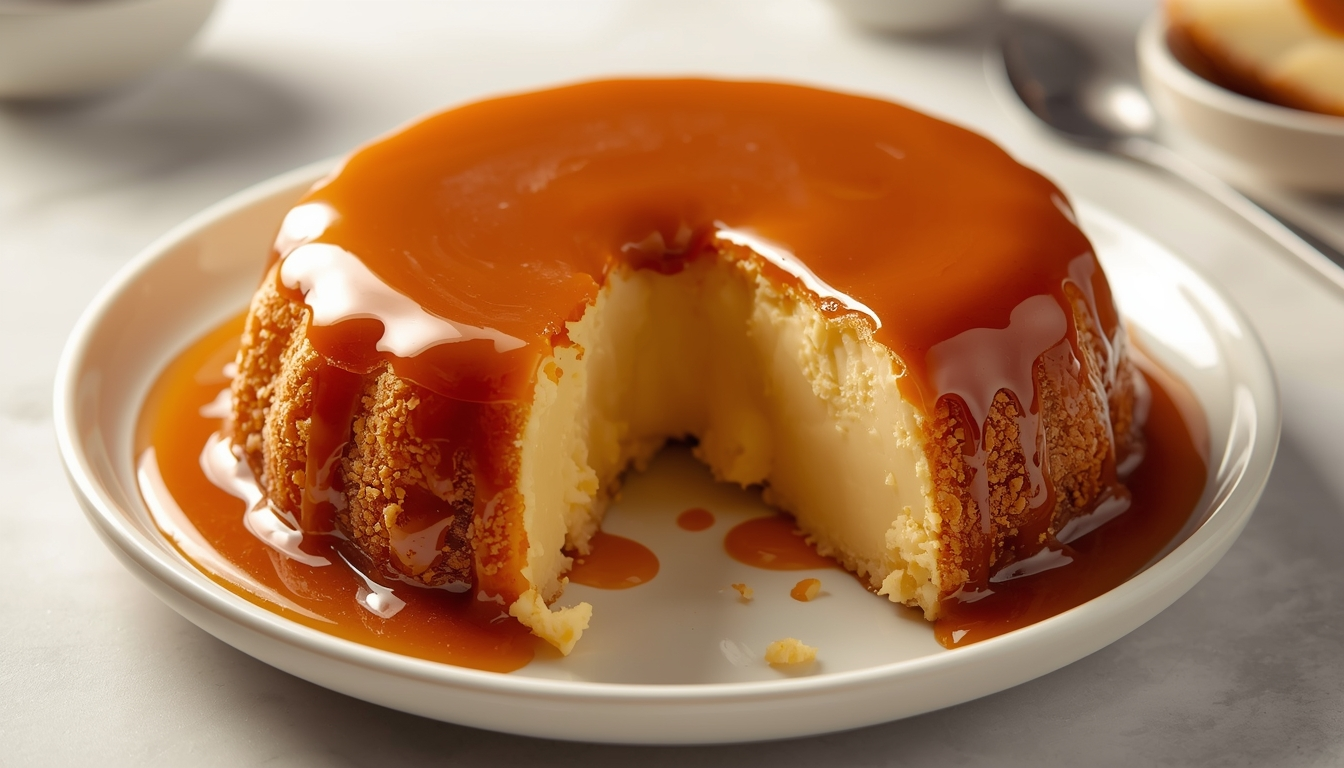
Scroll through TikTok, Instagram, or Brazilian cooking channels and you’ll see it everywhere: a glossy, caramel-topped pudding made with just two ingredients. No eggs. No milk. No cornflour. No complicated steps.
Just sweetened condensed milk and full-fat natural yoghurt.
And somehow, it sets into a sliceable, creamy dessert that looks like classic flan.
Food creators are calling it “impossible to mess up.” For once, the internet might be right.
Why This 2-Ingredient Pudding Is Going Viral
At first glance, it sounds too simple to work. Traditional flan or crème caramel relies heavily on eggs for structure. Custards can curdle, split, crack, or overbake.
This version skips the most temperamental ingredient entirely.
Instead:
- Condensed milk provides sweetness and richness
- Full-fat yoghurt provides structure and tang
- A gentle water bath ensures even baking
Fewer ingredients mean fewer variables. That’s a big part of its appeal.
For beginner bakers — or anyone who’s ever ruined a custard — this feels like freedom.
How It Differs from Traditional Flan
Classic Brazilian pudim (similar to crème caramel) uses eggs to create a delicate wobble and silky texture.
In this viral version:
- Yoghurt proteins coagulate during baking
- The condensed milk thickens and stabilizes the mixture
- The result is slightly denser and tangier
Many describe it as a cross between:
- Flan
- Cheesecake
- Sweet yoghurt custard
It’s less fragile than egg custard and more forgiving if the oven temperature fluctuates.
The Science Behind the Texture
When baked gently in a bain-marie (water bath), three key things happen:
- Protein Setting – Yoghurt proteins firm up gradually, forming a stable network.
- Moisture Retention – Sugar in condensed milk holds onto water, keeping the pudding creamy.
- Temperature Control – Steam from the water bath prevents cracking or rubbery edges.
Because there are no eggs to scramble, the margin for error widens dramatically.
That’s why so many first-timers report success.
The Base Recipe
One reason this dessert spreads so fast? The ingredients are already in most supermarkets — and often in the cupboard.
| Component | Ingredient | Typical Amount |
|---|---|---|
| Cream Base | Sweetened condensed milk | 2 tins (approx. 790 g total) |
| Structure | Full-fat plain yoghurt | 300–350 g |
| Caramel | Sugar + water | 1 cup sugar + ½ cup water |
Important tip:
Use full-fat yoghurt. Low-fat versions can result in a looser, less stable set.
Step-by-Step Method
1. Make the Caramel
- Melt sugar in a heavy pan until golden.
- Carefully add water (it will splutter).
- Stir until smooth and syrupy.
- Pour into a ring tin, coating the base and sides.
Let it cool and firm slightly.
Caramel is the only technical step — and even that’s manageable with care.
2. Mix the Pudding
- Pour condensed milk into a bowl.
- Add yoghurt.
- Stir gently until smooth.
No blender needed. In fact, avoid it — too much air creates bubbles.
Pour the mixture over the caramel.
3. Bake in a Water Bath
- Cover the tin with foil.
- Place it inside a larger tray.
- Pour hot water around it.
- Bake at 160°C (320°F) for about 60 minutes.
The surface should feel set but slightly springy.
Cool completely, then chill for several hours — ideally overnight.
To serve, run a knife around the edge, flip onto a plate, and watch the caramel cascade over the top.
That moment alone explains half the viral appeal.
Why People Say It’s “Impossible to Mess Up”
The recipe is forgiving because:
- The base is already thick
- There’s no egg tempering
- The yoghurt sets gradually
- Oven fluctuations matter less
- It can tolerate slight overbaking better than custard
It’s not truly foolproof — but it’s remarkably stable compared to traditional flan.
That stability builds confidence.
And confidence spreads recipes.
Safe Variations That Still Work
You can personalize the flavor without ruining the structure:
- A few drops of vanilla extract
- Lemon or orange zest
- A pinch of salt in the caramel
- Serving with fresh fruit
Full-fat Greek yoghurt creates a slightly firmer, cheesecake-like texture.
Very thin yoghurt may produce a softer set — better served in cups instead of unmolded.
Budget and Practical Benefits
This pudding wins on practicality:
- Two shelf-stable tins
- One tub of yoghurt
- Feeds a crowd
- Made the day before
- No last-minute stress
It’s ideal for:
- Sunday lunches
- Birthdays
- Potlucks
- Beginner baking sessions
Many families also use yoghurt nearing its best-before date — reducing food waste.
Is It Healthy?
Let’s be honest.
Sweetened condensed milk is high in sugar. This isn’t a “diet dessert.”
However:
- Yoghurt adds protein
- It’s more filling than gelatin desserts
- Smaller slices go a long way
Pairing it with fruit can balance sweetness and reduce portion size.
From Viral Trend to Kitchen Staple?
Many internet recipes disappear quickly.
This one may stay.
It works because it fits real life:
- Minimal ingredients
- Clear method
- Reliable results
- Impressive presentation
For anyone intimidated by custards or flan, this recipe removes the fear.
Two ingredients.
One bowl.
A bit of patience in the fridge.
And suddenly, you have a glossy, caramel-topped pudding that looks far more complicated than it is.
Key Points
| Key Point | Detail | Why It Matters |
|---|---|---|
| Only two main ingredients | Condensed milk + full-fat yoghurt | Simple, affordable, accessible |
| Water bath baking | Ensures even heat and smooth texture | Reduces cracking and curdling |
| No eggs required | Eliminates tempering and scrambling risk | Beginner-friendly |
| Make-ahead dessert | Chill overnight | Perfect for hosting |
FAQ
Can I use low-fat yoghurt?
It may set more loosely. Full-fat works best for slicing.
Can I skip the water bath?
Not recommended. Direct heat increases cracking and rubbery texture.
How long does it last?
Up to 3 days refrigerated, covered.
Can I make it without caramel?
Yes, but it becomes more cheesecake-like. Caramel adds contrast and visual impact.
Can I freeze it?
Freezing may affect texture. It’s best enjoyed chilled, not frozen.