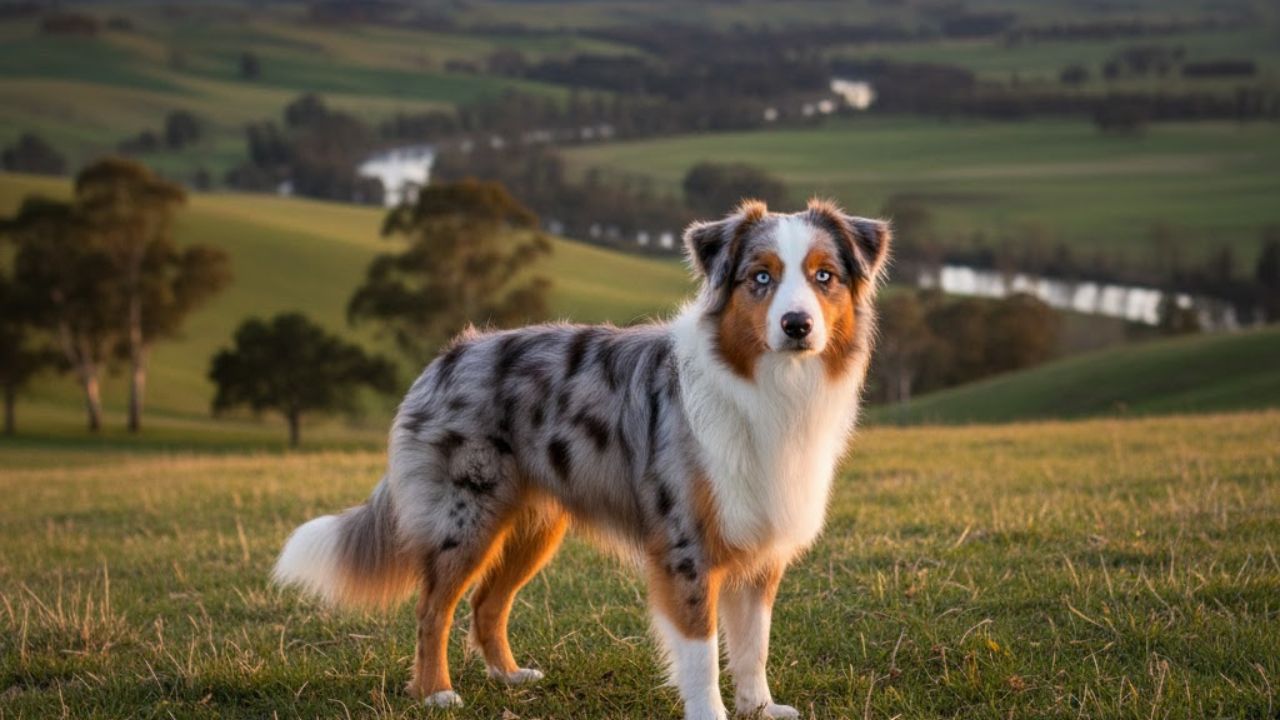
Scroll through social media and Australian Shepherds look like the perfect dog—intelligent eyes, striking coats, endless smiles on mountain trails. But behind those polished photos is a highly driven herding dog with a sharp mind and stamina that can overwhelm unprepared owners.
Before bringing an Aussie home, it’s worth understanding what daily life with this breed truly involves—not just for a week, but for the next decade or more.
The surprising origin of the Australian Shepherd
Despite the name, the Australian Shepherd is not actually Australian. The breed’s story begins with shepherds from the Basque region between France and Spain. In the 1800s, these herders traveled with their dogs to Australia, then later moved on to the United States.
American ranchers quickly recognised the dogs’ exceptional intelligence, endurance, and ability to manage livestock with minimal guidance. Over time, the breed became deeply associated with ranch life in the U.S., where it was refined into the Australian Shepherd we know today.
Only in recent decades has the Aussie surged in popularity as a family companion—especially in Europe. But at heart, this remains a working dog bred to think, move, and problem-solve all day long. That heritage shapes everything about the breed.
Energy levels: what “high drive” really means
Breeders often describe Australian Shepherds as “active” or “sporty.” In reality, that translates to hours of daily physical and mental engagement.
A realistic day with an Aussie often includes:
- 60–90 minutes of walking, running, hiking, or structured exercise
- Multiple short training sessions spread through the day
- Mental challenges like scent work, puzzle toys, or search games
- Regular safe off-lead time for free movement
If this sounds exhausting, the breed may not suit your lifestyle. But if you already enjoy outdoor activities and structured routines, an Aussie can be an incredible partner.
Without enough stimulation, they will invent their own jobs—herding children, chasing vehicles, digging, chewing furniture, or barking excessively.
Are Australian Shepherds good family dogs?
In the right environment, Aussies can be deeply loyal, playful, and affectionate family members. They often bond strongly with all household members and love interactive play with older children.
However, their herding instincts don’t disappear. These can show up as:
- Nipping at heels
- Circling running children
- Trying to “manage” guests
Early socialisation, consistent training, and clear boundaries are essential to prevent these behaviours from becoming a problem
What kind of home suits an Aussie best?
| Lifestyle | Suitability |
|---|---|
| Active, outdoors-focused, enjoys training | Excellent fit |
| City living with long walks and dog sports | Possible with commitment |
| Long work hours, dog left alone all day | Poor fit |
| Young children, limited training time | Risky without planning |
Separation anxiety and destructive behaviour
Australian Shepherds form strong emotional bonds with their people. That devotion is part of their charm—but it also means many struggle when left alone for long periods.
Common issues linked to boredom or loneliness include:
- Destructive chewing
- Excessive barking
- Escape attempts
- Obsessive behaviours like shadow chasing or licking
This is not a breed you simply “fit into” a busy schedule. Your routine needs to adapt to the dog, not the other way around.
Because they’re highly intelligent, Aussies also test boundaries quickly. Calm, consistent training from an early age keeps that clever brain working with you instead of against you.
Coat care, grooming, and shedding reality
The Australian Shepherd’s coat is one of its most admired features—often featuring eye-catching merle patterns and rich colour combinations. Fortunately, grooming isn’t overly complex.
Basic care includes:
- Weekly brushing (more during shedding seasons)
- Regular checks of ears, eyes, and nails
- Occasional baths when dirty
Shedding is real and constant. Hair will appear on furniture, clothes, and car seats. If a spotless home is a priority, this breed requires both a good vacuum and a relaxed mindset.
Health, lifespan, and genetic considerations
Australian Shepherds are generally healthy, medium-sized dogs with a life expectancy of 12–15 years when well cared for. Still, potential owners should be aware of breed-specific risks:
- Eye conditions (including cataracts and collie eye anomaly)
- Hip dysplasia
- Tendency toward weight gain if under-exercised
- MDR1 gene mutation, which affects drug sensitivity
Responsible breeders screen for these issues and provide documentation. If a breeder avoids health questions or pressures you to decide quickly, that’s a red flag.
Training an Aussie: start early, stay consistent
Australian Shepherds learn incredibly fast, which makes early training especially valuable. Positive, reward-based methods work best. Harsh corrections often backfire, leading to anxiety or stubbornness.
Key early training goals:
- Calm leash walking
- Reliable recall
- Learning to settle indoors
- Polite greetings without jumping or herding
Many owners find dog sports like agility, flyball, canicross, or herding trials extremely helpful. These activities satisfy both physical and mental needs, reducing behavioural issues at home.
Before you adopt: an honest reality check
Picture a normal weekday. You leave at 8 a.m. and return at 6 p.m. Who is with the dog during those ten hours? If the answer is “no one,” an Aussie is likely to struggle.
Now imagine a cold, rainy evening when you’re exhausted. The dog still expects engagement, exercise, and mental stimulation. That mismatch is where frustration often begins—for both human and dog.
Adopting an Australian Shepherd is closer to committing to an active lifestyle hobby than simply adding a pet.
For the right person, though, the rewards are huge: improved fitness, deeper outdoor routines, and an exceptionally loyal companion who thrives by your side.
Handled thoughtfully, an Aussie can be extraordinary. Chosen for looks alone, the same dog can become overwhelming. The decision starts long before the leash is clipped on.