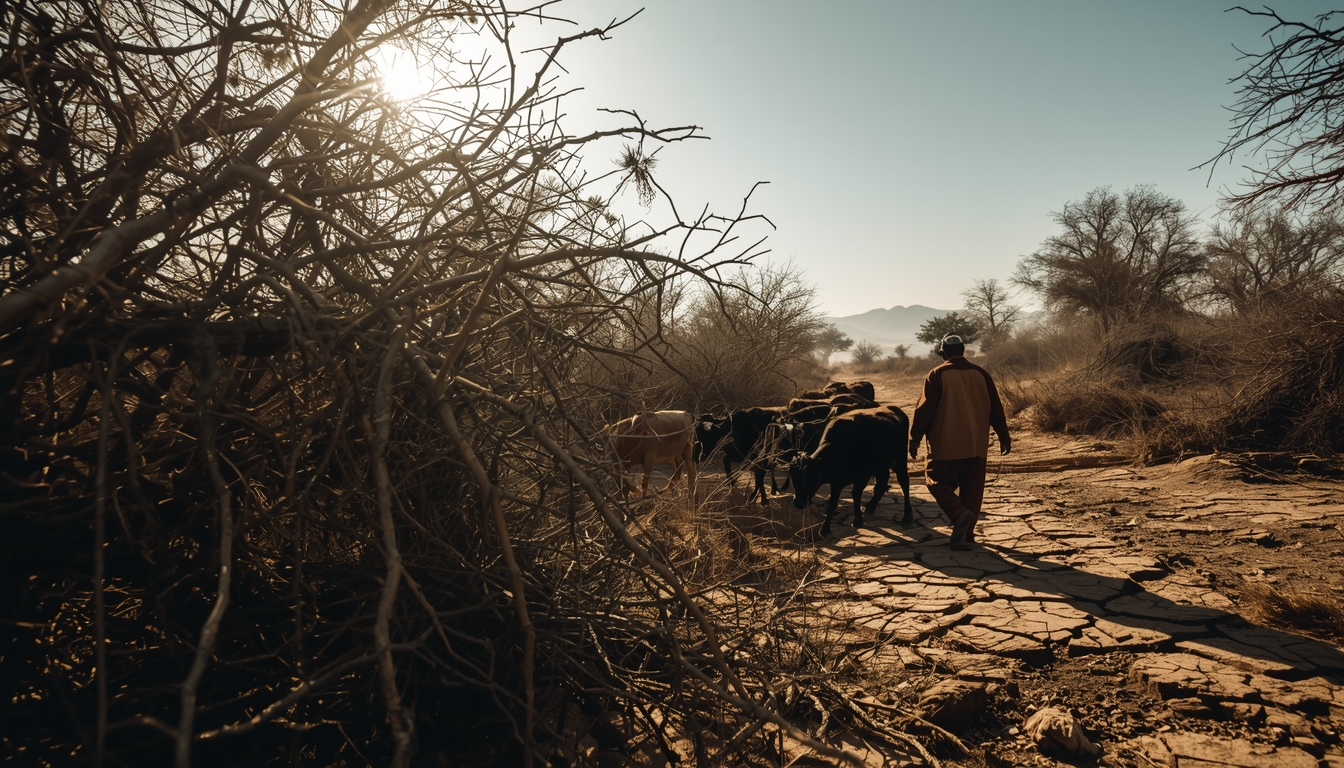
In the 1970s, a tree was introduced into northeastern Ethiopia with high hopes. It was supposed to halt desertification, stabilize fragile soils, and provide shade in arid landscapes. Instead, decades later, it has become one of the country’s most destructive environmental disasters.
That tree is Prosopis — once celebrated as a miracle solution, now regarded as a relentless invasive species devastating ecosystems, economies, and pastoral livelihoods.
What Is Prosopis — And Why Was It Introduced?
Prosopis juliflora, native to Latin America, is a hardy, thorny tree species known for its ability to survive extreme heat and drought. Its deep roots can access underground water reserves, allowing it to thrive where other vegetation struggles.
During the 1970s, Ethiopian authorities and international development agencies introduced Prosopis into the Afar Region to:
- Combat desertification
- Prevent soil erosion
- Provide shade and firewood
- Improve land productivity in semi-arid areas
On paper, it seemed like the perfect climate-resilient species.
In reality, it became an ecological nightmare.
From Climate Solution to Ecological Catastrophe
Over the past two decades, Prosopis has expanded at an alarming rate.
Scientific data shows that between 2003 and 2023, the area colonized by the species quadrupled, now covering nearly 20,000 square kilometers in Afar alone. The invasion is now spreading toward neighboring regions such as Amhara Region and Oromia Region.
If left unchecked, projections suggest it could cover 22% of Ethiopia’s territory by 2060.
So what went wrong?
How Prosopis Is Destroying the Ecosystem
1️⃣ Massive Water Consumption
Each Prosopis tree can absorb up to seven liters of water per day. Thanks to its deep root system, it taps into underground water tables — drying out farmland and reducing water availability for communities and livestock.
In a region already struggling with drought, this is devastating.
2️⃣ Shrinking Pasturelands
Over the past 20 years, more than 25% of pastureland in affected areas has disappeared.
Prosopis forms dense, impenetrable thickets that choke native vegetation. Grasslands once used to feed cattle, goats, and camels are now overrun by thorny forests.
For pastoral communities, this means fewer grazing areas and declining livestock productivity.
3️⃣ Harm to Livestock
The damage goes beyond lost grazing land.
- The tree’s sharp thorns injure animals.
- Its pods, when consumed in excess, can cause fatal digestive blockages.
- Injured animals struggle to travel long distances in search of food and water.
Elderly pastoralists report that families who once owned 50–100 cattle now struggle to maintain even modest herds.
4️⃣ Increased Predator Risk
Dense Prosopis thickets provide shelter for predators such as lions and hyenas. Livestock become more vulnerable, leading to further economic losses.
The Economic Cost: €517 Million Lost
The financial toll of this invasion is staggering.
Environmental economists estimate that Prosopis has caused approximately €517 million in losses in the Afar region over three decades — roughly four times the region’s annual budget.
This includes:
- Reduced livestock productivity
- Lost grazing land
- Increased management costs
- Labor required for removal
Globally, the Intergovernmental Science-Policy Platform on Biodiversity and Ecosystem Services (IPBES) estimates invasive species cost the world $423 billion annually — and that figure may be underestimated.
Prosopis is now considered one of the most economically destructive plant invasions in East Africa.
Why It Spread So Fast
Several factors accelerated the invasion:
- High drought resistance
- Deep root systems
- Rapid seed production
- Seed dispersal via livestock
Camels and other animals consume the pods and spread the seeds through their dung, allowing the tree to colonize new areas quickly.
Without natural predators to control it, Prosopis spreads aggressively and outcompetes native species.
Can the Damage Be Reversed?
Local initiatives are trying to fight back.
Since 2022, NGOs such as CARE International have launched mitigation programs that include:
- Producing animal feed from dried Prosopis leaves mixed with cereals
- Manufacturing charcoal briquettes and construction blocks
- Systematic uprooting of trees
- Replanting income-generating fruit species
However, clearing even a single plot can require 20 days of intensive labor.
Despite these efforts, the spread continues.
The scale of invasion is simply enormous — and funding remains limited.
A Global Lesson About Invasive Species
The Prosopis crisis highlights a crucial environmental lesson:
Introducing non-native species without long-term ecological studies can trigger irreversible consequences.
What was meant to combat desertification ended up:
- Depleting water resources
- Destroying pastureland
- Increasing poverty
- Disrupting ecological balance
Invasive species often begin as well-intentioned climate solutions. But ecosystems are complex. A single intervention can reshape landscapes for generations.
The Future of Afar’s Ecosystem
If strong national and international action is not taken, Prosopis could permanently transform Ethiopia’s drylands.
The challenge now is not just removal — it is restoration.
Restoring native vegetation, protecting water resources, and supporting pastoral communities will require:
- Policy reform
- Scientific intervention
- Sustainable land management
- Long-term funding
The story of Prosopis is not just an Ethiopian issue. It is a global warning.
Climate solutions must be carefully evaluated — or they risk becoming tomorrow’s environmental disasters.