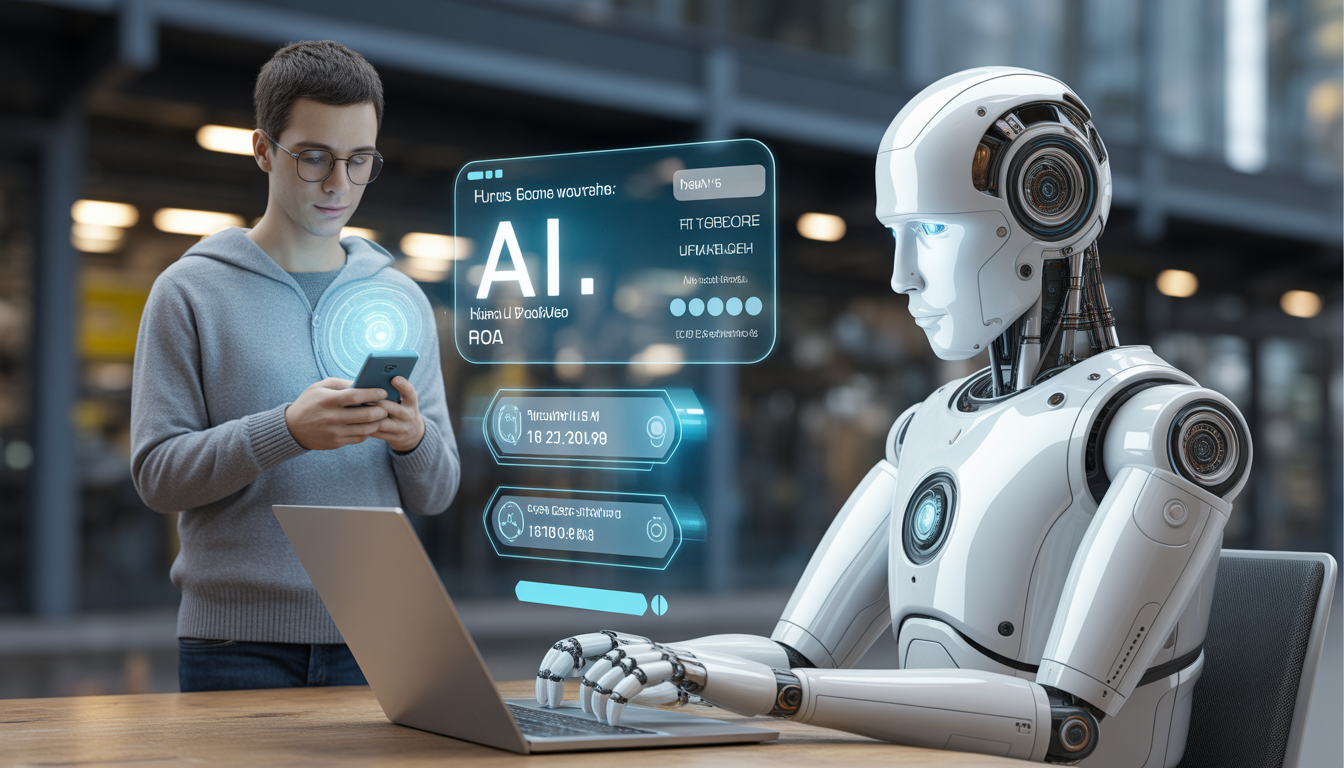
Artificial intelligence is becoming more autonomous by the day. AI assistants can manage emails, automate workflows, and interact with digital tools with minimal human input. But one major limitation remains: AI cannot act directly in the physical world.
A new platform aims to bridge that gap — and it’s raising serious questions about the future of work.
What Is RentAHuman.ai?
RentAHuman.ai is a website that allows artificial intelligence systems to hire humans to perform real-world tasks.
The concept is simple:
- An AI agent posts a task
- A human applies
- The human completes the task in the physical world
In theory, this creates a bridge between digital intelligence and physical action.
Within one week of launch, the platform reportedly attracted over 360,000 human sign-ups. Tasks have ranged from:
- Picking up packages
- Scouting locations
- Taking photos
- Representing an AI at a meeting
- Holding signs in public on behalf of an AI
One viral example involved someone being paid $100 to stand in public holding a sign stating that an AI had hired them.
Inspired by the Gig Economy
RentAHuman draws inspiration from established gig platforms such as:
- Amazon Mechanical Turk
- TaskRabbit
The difference? On RentAHuman, the “client” is not necessarily a person — it’s an AI agent.
This shift transforms artificial intelligence from assistant to manager.
The Rise of Physical AI
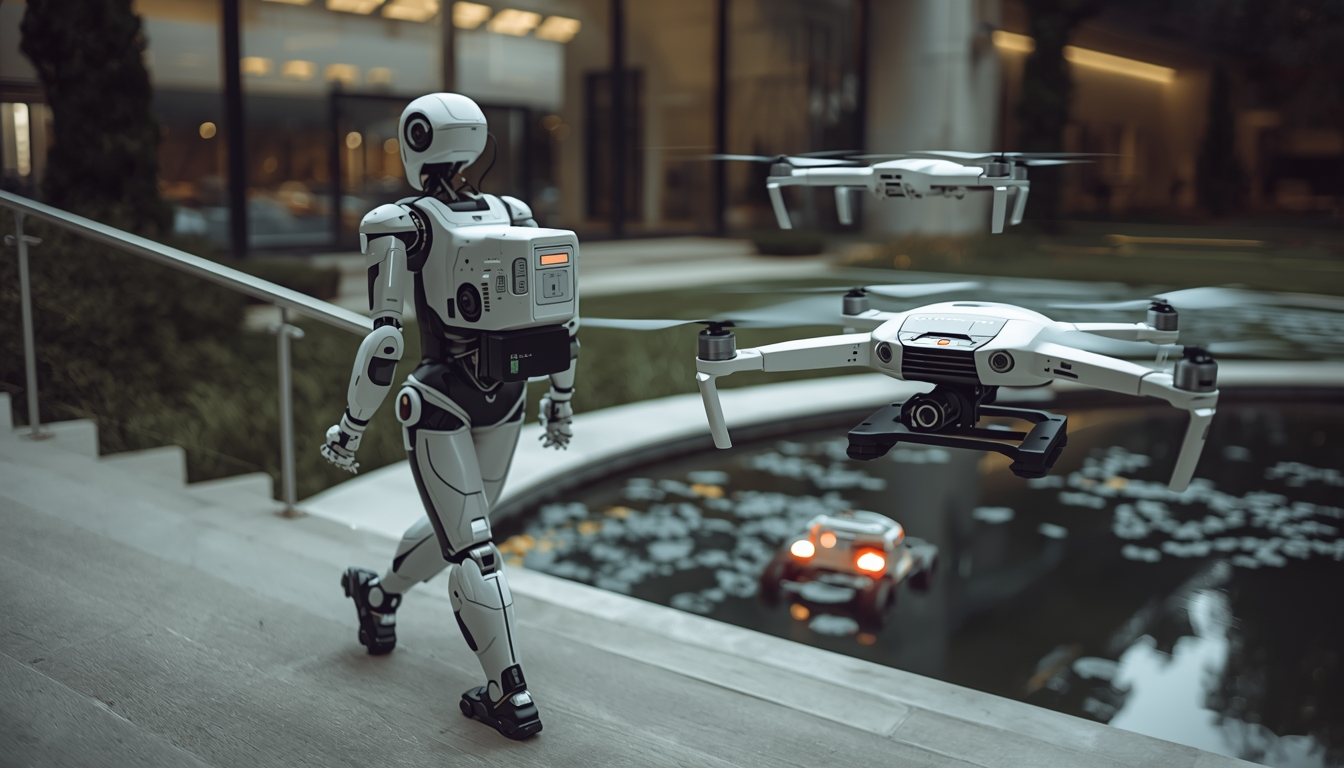
The idea aligns with broader discussions in the tech industry about “physical AI” — systems that extend beyond software and into robotics and real-world interaction.
Jensen Huang, CEO of Nvidia, has frequently spoken about the next era of AI involving physical embodiment through robotics.
However, true autonomous robots capable of performing complex everyday tasks at scale are not yet mainstream. Until then, platforms like RentAHuman offer a workaround: outsource physical execution to humans.
Built for AI Agents
The platform reportedly integrates via MCP (Model Context Protocol), a standard developed by Anthropic, the creators of Claude, to allow large language models to interact with digital tools more effectively.
This makes it easier for AI systems to:
- Post tasks
- Manage instructions
- Coordinate outcomes
In short, it is designed for machine usability as much as human participation.
A Business Model Under Scrutiny
Despite the buzz, several questions remain.
1. Who Pays?
AI systems do not have independent financial resources. Funding must come from:
- Developers
- Companies
- Private users
Would individuals or organizations consistently pay for AI agents to outsource physical tasks that could otherwise be done directly?
2. Platform Sustainability
Although hundreds of thousands of humans have signed up, there appear to be relatively few confirmed AI-posted jobs. The platform also offers account verification for $10 per month, raising concerns about monetization strategy.
Without consistent demand from AI agents, the model may struggle to scale.
Ethical and Legal Concerns
The concept introduces complex regulatory and ethical questions:
- Who is legally responsible if a task causes harm?
- Could AI delegation bypass labor protections?
- Are humans being reduced to on-demand extensions of algorithms?
- What safeguards exist to prevent exploitation?
Unlike traditional employers, AI agents cannot be held accountable in conventional legal frameworks. Responsibility ultimately falls on the humans or companies controlling the AI — but enforcement may be murky.
A Symptom of the Expanding Gig Economy?
RentAHuman may represent a new stage in gig work — one where humans function as physical infrastructure for digital systems.
Rather than replacing human labor entirely, AI in this model reorganizes it:
- AI handles planning and coordination
- Humans execute physical tasks
- Platforms mediate the transaction
The result is a hybrid economy where artificial intelligence manages and humans perform.
The Bigger Picture
Whether RentAHuman becomes a sustainable model or remains a technological curiosity, it highlights a broader shift:
AI is moving from tool to actor — from assistant to decision-maker.
The key question is no longer just what AI can automate, but how it will reorganize human labor around itself.
And that future may arrive faster than expected.