Every winter, the phrase “polar vortex” suddenly dominates news headlines, weather alerts, and social media discussions. Dramatic maps showing deep purple cold air surging south create an impression of an approaching environmental disaster. Yet, while the term sounds alarming, much of the panic surrounding polar vortex events comes from misunderstanding what the phenomenon actually is.
Meteorologists view the polar vortex as a normal atmospheric feature that plays an essential role in regulating winter weather patterns. However, public interpretation often equates it with severe cold outbreaks or historic winter storms. The gap between scientific meaning and public perception creates unnecessary fear and confusion.
Understanding what the polar vortex truly represents can help people interpret winter weather alerts more accurately and respond with practical preparation rather than anxiety.
What the Polar Vortex Actually Is
The polar vortex is not a storm, snow event, or sudden weather disaster. It is a large-scale circulation of extremely cold air that exists high in Earth’s atmosphere above the Arctic and Antarctic regions.
Location and Structure
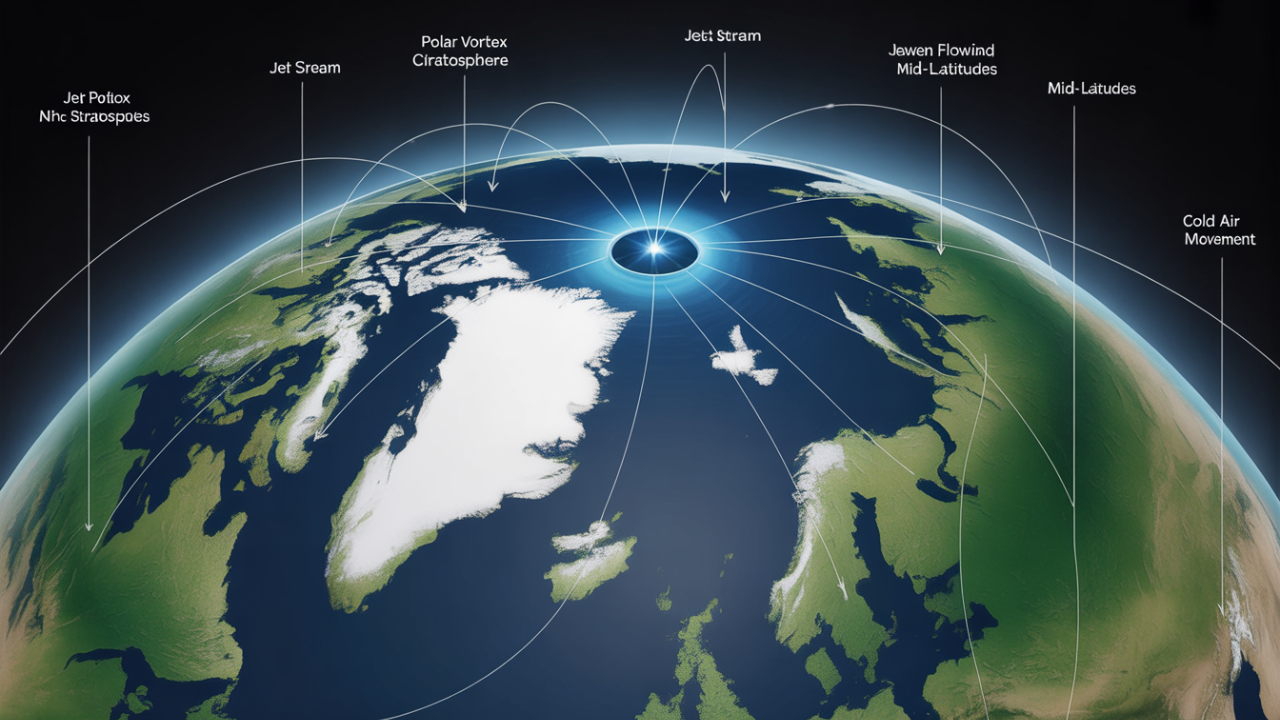
The polar vortex primarily forms in the stratosphere, approximately 10 to 50 kilometers above the Earth’s surface. It acts like a massive spinning ring of cold air that surrounds the polar regions during winter.
This circulation develops because of strong temperature differences between the icy poles and the relatively warmer mid-latitudes. When this temperature contrast remains strong, the vortex stays stable and keeps cold air locked near the poles.
Why the Polar Vortex Has Gained a Scary Reputation
The term “polar vortex” entered mainstream public vocabulary after the severe North American cold wave in 2014. During that event, record-low temperatures and extreme snowfall were widely linked to disruptions in the polar vortex.
Since then, media coverage often uses the term as a dramatic shorthand for extreme winter weather. Eye-catching visuals and simplified explanations have unintentionally transformed a scientific term into a perceived threat.
In reality, the polar vortex exists every winter. What changes is its behavior.
How the Polar Vortex Influences Weather
The vortex itself does not directly bring snowstorms or freezing temperatures to cities. Instead, it influences weather through interactions with the jet stream, a fast-moving river of air that steers weather systems across the globe.
Stable Polar Vortex
When the vortex remains strong and stable:
- Cold air stays trapped near the poles
- Mid-latitude regions often experience milder winter conditions
- Weather patterns remain relatively predictable
Disturbed Polar Vortex
When the vortex weakens, stretches, or splits:
- Lobes of Arctic air can move southward
- Cold outbreaks become more likely
- Weather patterns become more erratic
This disturbance often leads to headlines suggesting the vortex is “collapsing” or “attacking,” even though it is simply shifting its shape.
The Role of Sudden Stratospheric Warming
One major factor influencing vortex instability is a phenomenon called sudden stratospheric warming (SSW). During these events, temperatures in the stratosphere can rise dramatically within days.
This warming disrupts the vortex’s structure and can push cold air into lower latitudes weeks later. While SSW events increase the probability of cold spells, they do not guarantee severe winter conditions in every region.
Why Weather Headlines Often Cause Panic
Several factors contribute to public anxiety surrounding polar vortex warnings.
1. Dramatic Visual Representations
Weather graphics often display intense colors such as purple or black to indicate extreme cold. These images can appear threatening without proper explanation.
2. Simplified Media Messaging
To capture attention, media outlets sometimes present complex atmospheric phenomena as single, dramatic events rather than gradual pattern changes.
3. Emotional Memory
Many people associate the term “polar vortex” with past severe winters. These emotional memories amplify fear when the term appears again.
How Misunderstanding Meteorological Language Increases Fear
Meteorological terminology is designed for scientific precision. When these terms move into everyday language, meanings can shift.
For example:
- “Polar vortex” becomes synonymous with catastrophic cold
- “Bomb cyclone” sounds like an explosive weather event
- “Wind chill” may be misunderstood as actual temperature
These shifts create emotional reactions that often exceed the realistic level of weather risk.
Why Some Winters Feel More Severe Than Others
Although the polar vortex exists every winter, its intensity and structure vary. Several environmental factors influence how it behaves.
Climate Variability
Changes in Arctic sea ice, ocean temperatures, and atmospheric circulation patterns can affect vortex stability. Some research suggests warming Arctic conditions may increase vortex variability, leading to unpredictable winter swings.
Natural Atmospheric Cycles
Large-scale climate patterns such as the North Atlantic Oscillation (NAO) and El Niño also influence how cold air moves across continents.
Polar Vortex and Climate Change: Clearing the Confusion
The presence of severe winter weather does not contradict global warming. Climate change refers to long-term global temperature trends, not short-term weather fluctuations.
Scientists are studying how Arctic warming may weaken temperature contrasts between the poles and mid-latitudes, potentially making the vortex more unstable. However, research remains ongoing, and individual cold events cannot be directly attributed to climate change alone.
How to Interpret Polar Vortex Alerts Calmly
Instead of reacting to headlines, focusing on practical details helps individuals prepare effectively.
Step 1: Check Actual Temperature Forecasts
Understanding expected temperature ranges provides clearer insight into risk levels. A forecast of –5°C presents different challenges than –25°C.
Step 2: Monitor Duration of Cold Events
Short cold snaps often require minimal adjustments, while extended freezing periods can affect infrastructure, health, and travel.
Step 3: Focus on Local Weather Services
National meteorological agencies typically provide accurate and less sensational forecasts tailored to regional conditions.
Practical Preparation During Cold Weather Warnings
Rather than fearing terminology, individuals should focus on protective measures:
- Insulating water pipes to prevent freezing
- Preparing winter emergency kits
- Monitoring heating systems
- Protecting pets and vulnerable family members
- Adjusting travel plans during severe cold or snowfall
Preparation reduces risk regardless of the scientific terminology used in forecasts.
The Importance of Weather Literacy
Developing basic weather literacy helps individuals respond more rationally to forecasts. Understanding key atmospheric concepts allows people to separate genuine risks from exaggerated interpretations.
Simple mental translations can help:
- Polar vortex = High-altitude cold air circulation
- Jet stream = Weather steering airflow
- Wind chill = Feels-like temperature caused by wind
These translations reduce confusion and improve decision-making during winter weather events.
Social Media and Weather Anxiety
Modern weather panic is often amplified by social media platforms. Rapid sharing of dramatic maps and predictions can create echo chambers of fear.
To avoid misinformation:
- Rely on official meteorological sources
- Avoid sharing unverified weather graphics
- Limit doom-scrolling during severe weather alerts
Balanced information helps communities stay calm and prepared.
Why Understanding Terminology Improves Public Safety
Clear communication between scientists, media, and the public improves emergency response. When individuals understand what weather terms actually mean, they can take targeted precautions rather than reacting emotionally.
Misinterpretation can lead to two dangerous outcomes:
- Overreaction and unnecessary panic
- Underestimation of genuine weather threats
Accurate interpretation supports safer community responses.
The Future of Weather Communication
Meteorologists and climate scientists are increasingly working to improve public communication. Simplified explanations, improved graphics, and educational outreach aim to bridge the gap between scientific accuracy and public understanding.
As weather patterns become more unpredictable due to climate variability, clear communication will become even more essential.
Conclusion
The polar vortex is a natural and recurring atmospheric phenomenon that plays a crucial role in winter weather patterns. While disturbances in the vortex can contribute to cold outbreaks, the term itself does not represent a storm or immediate disaster.
Public panic often arises from misunderstanding meteorological language and media dramatization rather than actual weather risks. By focusing on concrete forecasts, local conditions, and practical preparation, individuals can respond to winter alerts more confidently.
Improving weather literacy empowers people to interpret forecasts accurately and reduces anxiety caused by complex scientific terminology. Ultimately, understanding the polar vortex helps transform fear into informed awareness and responsible winter preparedness.