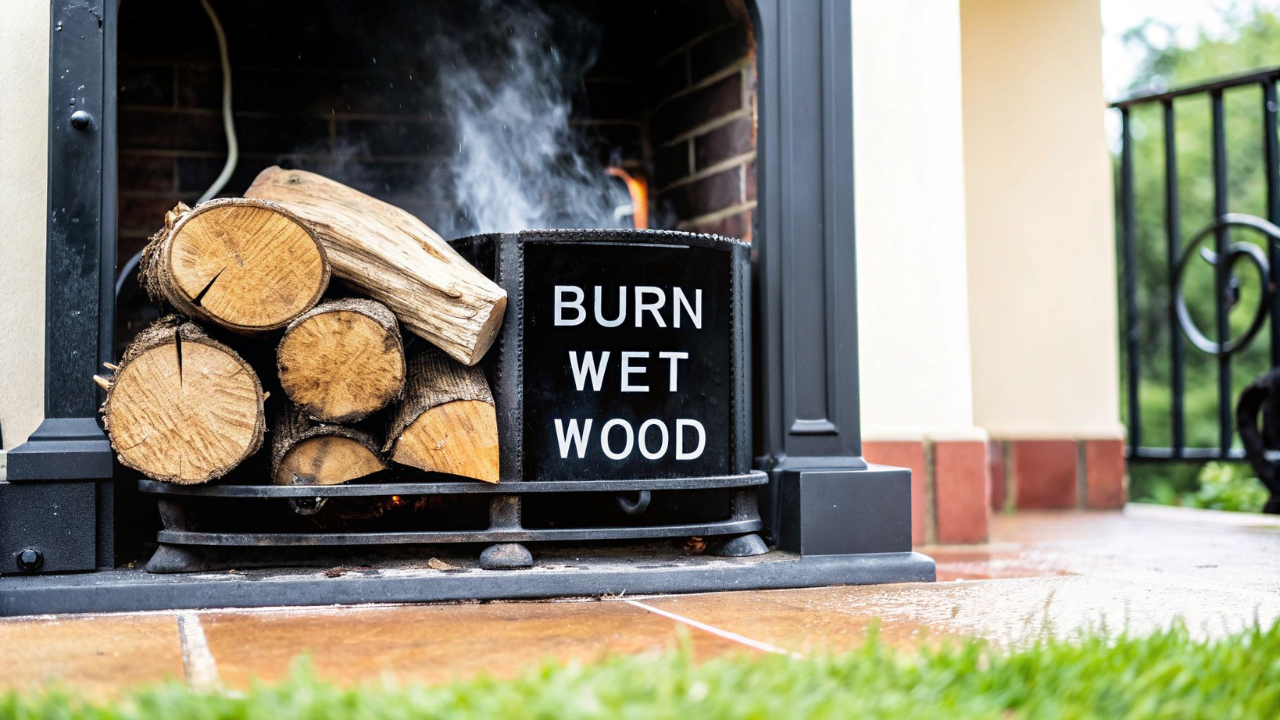
The woodpile looked perfect.
Neatly stacked under a lean-to, logs cut to identical lengths, enough to get through a long winter without worry. All summer, they passed it with quiet satisfaction—the same feeling as a full pantry or a topped-up freezer.
Then October arrived. The first real cold night. They lit the stove.
Two logs. Then four. Then eight.
Smoke. Sputtering. A flame that refused to take, like a lighter on its last breath.
They opened the stove door. The wood hissed softly, almost in protest. The room stayed cold. Outside, the pile suddenly looked less like preparation and more like a misunderstanding that had been months in the making.
No one had ever really explained how to do it.
When “Well-Stored” Firewood Is Doomed From the Start
From a distance, bad firewood looks exactly like good firewood.
The truth only shows itself when you try to burn it. The logs feel heavy. The bark clings tightly instead of peeling away. When two pieces knock together, the sound is dull instead of sharp. In the stove, they smoke, blacken, and sulk.
Everything looked right. Cut to size. Stacked neatly. Covered “to protect it from rain.” That’s precisely how many people lose an entire winter’s supply without realizing it.
What they stored wasn’t fuel. It was months of frustration.
A Familiar Story, Repeated Every Winter
Claire and Julien moved to a small village in spring, thrilled to finally have a wood stove. A neighbor delivered a trailer of “already dry” logs. They cut more themselves and stacked everything carefully against an old stone wall, covering it with a wide plastic tarp—just like they’d seen online.
In July, the pile looked textbook-perfect.
By November, nearly every log was still wet inside.
The tarp trapped moisture. The bottom rows sat directly on the ground. Air never circulated. Out of three cubic meters of wood, barely one burned properly. The rest produced smoke, soot, half-burned chunks, and a chimney that needed cleaning far too soon.
From the outside, nothing looked wrong.
Why Wood Doesn’t Dry the Way We Think It Does
Firewood doesn’t dry by simply waiting.
Drying depends on airflow, sun, time, and how the wood is handled early on. A log can look grey and cracked on the outside and still be damp like a sponge at its core.
What matters most:
- When the tree was cut
- How fast it was split
- Whether air could move through the stack
Wood left in thick rounds dries painfully slowly. Split wood dries much faster. But place that same split wood on bare soil, wrap it tightly in plastic, and the process slows to a crawl again.
Most people never test moisture. They trust appearances, habit, or the seller’s word—often right up until the first failed fire.
The Small Gestures That Decide Everything
The fate of your firewood is sealed early—often the day it arrives.
First mistake: leaving it in a heap “for later.” Compact piles trap moisture. The best move is to split the wood as soon as possible, while weather is mild, into stove-ready sizes.
Then comes stacking.
Think of your woodpile like a lung. It has to breathe.
- Raise it off the ground using pallets, stones, or beams
- Leave gaps between rows so air can move
- Keep the sides open to wind
- Protect the top from rain, not the whole pile
A tight tarp wrapped around the stack is like sealing wet laundry in a plastic bag and hoping it dries.
Stored properly from spring, softwood can be ready by winter. Dense hardwood usually needs a full year—or more. That means planning ahead, not reacting in autumn.
The “Ready-to-Burn” Trap
Buying firewood in October labeled “ready to burn” is another common gamble. The logs may look aged, but without ventilation at home and a quick test, disappointment waits inside the stove.
We’ve all tried to fix damp wood by adding more. It never works. You just get more smoke, more soot, and more frustration.
As Marc, a chimney sweep in a mountainous region, puts it:
“People don’t buy bad wood on purpose. They buy a promise. Every year I see beautiful stoves blamed for fires that fail—when the real problem is the pile in the backyard.”
The Rules That Actually Save Your Winter
- Raise the pile: Never let wood touch soil directly
- Split early: Thick logs stay wet inside for months
- Ventilate: Leave space between rows
- Cover smartly: Roof above, sides open
- Test before winter: Moisture meter or a sharp “clack” sound when logs strike
When a Woodpile Becomes a Quiet Life Lesson
Behind a failed fire is often more than a technical mistake. It’s about time—thinking months ahead in a world that rewards speed and shortcuts.
A good woodpile is a promise to your future self. The one who comes home frozen, counting on that first flame to change the entire evening.
When the logs finally crackle cleanly, catching in seconds with a clear flame, you feel it instantly. It’s not just warmth. It’s relief—and the quiet satisfaction of having done the invisible work right.
Key Takeaways
| Key Point | Detail | Value for the Reader |
|---|---|---|
| Ventilation matters most | Raised pile, open sides, light top cover | Prevents damp, unusable firewood |
| Drying takes time | Split in spring for winter use | Sets realistic expectations |
| Simple tests save seasons | Sound test, moisture meter, weight | Avoids smoke and wasted money |
FAQ
How long does firewood really need to dry?
Softwood can be ready in 6–9 months if split and ventilated well. Hardwood often needs 12–24 months.
Is storing wood under a tarp bad?
A tarp wrapped tightly around the pile traps moisture. A roof-style cover with open sides is far better.
How can I tell if wood is too wet without tools?
Wet wood feels heavy, sounds dull when struck, hisses in the fire, and smokes excessively.
Does wood type change storage rules?
Yes. Dense hardwoods need more time and better airflow than softwoods.
Can badly stored wood be saved?
Sometimes. Re-split it, raise it off the ground, uncover the sides, and give it more months of air and sun—but it won’t be ready quickly.