In what could become one of the most ambitious infrastructure developments in modern history, an international engineering consortium has officially initiated work on a proposed underwater rail tunnel designed to connect entire continents. If successfully completed, the project has the potential to redefine global transportation, trade logistics, and long-distance travel by introducing a new high-speed rail network running beneath the ocean floor.
While large-scale tunnel projects are not new, the concept of a transcontinental deep-sea rail corridor represents a significant leap in engineering, technology, and international collaboration. Experts believe the project could eventually transform global connectivity, offering faster, more energy-efficient alternatives to air and maritime transportation.
The Beginning of a Historic Infrastructure Initiative
According to project documentation released by the consortium, construction has commenced with early-phase operations, including seabed surveys, pilot drilling, and the installation of experimental tunnel segments. The work is being carried out in deep ocean regions using specialized drilling ships and remotely operated underwater vehicles (ROVs).
Unlike traditional land-based tunnels, this project requires engineers to operate in extreme underwater conditions, including:
- High water pressure at extreme depths
- Seismic and tectonic activity
- Complex seabed terrain
- Limited human accessibility
These challenges require advanced engineering solutions and continuous remote monitoring technologies.
Why a Deep-Sea Rail Tunnel Is Being Developed
1. Improving Global Freight Efficiency
Modern global trade heavily depends on shipping routes, which are often affected by congestion, geopolitical tension, and environmental conditions. A direct rail link between continents could offer faster, more reliable transportation for goods.
2. Supporting Climate Sustainability Goals
Air travel and shipping contribute significantly to global carbon emissions. Electrified rail systems powered by renewable or low-carbon energy could help reduce environmental impact while maintaining global mobility.
3. Enhancing Strategic Transportation Independence
Governments and logistics companies are exploring alternative transportation corridors that reduce reliance on vulnerable maritime routes.
Engineering Challenges of Building a Tunnel Beneath the Ocean
Constructing a tunnel thousands of meters below sea level presents unprecedented technical challenges. Engineers are adopting innovative methods to ensure safety, durability, and long-term performance.
Modular Tunnel Construction
Instead of drilling continuously through rock, engineers plan to create stabilized seabed trenches and install prefabricated tunnel segments. These segments are designed to interlock securely, forming a pressure-resistant structure.
Reinforced Structural Design
The tunnel will feature:
- Multi-layer protective shells
- Internal pressurization systems
- Separate maintenance and service corridors
- Integrated emergency evacuation sections
Advanced Monitoring Systems
Sensors embedded throughout the tunnel will continuously monitor structural integrity, temperature, pressure levels, and seismic activity. Artificial intelligence systems will analyze data in real time to detect potential risks before they develop into major issues.
Lessons Learned From Previous Mega Tunnel Projects
Engineers are applying knowledge gained from earlier projects such as international rail tunnels and underwater transport corridors. Past infrastructure developments revealed challenges including water leakage, structural stress, and rising construction costs.
To address these issues, the new project incorporates:
- Redundant safety systems
- Autonomous inspection drones
- Improved waterproofing technologies
- Flexible routing to avoid unstable geological zones
Potential Impact on Global Transportation
If completed successfully, the underwater rail corridor could introduce several transformative changes.
Faster Transcontinental Travel
Rail journeys connecting continents could reduce travel time compared to maritime shipping and offer competitive alternatives to air travel.
Reliable Weather-Proof Operations
Unlike aviation and maritime transport, underwater rail travel would be less affected by storms and adverse weather conditions.
Development of New Economic Corridors
Cities connected by the rail line could experience increased trade opportunities, tourism growth, and economic expansion.
Backup Logistics Infrastructure
The rail system could serve as an alternative transport network during port congestion or disruptions in global shipping routes.
Passenger Travel: What Future Journeys Might Look Like
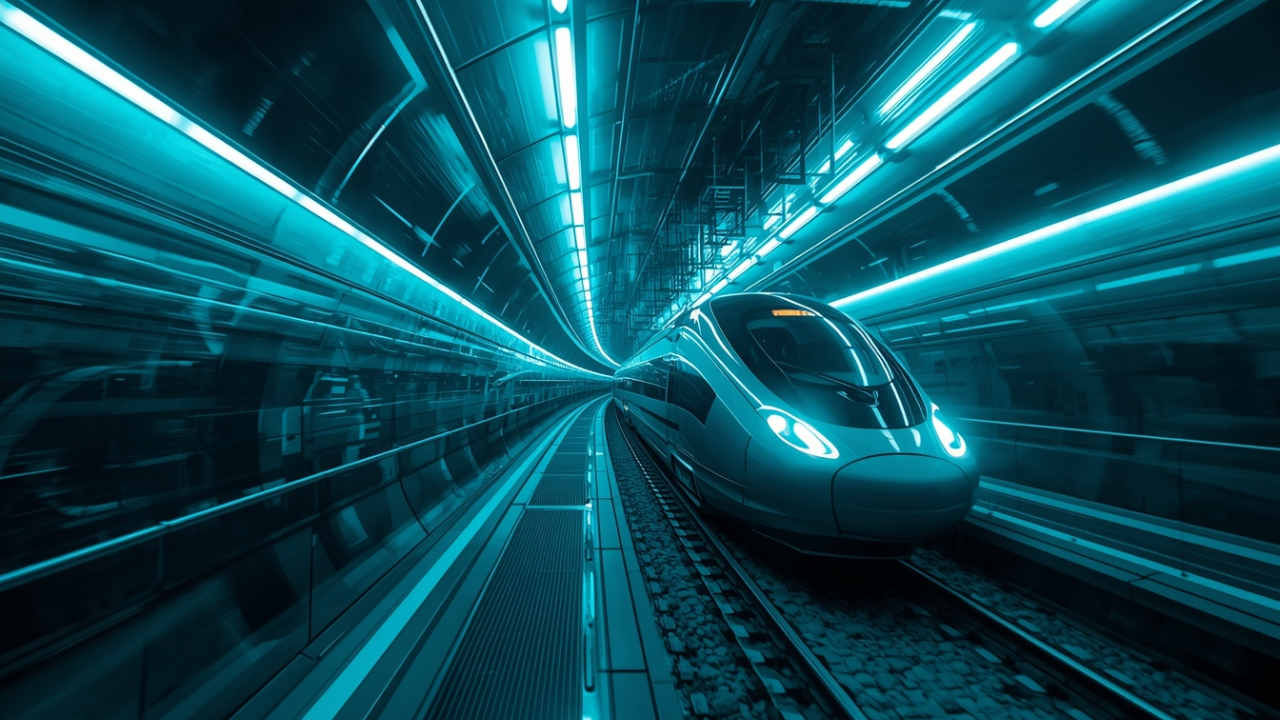
Although the initial phase will focus primarily on freight transportation, passenger services are under consideration. Future train designs may include pressurized cabin environments similar to aircraft, allowing passengers to travel safely beneath deep ocean regions.
Travel terminals may resemble airport-style boarding facilities, incorporating customs, immigration, and advanced security systems. Engineers envision quiet, high-speed trains offering smooth travel experiences with advanced digital connectivity throughout the journey.
Economic and Financial Considerations
Mega infrastructure projects typically require massive financial investment and long construction timelines. Early projections suggest that:
- Initial ticket prices for passenger services may be high
- Freight operations will likely generate early revenue
- Costs may gradually reduce as infrastructure expands
- Government and private sector partnerships will play key roles
While budget and schedule challenges remain possible, transportation history shows that large-scale projects often become more accessible over time.
Environmental Considerations
The environmental impact of such a large infrastructure project involves both benefits and challenges.
Potential Environmental Advantages
- Reduced reliance on high-emission air travel
- Electrified transport powered by renewable energy
- Lower carbon emissions per passenger or cargo unit
Environmental Challenges
- Ocean ecosystem disruption during construction
- High initial carbon footprint from infrastructure development
- Long-term marine environmental monitoring requirements
Environmental agencies are expected to play an essential role in regulating and assessing project sustainability.
Safety and Risk Management
Safety remains one of the most critical aspects of deep-sea tunnel design. Engineers are focusing on multiple layers of protection, including:
- Emergency evacuation stations at regular intervals
- Isolated tunnel compartments to limit damage during emergencies
- Continuous structural monitoring systems
- Automated maintenance inspection technologies
While no transportation system is completely risk-free, designers aim to achieve safety standards comparable to or exceeding existing long-distance rail tunnels.
Timeline and Future Outlook
The project remains in its early construction phase, focusing on testing technology, conducting geological research, and installing pilot tunnel sections. Experts estimate that:
- Freight operations could begin in early operational segments first
- Passenger services may take decades to reach commercial scale
- Full global network expansion could require long-term international cooperation
Despite the lengthy timeline, the project represents a major milestone in transportation engineering and global infrastructure development.
Conclusion
The construction of a deep-sea rail tunnel connecting continents marks a bold step toward redefining global mobility. By combining advanced engineering, climate-conscious transportation solutions, and international collaboration, the project has the potential to reshape how people and goods travel across the world.
While challenges related to safety, cost, and environmental impact remain, the initiative highlights humanity’s ongoing pursuit of innovation and connectivity. If successfully completed, this infrastructure could transform international travel, reduce transportation emissions, and fundamentally change global economic interactions.
FAQ
Question 1: Is the underwater rail tunnel currently under construction?
Yes, early-phase construction work, including seabed surveys and pilot tunnel segments, has officially begun.
Question 2: How safe would deep-sea train travel be?
The project incorporates multiple safety systems, including reinforced tunnel structures, monitoring sensors, emergency stations, and automated inspection technologies.
Question 3: Will the rail line carry passengers?
Initial operations are expected to focus on freight transportation, with passenger travel planned in later phases.
Question 4: How will this project impact climate goals?
Electrified rail transport could reduce carbon emissions compared to air and maritime transportation if powered by low-carbon energy sources.
Question 5: When might passengers use the tunnel?
Current projections suggest limited passenger services could become available within a few decades, depending on construction progress and testing results.