The first time I made this pasta, I ruined date night.
Not dramatically. No smoke, no broken plates. Just that quiet, sinking disappointment that settles over the table when you both realise the food is… fine. Perfectly edible. Instantly forgettable.
I’d followed the recipe exactly. Watched the video twice. Measured the salt. The pasta was al dente, the sauce looked glossy, the basil was fresh.
And still — nothing.
No depth. No warmth. No reason to ever make it again.
The strange thing was, I couldn’t let it go. It felt like a problem I hadn’t actually solved.
So I kept cooking it. And I learned it the hard way.
The night everything finally clicked
The breakthrough didn’t come on a romantic evening or a weekend cooking project. It came on a Tuesday, when I was tired, slightly annoyed at myself, and ready to give this pasta one last chance.
This time, I slowed down.
I salted the water and actually tasted it. I stayed in the kitchen instead of scrolling. I watched the garlic instead of assuming it would behave. The room got quiet — just the sound of oil warming, garlic softening, tomatoes bubbling gently.
And suddenly, the dish started talking back.
The recipe was a classic: olive oil, garlic, tomatoes, basil, cheese. I’d made versions of it dozens of times. But I’d always treated it like steps on a page — sauce first, pasta second, toss, done.
That night, something small changed everything.
The mistake I didn’t know I was making
I used to think the recipe was the sauce.
Make a good sauce, cook good pasta, combine at the end. Logical. Efficient. Wrong.
What I finally understood is this: the real recipe starts when the pasta and sauce meet in the pan. Everything before that is preparation.
That night, I undercooked the pasta slightly and moved it straight into the sauce while everything was still hot. I added a splash of cloudy pasta water — not randomly, but with intention — and tossed it properly, letting heat, starch, oil, and tomato come together.
Ten seconds changed the dish.
The sauce thickened without cream. It clung instead of sliding off. The smell deepened. It tasted finished.
Once you feel that moment, you can’t unlearn it.
How I make this pasta now (every single time)
I don’t follow the recipe differently on paper. I follow it differently in practice.
I start with a wide pan, never crowded. Thinly sliced garlic goes into cold olive oil before the heat is on. Medium-low heat, always. I watch until the garlic turns pale gold and smells sweet, not sharp.
A pinch of chili flakes blooms briefly. Then tomatoes go in and simmer gently — not rushed, not reduced into paste.
Meanwhile, the pasta cooks in water that actually tastes seasoned. I pull it two minutes early and transfer it directly into the sauce, dripping wet.
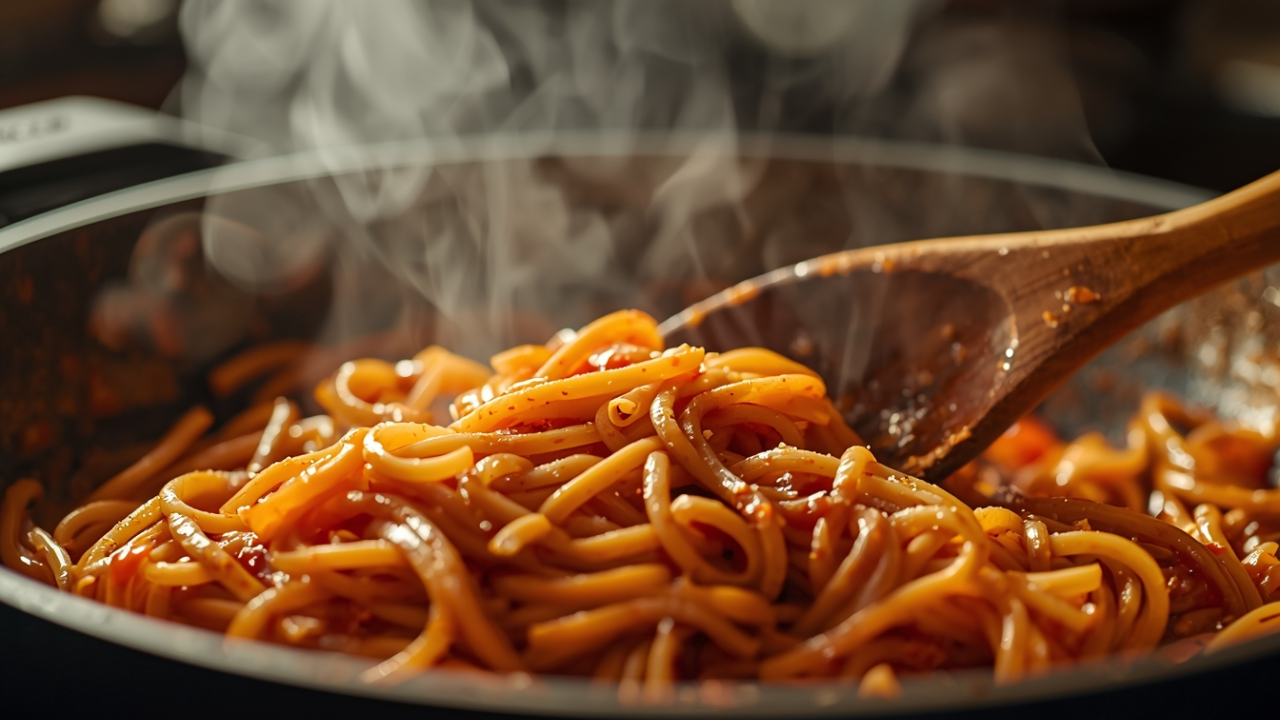
This is the part I used to skip: I add pasta water a little at a time and toss — not stir lazily, but really toss — letting the sauce emulsify and tighten. The pasta finishes cooking inside the sauce, absorbing flavour instead of being coated after the fact.
Salt and cheese come last. Always taste. Always serve immediately.
Why pasta water matters more than fancy ingredients
For years, I obsessed over tomatoes and olive oil brands while ignoring the most powerful tool in the kitchen: that cloudy water everyone tells you to save.
Pasta water is not just water. It’s starch, salt, and heat — the glue that binds oil and tomato into something cohesive.
When you add it at the right moment, over steady heat, and actually move the pasta, you’re not mixing. You’re building a sauce.
That’s why restaurant pasta tastes different. Not because of secret ingredients, but because of timing and confidence.
The quiet ritual it became
Now this pasta isn’t a “quick dinner.” It’s a reset button.
I still mess it up sometimes. Garlic gets too dark. I forget to save enough water. The difference is I know why it went wrong.
That awareness changes everything.
When someone takes a bite and says, without thinking, “Wow,” I know it wasn’t luck. It was a series of tiny decisions made with attention.
The recipe didn’t really change.
I did.
The core lessons (the ones worth remembering)
- Finish pasta in the sauce – The last 2–3 minutes matter most
- Use pasta water deliberately – Add, toss, taste, repeat
- Respect the garlic – Pale gold, never brown
- Control the heat – Gentle cooking builds depth
- Serve immediately – Pasta has a short perfect window
FAQ
Do I really need to salt the pasta water that much?
Yes. It seasons the pasta itself and the sauce later through the pasta water.
Can I use any pasta shape?
Most work, but shapes with texture or length (spaghetti, linguine, rigatoni) cling best.
What if I forget to save pasta water?
The dish will still be edible, but flatter. Keep a mug by the pot as a reminder.
Do I need expensive ingredients?
No. Good technique beats premium ingredients cooked carelessly almost every time.
How do I know the sauce is right?
It should look glossy, cling to the pasta, and leave no watery puddle in the pan.