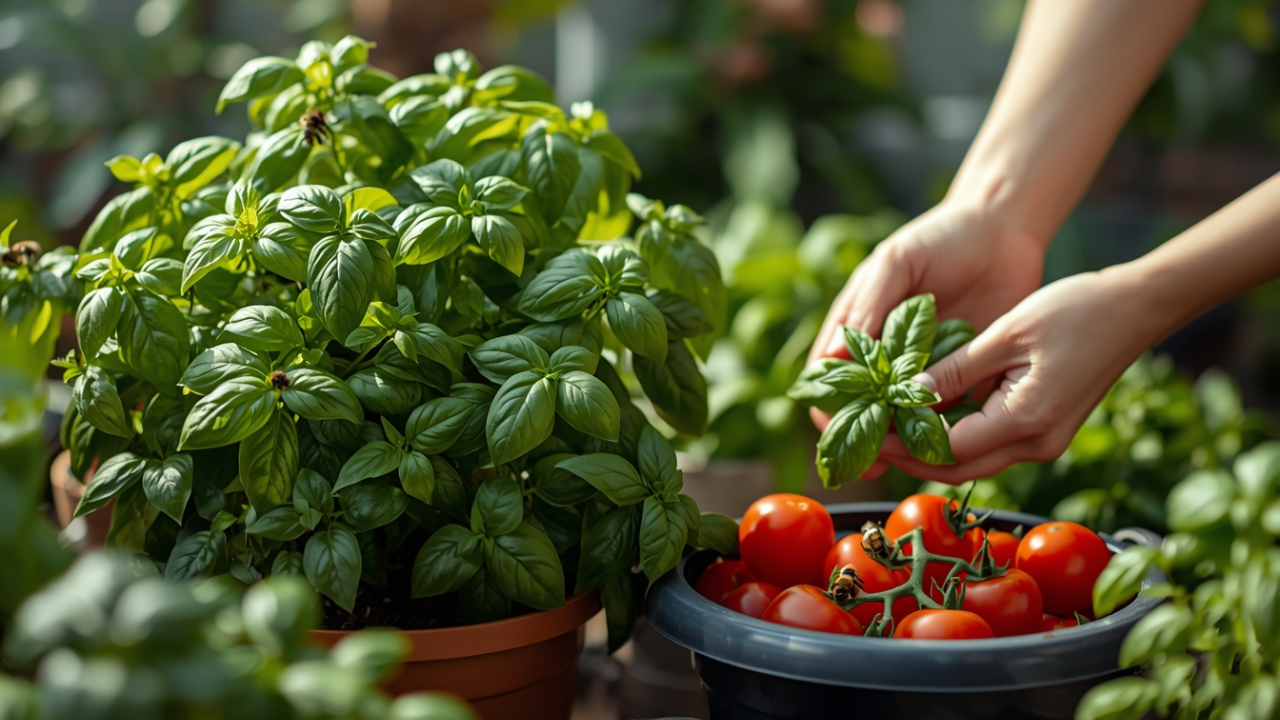
It began as one of those impulse purchases you barely remember making.
A flimsy basil seedling in a plastic pot. Soil already cracking at the edges. Leaves a little pale, a little limp. The price — R$1.57 — suggested it was meant to be used up quickly, not invested in. A garnish, not a commitment.
A few months later, that same plant had quietly redrawn the backyard, changed the rhythm of cooking in the house, and turned a forgotten corner of concrete into a living, fragrant hub of green.
From supermarket afterthought to backyard centerpiece
Sweet basil has a reputation problem. Most people know it as the herb that looks promising on the windowsill for about a week, then collapses into a sad tangle of stems and blackened leaves. That reputation isn’t entirely fair — it’s just what happens when a sun-loving plant is treated like a houseplant.
Once the seedling went into real soil, everything changed.
Given a bright spot with morning sun and decent airflow, the basil stopped behaving like a disposable herb and started acting like what it actually is: a vigorous, fast-growing plant with no intention of staying small.
The stem thickened. Leaves doubled in size. Every time the top was pinched, two new shoots emerged. Within weeks, the single spindly plant had become something closer to a shrub — dense, glossy, and unmistakably alive.
What stood out most wasn’t just growth, but confidence. Other plants politely occupied their space. Basil claimed it.
Why basil explodes when conditions are right
Basil has a simple philosophy: give it light, space, and a reason to grow, and it will do the rest.
The turning point came from a few small choices that added up quickly:
The conditions that changed everything
| Factor | What changed | What happened |
|---|---|---|
| Sunlight | 4–6 hours of direct morning sun | Compact growth and darker leaves |
| Soil | Fresh potting mix, not supermarket soil | Strong root expansion |
| Drainage | Pot with proper holes, no standing water | No root rot, steady growth |
| Pruning | Tips pinched weekly | Bushier shape, more leaves |
| Feeding | Light organic fertilizer monthly | Stronger aroma and flavour |
Individually, none of these steps were dramatic. Together, they flipped a switch. Instead of racing to flower and die, the basil stayed focused on producing leaves — exactly what you want if you’re actually using it.
Basil responds to harvesting almost like a challenge. Cut one stem, and it answers with two. Use it often, and it rewards you for it.
When a single plant stops being “just an herb”
The backyard itself began to change.
Against brick, concrete, and gravel, the basil’s bright green leaves popped. When flower spikes appeared — tiny white blossoms stacked along thin stems — bees arrived almost immediately. Hoverflies followed. What had been a quiet, unused patch of ground became active.
This is one of basil’s overlooked roles: it’s not just productive, it’s social. Its flowers feed pollinators. Its scent carries on warm air. Its presence subtly improves the surrounding garden.
It also does something else gardeners appreciate: it anchors space. A mature basil plant softens hard lines, breaks up sterile corners, and makes a yard feel intentional rather than accidental.
How one plant quietly multiplied
There was no plan to turn basil into a backyard empire. It happened almost accidentally, through curiosity and a refusal to waste good growth.
Every pruning produced usable stems. Some went straight into cooking. Others, out of interest, went into jars of water.
Within a week, roots appeared.
Those cuttings moved into soil. Suddenly, there wasn’t one basil plant, but three. Then five. Each genetically identical, each free, each thriving.
That’s when the realization hit: one cheap seedling wasn’t a purchase. It was a starting point.
By mid-season, basil wasn’t confined to a single pot. It lined the sunny wall. It shared space with tomatoes and chillies. It turned up in corners where nothing had grown well before.
The kitchen impact no one expects
The biggest change didn’t happen outside. It happened at the stove.
Having basil on hand — not a few precious leaves, but armfuls — rewired cooking habits. When basil is scarce, you ration it. When it’s abundant, you use it the way Mediterranean kitchens always have: generously and without ceremony.
How fresh basil reshaped everyday meals
- Torn over tomatoes and olive oil instead of bottled dressings
- Stirred into pasta at the last minute, not cooked to death
- Blitzed into quick pesto without measuring
- Added to soups right before serving for brightness
- Dropped into iced water or lemonade for subtle aroma
As the meals got simpler, the flavours got sharper. Less reliance on packaged sauces. Fewer dried mixes. More food that tasted like itself.
Ironically, using the basil more often made the plant grow faster. Regular harvesting acted as pruning. The bush stayed low, dense, and productive instead of tall and woody.
When basil grows faster than you can eat it
Abundance creates a new problem: what to do when the plant outpaces your appetite.
That problem turned into an education in preservation — not complicated, not time-consuming, just practical.
Simple ways the surplus was saved
- Freezer pesto: Large harvests blended with oil and nuts, frozen in small portions
- Oil cubes: Chopped leaves frozen in olive oil for instant flavour boosts
- Air-drying: Stems hung in shade for a milder dried herb
- Herb salt: Finely chopped basil mixed with coarse salt, dried and jarred
These methods stretched the value of the plant far beyond its growing season. They also allowed for aggressive cutbacks, which kept the basil healthy and delayed decline.
That R$1.57 plant didn’t just feed one summer. It fed the year.
How long basil can really live
Botanically, basil is considered an annual. In practice, that’s only partly true.
In warm climates, or with frost protection, a basil plant can live far longer than expected — especially if flowering is controlled and cuttings are taken regularly.
Two habits made the biggest difference:
- Removing flower spikes early
- Rooting cuttings before stems turned woody
Each cutting was insurance. When one plant slowed down, another was already established. Instead of one aging basil, there was a rotation — young plants taking over as older ones tired.
Think of basil less like a disposable herb and more like a renewable system.
Unexpected side benefits
The basil takeover came with bonuses no one planned for.
Scent
Brushing past the plant released a cloud of peppery, clove-like aroma. Even mundane tasks like hanging laundry picked up that sensory lift.
Insects
Bees returned regularly. That spillover helped nearby crops — tomatoes, peppers, even flowers — set better fruit.
Companion planting
Basil proved to be a good neighbour. It likes the same conditions as many vegetables and can discourage some pests through scent alone. Not a miracle cure, but part of a healthier, low-spray garden.
What first-time basil growers should know
Basil is generous, but it’s not indestructible.
It hates:
- Cold drafts
- Waterlogged soil
- Poor airflow
- Constantly wet leaves
It also varies by type. Genovese basil behaves differently from Thai or lemon basil. Some tolerate heat better. Some resist rain. Choosing a variety suited to local conditions matters more than people think.
Still, the learning curve is forgiving — and cheap. Few plants offer this level of return for such a tiny initial cost.
Why this story resonates
The basil didn’t take over the backyard by force. It did it by usefulness.
It justified its space daily — through meals, scent, shade, and presence. It replaced plastic packaging, cut grocery costs, and quietly shifted habits toward fresher food.
That’s why the plant stuck around. Not because it was trendy or ornamental, but because it earned its place.
What started as a forgettable supermarket seedling became a reminder that some of the best upgrades to daily life are small, green, and cost less than a cup of coffee.