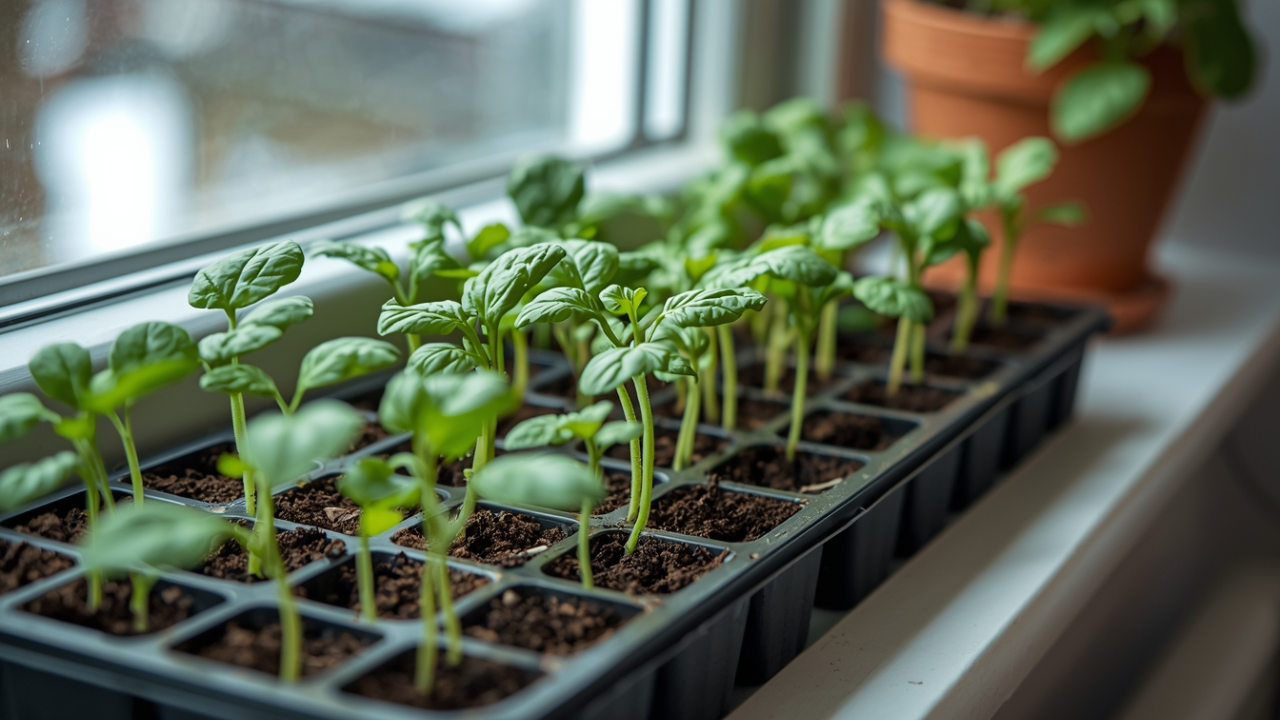
While winter still grips the garden outside, February is when life quietly begins indoors.
Seed trays appear on windowsills, radiators hum beneath pots of compost, and tiny labels promise tomatoes, chillies, flowers, and herbs weeks before spring arrives. But this early start comes with a hidden cost: February is one of the riskiest months for young seedlings.
Fungal diseases, rot, and indoor pests thrive in the same warm, damp conditions we create to help seeds germinate. The result? Perfectly sprouted seedlings that suddenly collapse, yellow, or vanish almost overnight.
The good news is that most February seedling losses are preventable — if you understand what’s really going on.
Why February is such a danger zone for seedlings
February sits awkwardly between seasons. Daylight is increasing, but still weak. Central heating dries the air, yet compost stays wet for longer. Rooms are warm, but ventilation is limited.
That combination creates ideal conditions for:
- Fungal spores
- Rot at soil level
- Sap-sucking insects that thrive indoors
Most problems don’t come from bad seeds. They come from stressed seedlings growing in environments that are too warm, too damp, and poorly aired.
Seedlings don’t just need heat.
They need balance:
- Cool, but not cold
- Moist, but never waterlogged
- Bright, but not baked on a radiator sill
The most common February threats (and how to spot them early)
Garden experts see the same problems every winter:
- Damping-off disease – seedlings suddenly topple and rot at the soil line
- Fungus gnats – tiny black flies hovering over damp compost
- Spider mites – pale speckled leaves and fine webbing in dry heat
- Aphids (greenfly) – clustering on soft new growth
- Grey mould (botrytis) – fuzzy growth on crowded, poorly ventilated trays
Catching these early is critical. Waiting “to see what happens” often means losing an entire tray.
Smart sowing: protection starts before seeds germinate
Many February failures happen before pests or disease appear.
Choose the right crops for February
Not everything wants an early start. Focus on plants that genuinely benefit from extra time:
- Chillies and peppers
- Aubergines
- Early tomatoes
- Leeks
- Sweet peas and slow-growing flowers
Fewer trays grown well will always outperform lots of trays grown badly.
Check seed packets carefully and favour varieties described as compact, container-friendly, or suitable for indoor sowing. They cope better with lower light levels.
Clean tools and fresh compost: boring but powerful
Many seedling diseases overwinter in old compost and dirty pots.
| Item | Best practice |
|---|---|
| Pots & trays | Wash in warm soapy water, rinse, dry fully |
| Compost | Use fresh seed compost only |
| Tools & labels | Wipe with mild disinfectant |
| Watering cans | Clean regularly to prevent algae and bacteria |
Reusing last year’s compost indoors is one of the fastest ways to invite fungus gnats and rot.
Moisture control: stopping rot before it starts
Overwatering is the silent killer of February seedlings.
Water from below, not above
Experts increasingly recommend bottom watering in winter:
- Place pots in a shallow tray of water
- Leave for 10–15 minutes
- Remove and allow excess water to drain
This keeps the compost evenly moist while leaving the surface drier — exactly what fungi dislike.
It also prevents splashing spores onto delicate stems.
Let compost dry slightly between waterings
Instead of watering by habit, check the compost:
- Just moist when pressed = perfect
- Shiny or green surface = too wet, poor airflow
- Pulling away from pot edges = too dry
In February, slightly dry is far safer than constantly wet.
Light, temperature, and airflow: creating a mini climate
Avoid the radiator windowsill trap
Placing trays directly above radiators creates:
- Hot roots
- Cold leaves at night
- Dry air and weak stems
If possible, move seedlings slightly away from direct heat. A bright table near a window works well. Adding a reflective surface behind plants (even foil on cardboard) boosts light without raising temperature.
Gentle ventilation without chilling
Fresh air reduces mould and disease — if done carefully:
- Ventilate briefly at midday, not at night
- Tilt propagator lids daily
- Avoid direct cold draughts
Condensation on lids and leaves is often the first sign conditions are wrong.
Dealing with pests before they take over
Fungus gnats
If small black flies appear:
- Let the compost surface dry
- Remove dead plant material
- Use yellow sticky traps to monitor numbers
Severe infestations can be treated with biological controls such as nematodes, applied when larvae are active in the soil.
Aphids and spider mites
- Check leaf undersides weekly
- Rinse affected plants gently in the sink
- Isolate badly affected trays
A mild soap spray can help with aphids. Spider mites dislike humidity and air movement — improving both often solves the problem.
Spacing and thinning: overcrowding invites disease
Dense sowing traps moisture and blocks airflow.
Once seedlings develop their first true leaves:
- Thin so leaves don’t touch
- Pot on extras rather than crowding trays
This single step dramatically reduces damping-off and mould problems.
When things go wrong: practical rescue scenarios
If seedlings suddenly collapse
That pinched, brown stem at soil level is classic damping-off.
Remove affected plants and the surrounding compost. Improve airflow, reduce watering, and move survivors to brighter, cooler conditions. Starting fresh in clean compost is often faster than trying to save every plant.
If fungus gnats appear overnight
Dry the surface, scrape off the top layer of compost, replace with fresh compost or fine grit, and add sticky traps. Populations usually crash within weeks.
Two February terms gardeners often confuse
- Damping-off: fungal disease that kills seedlings
- Hardening off: gradually preparing plants for outdoor life in spring
The habits that prevent damping-off now — airflow, careful watering, strong light — also make hardening off much easier later.
The February takeaway
February is a month of quiet optimism — and quiet risk.
Most seedling losses don’t come from bad luck. They come from small, fixable details: where a tray sits, how long compost stays wet, how often air is refreshed.
Get those right now, and by March you won’t just have seedlings — you’ll have strong, resilient plants ready for the season ahead.