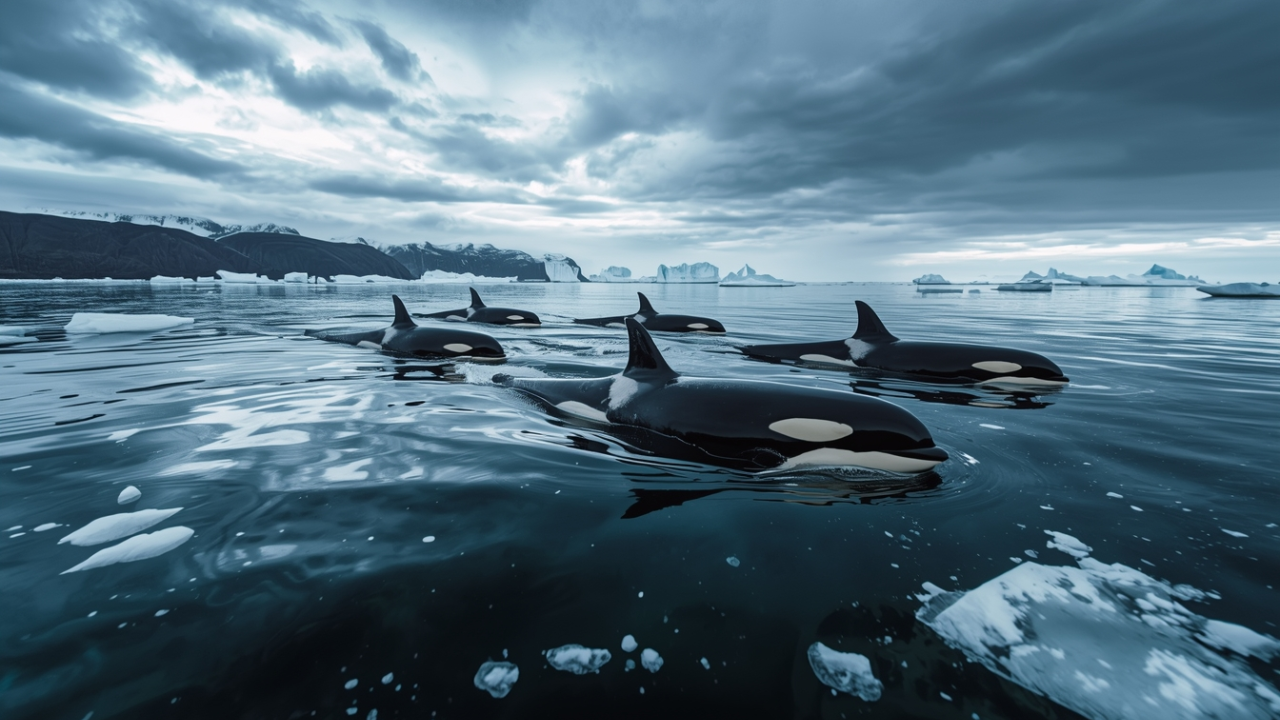
Greenland has officially declared a regional climate emergency following alarming scientific findings linking increased orca activity in Arctic waters to rapidly melting sea ice. The declaration highlights growing concerns among scientists, environmental researchers, and local communities witnessing dramatic ecological shifts across the region.
Residents along Greenland’s western coast have reported frequent sightings of orca pods in areas previously covered by thick, multi-year sea ice. For many local fishermen and hunters, these appearances signal a profound environmental change rather than an ordinary wildlife event.
In coastal towns like Nuuk, orcas are now being spotted in waters that, until recently, remained frozen for most of the year. Experts warn that these predator movements reflect deeper disruptions within the Arctic ecosystem.
Why Orca Migration Is Raising Global Climate Concerns
Orcas, also known as killer whales, are apex predators highly sensitive to environmental conditions. Their hunting patterns depend heavily on open water access, making them powerful indicators of climate change.
Scientists explain that orcas typically avoid regions with dense sea ice because it restricts movement and hunting efficiency. However, warming ocean temperatures and reduced ice coverage have opened new marine corridors, allowing orca populations to expand further north.
Key Climate Indicators Observed in Greenland:
- Rapid decline in summer sea-ice coverage
- Extended periods of open ocean water
- Increasing presence of migratory marine species
- Changes in Arctic food chain structures
Researchers often describe these shifts as “climate fingerprints,” where wildlife behavior reveals environmental changes before data trends become widely visible.
Scientific Evidence Linking Orca Presence to Ice Melt
Marine researchers have been closely tracking wildlife migration patterns alongside satellite-based sea-ice monitoring. Their findings reveal a strong correlation between earlier seasonal ice retreat and increased orca sightings.
In recent studies focusing on Greenland’s Disko Bay region, scientists observed dramatic environmental shifts. Historically, dense sea ice protected marine mammals such as narwhals and seals from orca predation. However, decreasing ice thickness has removed this natural barrier.
Research Observations:
- Orca pods were rarely documented in Disko Bay before 2010
- By 2016, orca attacks near traditional hunting areas became common
- Ice-free periods in coastal waters have increased significantly
- Local hunters report unstable ice conditions affecting travel routes
Glaciologists have also confirmed that warmer Atlantic ocean currents are accelerating glacier melting from below, further increasing ice loss.
Impact on Greenland’s Marine Ecosystem
The arrival of orcas has triggered a chain reaction within Arctic ecosystems. As top predators, their presence alters the behavior of prey species, reshaping marine food chains.
Ecological Consequences:
- Seals are moving closer to rocky coastlines for protection
- Narwhal migration routes are changing
- Fish populations are redistributing due to shifting predator zones
- Increased competition among marine species
Such ecological restructuring affects biodiversity and threatens long-standing ecological balance within Arctic waters.
How Climate Change Is Affecting Greenland Communities
Beyond environmental effects, climate change is transforming daily life for Greenland’s coastal communities. Indigenous hunters and fishermen rely heavily on predictable ice patterns for transportation, hunting, and cultural traditions.
Community Challenges Include:
- Dangerous thinning sea ice increasing accident risks
- Disrupted hunting seasons due to shifting animal behavior
- Reduced reliability of traditional sled routes
- Economic uncertainty for communities dependent on marine wildlife
Many hunters have already adapted by shifting hunting schedules or replacing sled transportation with small boats. However, these changes often introduce new safety risks and financial challenges.
Why Greenland’s Climate Emergency Matters Globally
Greenland’s ice sheet contains enough frozen water to significantly raise global sea levels if large-scale melting continues. The region acts as one of the most critical indicators of global climate health.
Scientists warn that Arctic warming does not remain isolated. Melting ice contributes to:
- Rising global sea levels
- Altered ocean circulation patterns
- Increased coastal flooding worldwide
- Changes in global weather systems
Experts emphasize that Greenland’s climate crisis is not just a regional issue but a global environmental warning.
Environmental Monitoring and Response Strategies
Greenland’s emergency declaration aims to increase environmental monitoring and strengthen climate adaptation strategies. Scientists and policymakers are collaborating to track wildlife migration, ocean temperature changes, and ice loss trends.
Current Response Measures:
- Expanding climate research and satellite monitoring
- Supporting local communities with adaptation planning
- Strengthening infrastructure safety guidelines
- Collaborating with international climate organizations
- Increasing public awareness about Arctic environmental changes
The Psychological and Cultural Impact of Arctic Climate Change
Climate change is not only reshaping landscapes but also affecting cultural identity and traditions in Greenland. Younger generations face uncertainty about preserving traditional hunting skills as environmental conditions evolve.
Many residents describe climate change as a visible, daily reality rather than a distant environmental theory. The disappearance of reliable sea ice has become a symbol of broader cultural and environmental transformation.
Key Climate Emergency Highlights
| Key Point | Details | Reader Benefit |
|---|---|---|
| Climate Emergency Declaration | Greenland officially recognizes severe climate risks | Highlights urgency of Arctic environmental changes |
| Orca Migration Increase | Orca pods entering previously ice-covered waters | Provides visible climate change indicators |
| Ecosystem Disruption | Predator-prey relationships rapidly shifting | Demonstrates ecological impact of warming oceans |
| Community Impact | Traditional hunting and transportation routes affected | Shows human and cultural consequences |
| Global Significance | Melting ice contributes to rising sea levels worldwide | Connects Arctic events to global climate risks |
Frequently Asked Questions (FAQs)
1. Why has Greenland declared a climate emergency now?
Recent years have shown rapid ice melt combined with major ecosystem disruptions and growing risks to communities, prompting officials to formally recognize the crisis.
2. Are orcas responsible for melting Arctic ice?
No. Orcas are reacting to environmental changes caused primarily by rising ocean and air temperatures linked to climate change.
3. How do orcas affect Greenland hunting practices?
Orcas prey on seals and other marine animals relied upon by local communities, making traditional hunting more unpredictable and dangerous.
4. Can Greenland’s ice melt still be slowed?
While some ice loss is unavoidable, reducing global greenhouse gas emissions can slow long-term melting and reduce future sea-level rise.
5. Why should people outside the Arctic care?
Melting Arctic ice directly influences global sea levels, weather patterns, and ocean circulation systems that impact coastal populations worldwide.
Conclusion
Greenland’s climate emergency declaration marks a critical moment in global environmental awareness. The increasing presence of orcas in Arctic waters serves as a powerful reminder of the interconnected nature of climate change.
While wildlife migration offers visible evidence of environmental transformation, the broader implications extend far beyond Greenland. Rising sea levels, shifting ecosystems, and community adaptation challenges highlight the urgent need for coordinated global climate action.
As Arctic ice continues to melt, Greenland’s evolving landscape stands as both a warning and a reflection of the planet’s rapidly changing climate system.