The olive oil aisle has started to feel like the luxury section.
One week you’re drizzling extra-virgin oil over tomatoes without thinking. The next, you’re standing in front of the shelf doing mental maths — rent, fuel, groceries — wondering when a basic cooking staple became a special-occasion purchase.
In some supermarkets, people hesitate with the bottle in their hand. At checkouts, you hear it whispered like a shared memory: “Remember when this used to be affordable?”
So kitchens are changing. Pans stay dry a little longer. People search late at night for “cheaper healthy oil” with a quiet knot in their stomach.
And one alternative keeps coming up.
Why olive oil is quietly losing its everyday role
Olive oil hasn’t stopped being loved.
It’s stopped being used for everything.
Between rising prices, unstable harvests, and supermarket mark-ups, many households now treat olive oil almost ceremonially. It’s still there — but poured carefully, sparingly, saved for when flavour really matters.
For everyday cooking — frying eggs, roasting vegetables, sautéing onions — people are reaching for something else. Not because they want to, but because they have to.
There’s also a practical issue. Extra-virgin olive oil, the kind people pay most for, isn’t ideal for higher-heat cooking. Its delicate compounds break down sooner, which means many people were already using an expensive oil where it wasn’t doing its best work.
So kitchens begin to split roles:
one oil for flavour, one for function, one for the budget.
That’s where a quiet workhorse steps in.
The surprising alternative: cold-pressed rapeseed oil
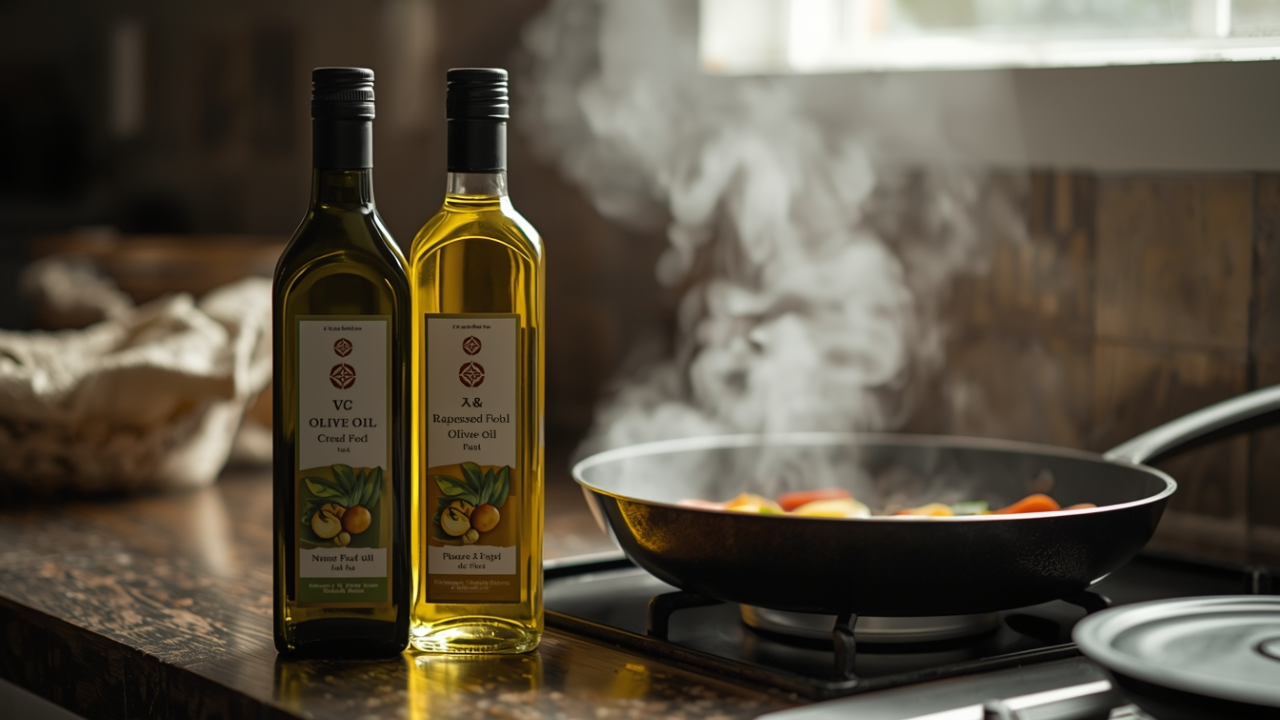
Rapeseed oil (often called canola oil in some countries) doesn’t have a romantic reputation. It sits on lower shelves, plain labels, no Mediterranean poetry attached.
Yet nutritionally and financially, it’s one of the best values in the supermarket.
Cold-pressed rapeseed oil is:
- Low in saturated fat
- Rich in unsaturated fats
- A source of plant-based omega-3s
- Neutral enough for everyday cooking
- Significantly cheaper per litre than quality olive oil
In many parts of Northern Europe, it’s been a daily kitchen staple for years — not as a compromise, but as a habit.
The problem is that many people have only encountered rapeseed oil in its worst form: huge plastic bottles labelled “vegetable oil,” used for deep frying, stripped of identity and story. That’s not the whole picture.
Cold-pressed versions, often sold in darker bottles, can have a mild, slightly nutty aroma when raw and become almost invisible when heated.
Why dietitians don’t panic about this switch
No one cooks with a nutrition spreadsheet.
What matters in real life is whether an oil lets you cook generously, regularly, and without stress — while still supporting heart health.
Rapeseed oil performs well on that front. Its low saturated-fat content and balanced fat profile make it a solid everyday choice. Its smoke point works well for gentle to medium-high heat, especially in refined versions.
Olive oil still brings unique benefits, especially its polyphenols when used raw. But that doesn’t mean it has to carry the entire burden of your daily cooking.
Health doesn’t come from one perfect oil.
It comes from cooking real food consistently.
How to switch without losing flavour (or joy)
The easiest mistake is to quit olive oil completely. You don’t need to.
Instead, change its job description.
Use rapeseed oil for:
- Frying eggs
- Roasting vegetables
- Pan-searing meat
- Baking cakes and muffins
- Batch cooking and meal prep
Keep olive oil for:
- Drizzling over finished dishes
- Salads and vinaigrettes
- Bruschetta, hummus, soups, grilled fish
A simple trick: roast vegetables with rapeseed oil, salt, and spices. Just before serving, add a thin ribbon of olive oil on top. You’ll use half the olive oil, keep the aroma you love, and lower the cost per meal.
Taste worries are common — and usually unfounded. Refined rapeseed oil is very neutral. Cold-pressed has a light nutty note that fades with heat.
Start with hot dishes where flavour matters less, then experiment slowly with dressings if you want.
Why this small switch feels bigger than it is
This isn’t really about oil.
It’s about pressure.
When cooking fat feels too expensive to use properly, people cook less generously. Vegetables roast poorly. Meals feel thin. Snacks creep in later because dinner didn’t satisfy.
Switching to a cheaper, healthy oil removes that tension. You stop hesitating before pouring. You cook enough. You enjoy the food and move on.
That’s not indulgence — it’s sustainability.
You’re not giving up olive oil.
You’re protecting it, and protecting your budget at the same time.
A more realistic way to think about “good” oil
Olive oil came with a story: sun, trees, tradition. Rapeseed oil doesn’t shout. It just shows up.
In a squeezed economy, that matters.
It lets families keep cooking real food instead of cutting corners. It keeps vegetables on plates. It supports health without demanding luxury pricing.
The real upgrade isn’t replacing olive oil.
It’s using each oil where it actually shines.
Look down on the shelf next time, not up. Bring home a bottle of rapeseed oil. Give it a month. Watch how often you still reach for olive oil — and how often you simply cook, eat, and carry on without stress.
Sometimes the healthiest change is the one that makes everyday life easier.
Key Takeaways
| Point | Detail | Why it helps |
|---|---|---|
| Better fat balance | Rapeseed oil is low in saturated fat and contains omega-3s | Supports heart health |
| Lower cost | Often around half the price of quality olive oil | Reduces grocery stress |
| Smart role-sharing | Cook with rapeseed, finish with olive oil | Keeps flavour and pleasure |
FAQ
Is rapeseed oil as healthy as olive oil?
They’re different but comparable. Rapeseed oil has less saturated fat and more omega-3s; olive oil offers polyphenols, especially when raw.
Can I fry with rapeseed oil?
Yes. Refined rapeseed oil has a higher smoke point and is well suited to everyday frying.
Will food taste different?
In cooked dishes, most people barely notice a difference. Start with hot meals.
Should I stop buying olive oil entirely?
No. Many households keep a smaller bottle for flavour and finishing.
What should I look for on the label?
“Cold-pressed” for more flavour and nutrients, “refined” for neutral taste and higher heat. Dark bottles are best.