In the pharmacy aisle, a familiar moment plays out. You catch your reflection under unforgiving lights and notice it again: silver strands at the roots, sharper against your natural color than you remember. For years, this moment meant one thing—grab a box dye, cover everything, reset the clock.
But something has shifted.
Instead of reaching for a heavy, opaque color, more people are choosing a different solution: grey blending. It doesn’t erase grey hair. It softens it. It doesn’t fight ageing. It works with it. And quietly, it’s replacing traditional hair dye as the go-to option for people who want to look younger without looking artificial.
This isn’t about giving up on grooming. It’s about redefining what polished actually looks like.
The Quiet End of “Cover Everything” Hair Dye
For decades, hair coloring followed one strict rule: grey must disappear. The result was often a solid, uniform shade that looked great for a week or two—until the roots came in. Then came the harsh line, the panic touch-ups, and the endless cycle.
What many people didn’t realize is that as we age, contrast becomes the enemy. Dark, opaque dyes can clash with softening skin tones, exaggerate shadows, and make facial features look harsher. Ironically, trying to look younger sometimes did the opposite.
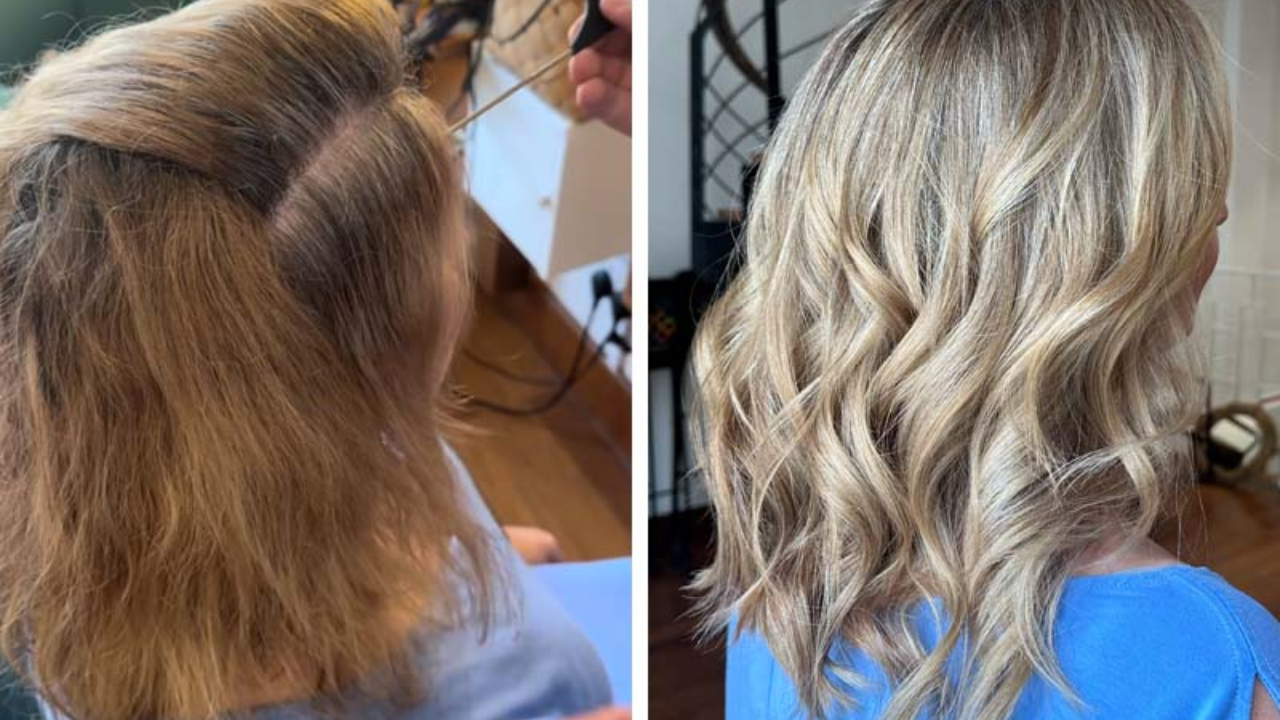
Grey blending flips that logic. Instead of masking silver strands, it dilutes the contrast, allowing grey to exist as part of a multidimensional, natural-looking color.
The result? Hair that looks lived-in, intentional, and surprisingly youthful.
What Exactly Is Grey Blending?
Grey blending is not one single product or technique—it’s a philosophy.
The principle is simple: blend, don’t delete.
Rather than covering grey hair completely, stylists use a mix of:
- Micro-highlights and lowlights
- Demi-permanent or translucent color
- Soft toners or glosses
These techniques weave grey strands into the rest of your hair so they no longer stand out as “roots.” Instead, they become part of a cohesive, light-reflective palette.
At home, similar effects can be achieved with:
- Tinted glosses
- Sheer color masks
- Root-blurring sprays
- Color-depositing shampoos
The goal is never full coverage. The goal is harmony.
Why Grey Blending Instantly Looks Younger
The irony of ageing hair is this: grey itself isn’t what ages the face — harsh color is.
Grey blending works because it:
- Softens facial contrast
- Reflects light more naturally
- Avoids stark regrowth lines
- Moves with your skin tone instead of against it
Hair with dimension mimics youth. Think about children’s hair—it’s rarely flat or uniform. Grey blending restores that depth by mixing silver, natural pigment, and subtle tone variation.
The eye reads this as healthier, fresher, and more modern.
A Real-Life Shift: Sophie’s Story
Sophie, 47, spent years coloring her hair dark brown every five weeks. The routine was exhausting, expensive, and emotionally draining. The moment her roots showed, she felt “unfinished.”
Her stylist suggested grey blending instead of another full dye.
Using ultra-fine highlights and a soft glaze close to her natural shade, they allowed some grey to remain visible—intentionally. Three months later, something surprising happened: people stopped commenting on her hair color and started saying she looked refreshed.
No one said, “You’ve gone grey.”
They said, “You look well.”
That’s the power of blending.
The Psychology Behind the Trend
Grey blending isn’t just cosmetic—it’s emotional.
Classic dye reinforces the idea that ageing is a flaw to correct. Grey blending sends a different message: I’m evolving, not declining.
Many people report:
- Less anxiety about regrowth
- Fewer emergency salon visits
- More confidence between appointments
- A healthier relationship with ageing
This shift mirrors broader beauty trends—skin texture over perfection, movement over stiffness, realism over illusion.
Why “Panic Coloring” Backfires
The first grey hair often triggers panic. The instinct is to go darker, stronger, more permanent. But this creates a trap:
- Dark dye increases contrast
- Contrast exaggerates regrowth
- Regrowth increases stress
- Stress leads to more frequent coloring
By midlife, this cycle can age the face faster than grey hair ever would.
Grey blending breaks the loop by making regrowth irrelevant.
Key Benefits of Grey Blending
1. No harsh regrowth lines
Grey grows in softly, without that “helmet” effect.
2. Less maintenance
Appointments can be spaced 6–10 weeks apart instead of 4.
3. More natural movement
Hair looks dimensional, not painted on.
4. Youthful softness
Color works with your skin tone rather than overpowering it.
5. Emotional relief
You stop fighting the mirror every few weeks.
How Much Grey Should You Show?
There’s no rule—but most stylists recommend allowing 20–40% grey to remain visible for the most natural effect.
This level:
- Preserves brightness
- Keeps hair from looking flat
- Prevents drastic contrast
You don’t have to “go fully grey” to benefit. Grey blending is gradual by design.
Tips for the Best Grey Blending Results
- Choose demi-permanent color instead of permanent dye
- Stay close to your natural shade
- Avoid going darker than your youth color
- Use glosses to refresh tone, not recolor
- Style with texture — waves, layers, and movement enhance blending
- Extend time between appointments gradually
Patience is part of the process—and that’s a feature, not a flaw.
Is Grey Blending Only for Women?
Not at all.
More men are stepping away from solid dyes and opting for:
- Grey-toning shampoos
- Subtle blending at the temples
- Cool-toned glosses to reduce yellowing
The result is hair that looks intentional rather than concealed.
Can You Do Grey Blending at Home?
Yes—with realistic expectations.
At-home products can:
- Soften contrast
- Add shine
- Temporarily blur roots
Salon blending, however, offers:
- Better placement
- More natural transitions
- Customized tones
Many people combine both: professional blending every few months, gloss maintenance at home.
The Bigger Picture: A New Definition of Youthful
Grey blending isn’t about surrender. It’s about control without denial.
Youthfulness today isn’t measured by how well you hide time—it’s measured by how comfortably you inhabit it. Hair that looks natural, intentional, and low-stress often reads as more confident than hair that looks “perfect.”
Grey blending allows your hair to age with you, not against you.
And that’s why it’s not just a trend—it’s a shift.
FAQs
Does embracing grey automatically make you look older?
No. Harsh, opaque color and visible regrowth age the face more than grey itself.
How long does grey blending last?
Typically 4–6 weeks, fading softly without a harsh line.
What if I’m not ready to show grey yet?
Start small—soften your shade, blend around the hairline, or use glosses.
Is grey blending reversible?
Yes. You can always return to full color later, without damage or shock.