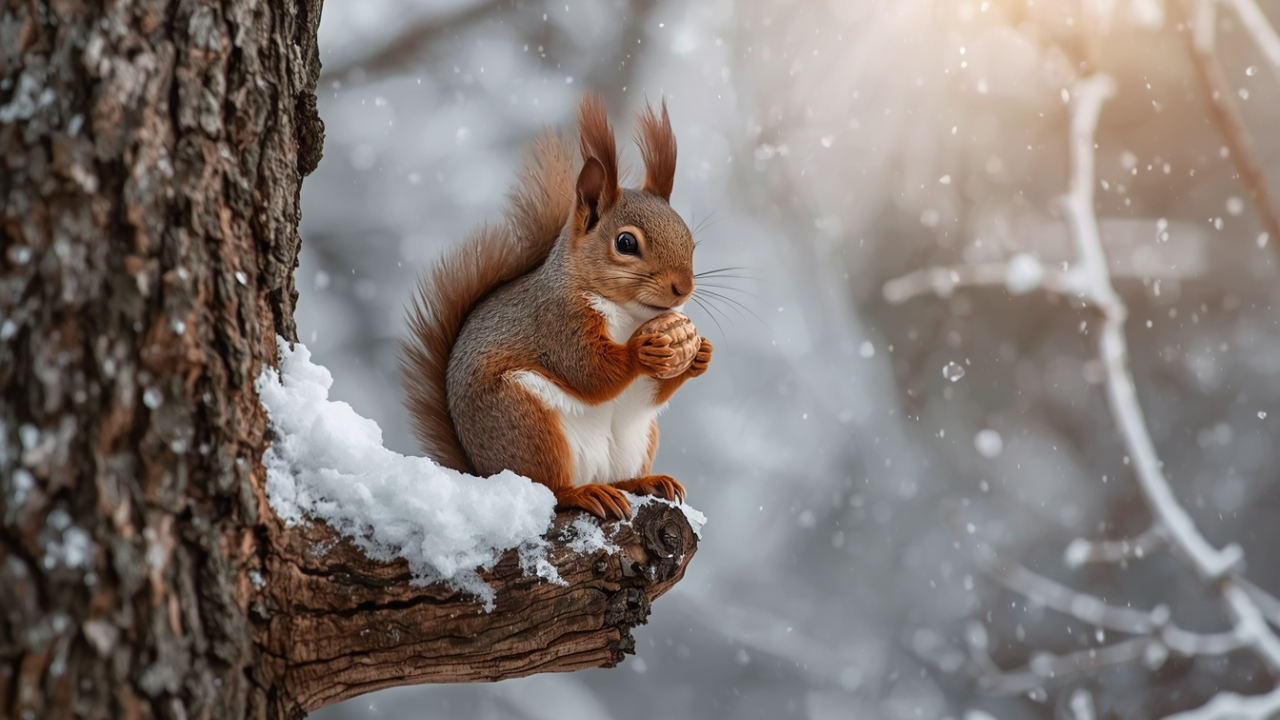
Many people believe squirrels are naturally prepared for winter because they store food throughout autumn. While this strategy normally works, prolonged freezing weather can turn their survival system into a dangerous trap.
During harsh winter frost, the ground becomes frozen solid, preventing squirrels from accessing buried food caches. Thick snow layers hide landmarks squirrels rely on to find stored food. As temperatures drop, squirrels burn more energy trying to stay warm while struggling to reach their hidden supplies.
Wildlife experts warn that during extreme cold spells, squirrels can suffer life-threatening hypothermia if they cannot access food quickly.
Why Urban and Suburban Squirrels Face Greater Risk
Wildlife specialists note that squirrels living in cities and residential neighborhoods face additional challenges during frost-heavy winters.
Key Risks for Urban Squirrels:
- Limited natural food sources
- Reduced tree coverage
- Increased reliance on buried food caches
- Frozen water sources
Because natural food options are already scarce in built-up areas, frost can remove nearly all available nutrition sources. However, these same areas allow homeowners to provide effective wildlife support.
A single garden offering food and water can serve as a winter refuge for multiple squirrels.
How You Can Help Squirrels Survive Freezing Conditions
Provide Safe Winter Food
Experts recommend offering natural, high-energy food similar to what squirrels collect in the wild.
Safe Foods for Squirrels:
- Unsalted hazelnuts and walnuts (in shell)
- Acorns and beechnuts from chemical-free areas
- Unsalted sunflower or pumpkin seeds
- Small portions of dried apple or pear
- Commercial squirrel feed from wildlife suppliers
Foods to Avoid:
- Salted or flavored nuts
- Chocolate
- Bread
- Processed snacks
Improper foods can cause dehydration, digestive problems, or poisoning.
Provide Fresh Water – The Most Overlooked Winter Need
Water is often more critical than food during freezing temperatures. Natural puddles and streams frequently freeze, leaving squirrels dehydrated.
How to Provide Winter Water:
- Place shallow bowls or plant saucers in sheltered garden areas
- Refill daily with fresh lukewarm water
- Bring bowls indoors overnight during severe frost
- Reposition water sources early each morning
Access to unfrozen water significantly improves wildlife survival during winter extremes.
Setting Up a Safe Feeding Station
Proper feeding station placement protects squirrels from predators and environmental stress.
Feeding Station Guidelines:
- Mount feeding shelves 1.5 to 2 meters above ground
- Position near tree branches for safe access
- Choose quiet locations away from pets and heavy foot traffic
- Maintain a consistent feeding schedule to reduce stress
Squirrels adapt quickly to predictable feeding patterns, helping them conserve energy.
Maintaining Hygiene to Prevent Wildlife Disease
Feeding stations can spread illness if not cleaned regularly.
Feeding Station Hygiene Routine:
| Action | Frequency | Purpose |
|---|---|---|
| Remove wet or spoiled food | Daily | Prevent mold and bacteria |
| Clean feeding containers | Every few days | Reduce disease spread |
| Replace water daily | Daily | Maintain safe drinking source |
| Remove droppings and debris | Weekly | Keep feeding area healthy |
Maintaining cleanliness protects local wildlife populations.
Recognizing Signs of a Squirrel in Distress
During extreme frost, some squirrels may require professional rescue assistance.
Warning Signs Include:
- Lying motionless on the ground
- Slow or uncoordinated movements
- Visible signs of severe weight loss
- Minimal reaction to human presence
- Falling from low branches
If you observe these symptoms, contact wildlife rescue organizations rather than attempting to handle the animal directly.
How Climate Change Makes Winters Harder for Wildlife
Changing climate patterns have increased extreme weather events. Warmer early winters followed by sudden frost reduce squirrels’ preparation time and food storage efficiency.
These unpredictable seasonal shifts create dangerous mismatches between squirrel behavior and environmental conditions.
While backyard support cannot solve global climate challenges, it helps reduce winter survival risks for local wildlife.
Creating Wildlife-Friendly Gardens for Long-Term Support
Homeowners can improve wildlife resilience through thoughtful garden design.
Wildlife Garden Tips:
- Plant native nut-producing trees such as hazel
- Preserve mature trees and shrubs
- Leave leaf piles and deadwood areas for shelter
- Avoid heavy tree pruning during winter nesting periods
- Coordinate wildlife support with neighbors
Small environmental changes can create sustainable winter habitats.
Key Winter Wildlife Protection Tips
| Key Point | Details | Reader Benefit |
|---|---|---|
| Frost Blocks Food Access | Frozen ground prevents squirrels from retrieving stored food | Explains winter survival risks |
| Water Is Critical | Frozen water sources cause dehydration | Highlights simple life-saving support |
| Safe Feeding Stations Help | Elevated and consistent feeding reduces stress | Improves wildlife survival |
| Garden Design Supports Wildlife | Natural habitats reduce winter risks | Creates long-term ecological benefits |
Frequently Asked Questions (FAQs)
1. Should squirrels be fed throughout the year?
Wildlife experts recommend feeding primarily during severe winter conditions to avoid dependency.
2. Can squirrels survive snow without human help?
Many do survive naturally, but prolonged frost and urban environments increase survival risks.
3. Is feeding squirrels safe for garden ecosystems?
Yes, when done responsibly using natural foods and proper hygiene practices.
4. Can squirrels drink snow for hydration?
Snow does not provide sufficient hydration and may increase energy loss. Fresh water sources are important.
5. What should I do if I find an injured squirrel?
Contact wildlife rescue services rather than handling the animal directly.
Conclusion
Extended frost periods can create severe survival challenges for squirrels, especially in urban environments where natural food and water sources are limited. By providing appropriate food, fresh water, and safe feeding areas, homeowners can play an important role in protecting local wildlife populations.
Small, consistent winter support can transform residential gardens into vital survival spaces during harsh weather conditions.