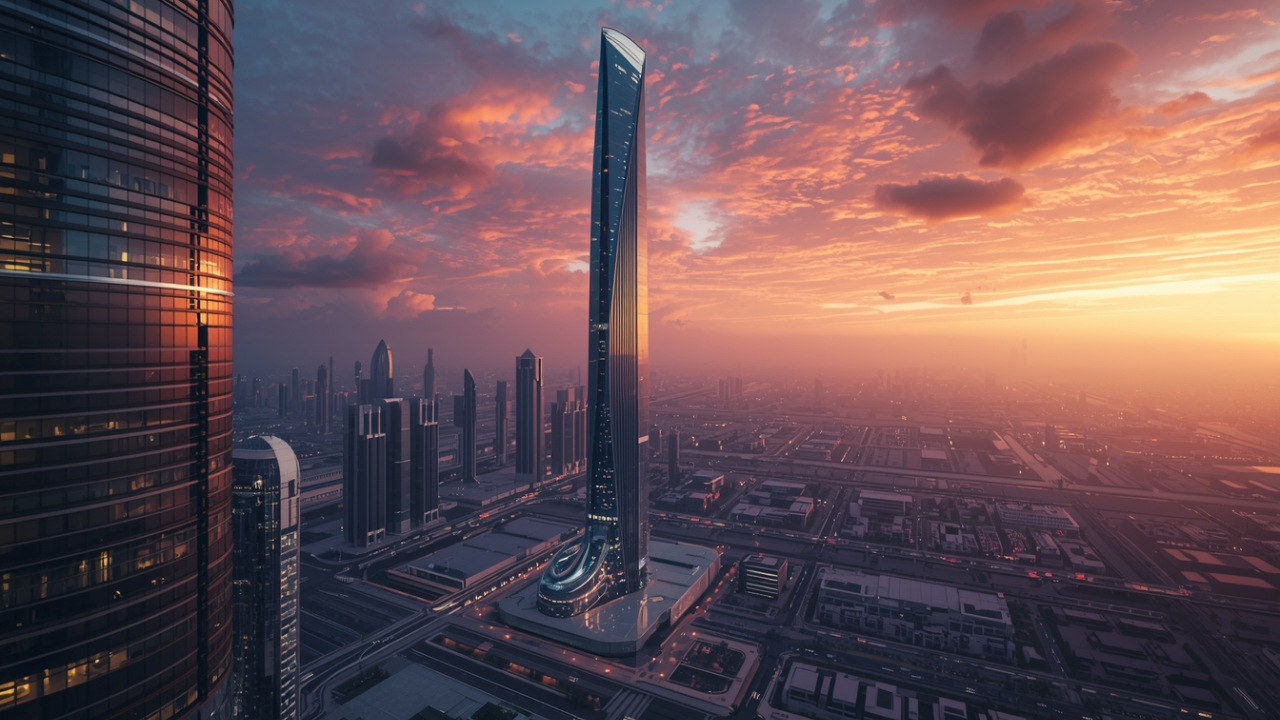
The taxi driver glances toward the shimmering skyline of Jeddah as the evening sun paints the city in gold. With a small laugh, he says something that sounds almost unbelievable.
“Soon, the Burj Khalifa will look small.”
It may sound like an exaggeration, but Saudi Arabia is quietly working toward one of the most ambitious construction projects in human history — a 1-kilometer-tall skyscraper designed to rewrite global architectural records.
The project, known as Jeddah Tower, aims to become the first structure on Earth to cross the symbolic 1,000-meter height barrier. If completed as planned, it will redefine skylines, engineering limits, and urban living concepts.
From World Records to New Frontiers
For more than a decade, skyscrapers like the Burj Khalifa in Dubai and the Shanghai Tower in China have dominated the global skyline competition. These structures transformed how cities display economic strength and engineering capability.
However, Saudi Arabia is now planning to raise the bar dramatically.
Planned Height Comparisons
| Building | Height |
|---|---|
| Burj Khalifa | 828 meters |
| Shanghai Tower | 632 meters |
| Jeddah Tower (Planned) | ~1,000 meters |
Crossing the 1-kilometer threshold is more than breaking a record. It represents a psychological and technological milestone in modern construction.
The Vision Behind Jeddah Tower
The tower is part of Saudi Arabia’s broader Vision 2030 strategy, which aims to diversify the country’s economy beyond oil. Instead of relying solely on natural resources, Saudi leaders are investing heavily in tourism, infrastructure, and global branding.
Jeddah Tower is expected to serve as:
- A luxury residential hub
- A commercial and business center
- A global tourism landmark
- A symbol of post-oil economic transformation
Experts believe such iconic megaprojects help attract foreign investment and boost international attention.
Why Build a 1km Skyscraper?
Global Prestige and Branding
Modern cities compete globally for recognition, tourism, and investment. Having the tallest building in the world instantly creates global visibility.
Economic Development
Large-scale towers often stimulate surrounding urban growth, increasing property values and commercial activity.
Architectural Innovation
Building higher pushes engineering technologies forward, often leading to advancements later applied in regular construction.
The Engineering Challenge of Building a Kilometer-High Tower
Constructing a 1km skyscraper is far more complex than simply extending a taller structure. At this scale, buildings face extreme environmental and structural challenges.
1. Wind Resistance
At heights approaching 1,000 meters, wind pressure becomes a major structural threat. Engineers design tapered shapes and aerodynamic setbacks to reduce turbulence.
2. Deep Foundations
Jeddah Tower requires foundations buried deep into stable rock layers, functioning like giant underground anchors.
3. Advanced Materials
High-strength concrete and steel mixtures are required to handle enormous vertical loads.
4. Elevator Innovation
Vertical transportation inside the tower will function like a multi-level transit system, connecting sky lobbies and different zones.
5. Safety Systems
The building will include evacuation floors, fire protection zones, and advanced structural monitoring technologies.
Life Inside a Vertical City
Unlike traditional skyscrapers, Jeddah Tower is designed to function as a self-contained vertical city.
Planned Features
- Luxury apartments
- Hotels and serviced residences
- Corporate office spaces
- Observation decks
- Retail and entertainment areas
Urban planners call this concept vertical zoning, where residential, commercial, and recreational spaces are stacked within one structure.
The goal is to reduce long-distance commuting and create walkable living environments within a concentrated urban zone.
The Economic Ripple Effect
Mega towers often trigger massive real estate and infrastructure growth. The Jeddah Tower development includes a large surrounding district featuring:
- Waterfront residential communities
- Tourism zones along the Red Sea
- Commercial business centers
- Public parks and promenade areas
Such developments transform not only skylines but entire city economies.
Concerns and Criticism
Despite the excitement, mega skyscrapers also raise important questions.
Sustainability Challenges
Buildings of this scale require large amounts of energy and water, particularly in desert climates. Designers are exploring advanced cooling systems and energy-efficient glass facades to reduce consumption.
Social Accessibility
Critics worry such towers may cater primarily to wealthy investors rather than everyday residents.
Long-Term Maintenance
Maintaining safety and structural integrity in a kilometer-high tower requires significant ongoing investment.
The Future of Skyscraper Competition
The race to build taller structures is unlikely to end with Jeddah Tower. Architects worldwide are already exploring designs exceeding 1.1 kilometers or more.
However, modern skyscraper projects are shifting focus from pure height toward:
- Sustainability
- Mixed-use urban planning
- Smart building technologies
- Community-focused development
Why Jeddah Tower Matters Globally
The tower represents more than architectural ambition. It signals a shift in how countries project economic and technological leadership.
If completed successfully, Jeddah Tower will:
- Redefine engineering limits
- Reshape global tourism competition
- Influence future city planning models
- Serve as a landmark for Saudi Arabia’s economic transition
Key Takeaways
- Jeddah Tower aims to become the world’s first 1-kilometer skyscraper
- The project supports Saudi Arabia’s Vision 2030 economic transformation
- Advanced engineering innovations are required to handle wind, load, and safety challenges
- The tower is designed as a vertical city with mixed-use urban living
- Sustainability and accessibility remain major global discussion points
Frequently Asked Questions
Will Jeddah Tower be taller than Burj Khalifa?
Yes. The planned height exceeds 1,000 meters, surpassing Burj Khalifa’s 828 meters.
Is construction currently active?
Construction began earlier, paused, and has recently been revived with new contracts and engineering updates.
Why is Saudi Arabia investing heavily in mega towers?
The goal is economic diversification, tourism growth, and global branding under Vision 2030.
Will visitors be able to access the tower?
Plans include public observation decks, hotels, and entertainment facilities.
Is such a massive tower environmentally sustainable?
Designers are integrating energy-efficient technologies, but resource consumption remains a key challenge.