Dragons, lanterns, fireworks — and humanoid robots.
The 2026 Chinese New Year Gala, broadcast nationwide by China Central Television (CCTV), didn’t just welcome the Year of the Horse. It delivered a powerful technological statement: China’s robotics industry is accelerating at full speed.
This year, machines weren’t backstage props. They were performers.
A Martial Arts Performance — Featuring Robots
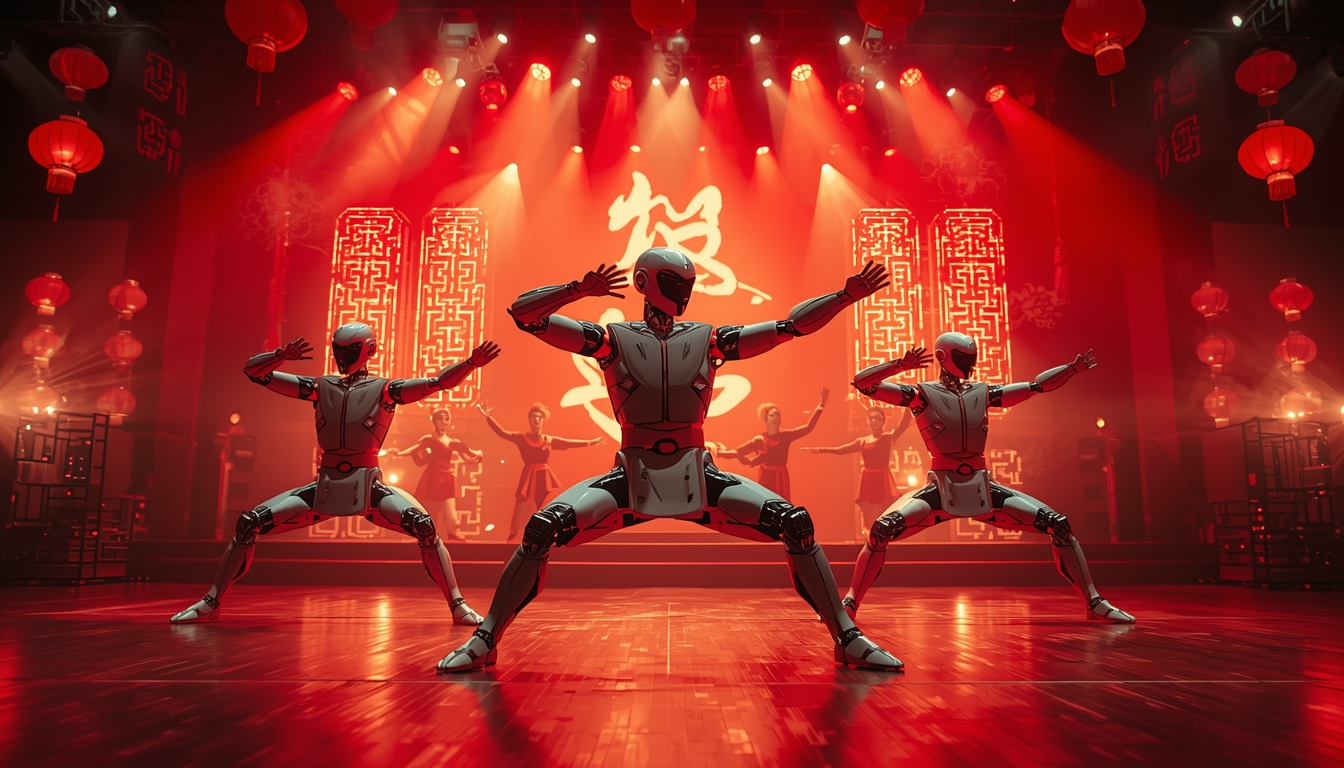
One of the most talked-about moments of the evening was a choreographed martial arts demonstration.
A dozen humanoid robots took to the stage alongside children, executing synchronized movements with surprising fluidity and balance.
The stars of the show were clearly the Unitree G1, developed by Chinese robotics company Unitree Robotics.
The G1 has gained attention internationally for combining advanced mobility with a relatively accessible price point — around $13,500. Its performance at the gala highlighted:
- Real-time balance control
- Coordinated limb articulation
- Smooth, dynamic posture adjustments
Whether fully autonomous or pre-programmed, the spectacle demonstrated remarkable engineering progress.
Robots Everywhere on Stage
The martial arts routine was only the beginning.
Throughout the evening:
- Robots danced alongside human performers
- A humanoid robot served food
- Another folded a T-shirt during a live performance
- Smaller humanoid models participated in a theatrical sketch
Several of these machines were models from Noetix Robotics, including the E1, N2, and Bumi — some marketed as among the most affordable humanoid robots globally, with entry prices around €1,200.
The message was clear: robotics is no longer experimental — it is entering everyday life.
A National Showcase of Technological Power
The Chinese New Year Gala has always been more than entertainment. It is one of the most-watched television events in the world, serving as both cultural celebration and soft power display.
By placing humanoid robots at the center of the spectacle, China sent a signal:
- Robotics is a national priority
- AI integration is accelerating
- Domestic manufacturers are closing the global gap
For years, Western firms dominated headlines in humanoid robotics. But China has rapidly expanded research, development, and commercialization.
While companies like Tesla have announced ambitious humanoid projects such as Optimus — not expected to reach commercialization before 2027 — Chinese firms are already offering deployable units for purchase.
How Autonomous Are These Robots?
One open question remains:
Were these performances fully autonomous, or tightly choreographed through pre-programmed routines?
Public demonstrations often combine:
- Predefined motion sequences
- AI-assisted balance systems
- Sensor-based adjustments
Even so, the ability of humanoid robots to coordinate with human performers under stage conditions reflects major advances in:
- Motor control algorithms
- Real-time environmental sensing
- Lightweight actuator systems
- AI-driven motion planning
We are still far from fully independent home assistant robots capable of complex caregiving. But the gap is narrowing.
Robotics as Cultural Symbol
The Year of the Horse traditionally symbolizes speed, energy, and forward momentum.
In 2026, the symbolism felt intentional.
Humanoid robots performing martial arts alongside children was not just entertainment — it was a vision of coexistence between human tradition and technological modernity.
China’s robotics sector, once perceived as trailing global leaders, now appears confident and competitive.
The gala didn’t just celebrate a new lunar year.
It showcased a future where robots may soon become part of daily life.