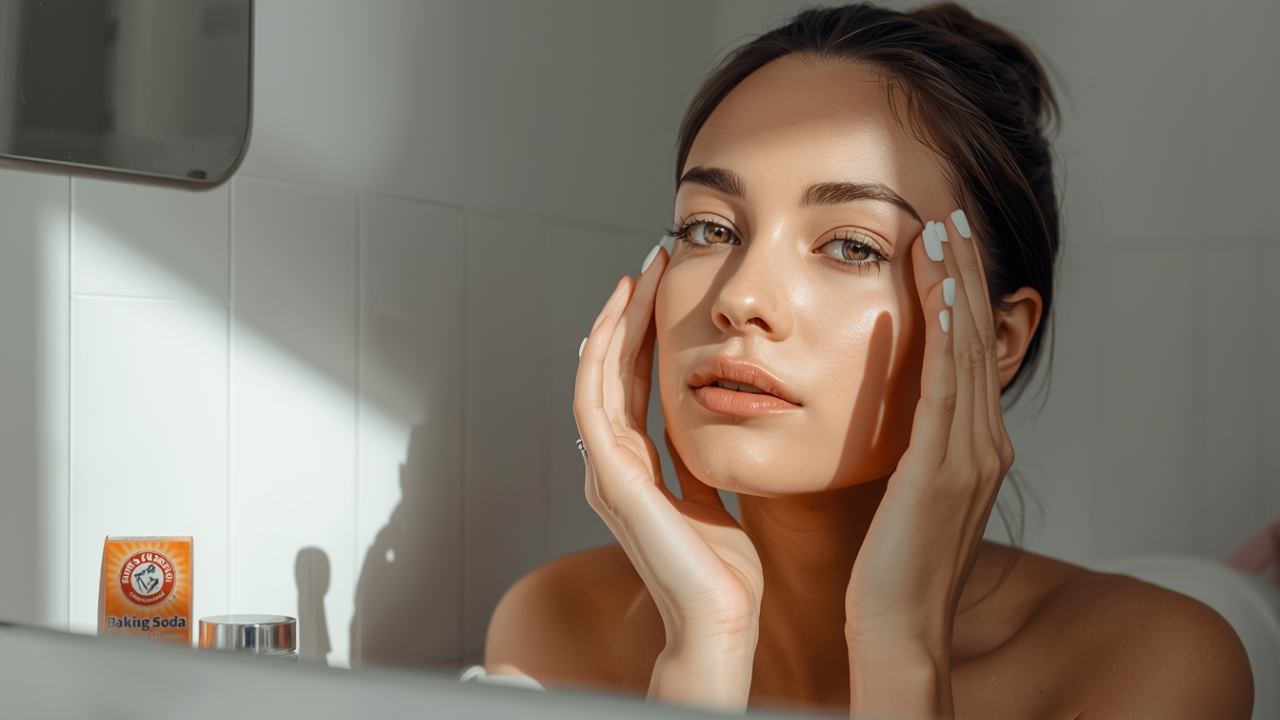
The first time I saw someone pat baking soda under their eyes, I assumed it was a joke.
A kitchen spoon. A pinch of white powder. Something that normally lives beside dish soap, not eye cream. Yet the comments under the video told a different story: “My dark circles look lighter.” “Wrinkles seem softer.” “Why didn’t anyone tell us this sooner?”
We’ve all felt that moment — standing in front of a bathroom shelf full of half-used, expensive products that promised miracles and delivered… very little. Suddenly, a two-euro box from the supermarket is getting all the attention.
So why aren’t beauty specialists instantly dismissing it?
How baking soda wandered from the kitchen into skincare
Baking soda has been quietly migrating for years. First teeth. Then deodorant. Then scalp scrubs. Now it’s appearing in DIY eye treatments labelled “anti-wrinkle” or “dark circle fix.”
Scroll beauty forums long enough and you’ll see cautious curiosity rather than blind hype. People aren’t claiming they look ten years younger — they’re saying they look less tired. Fresher. Brighter in photos.
A reader in her forties summed it up perfectly:
“I didn’t look younger. I just looked like I slept.”
That distinction matters.
What specialists actually say is happening
Dermatologists and facialists who speak honestly are clear: baking soda is not a treatment for aging skin. It doesn’t rebuild collagen, erase wrinkles, or change genetics.
What it can do — when used very gently — is temporarily change how the skin surface behaves.
Baking soda is:
- Mildly alkaline
- Slightly abrasive
- Able to lift surface dead cells
Used briefly and diluted, it can smooth texture and increase light reflection. Under the eyes, that can make shadows appear softer and fine lines look less defined — remembers, for a few hours, not permanently.
It’s an optical effect, not a biological one.
As one facialist explained:
“You’re not reversing time. You’re adjusting how light hits tired skin.”
The only method professionals tolerate
Where most DIY videos go wrong is aggression.
Professionals who allow baking soda near the face insist on a very specific approach:
- A tiny pinch of baking soda
- Mixed with a lot of water until fully dissolved
- Texture should be watery, not grainy
- Applied with a cotton pad — never fingers
- Left on no more than 1–2 minutes
- Rinsed thoroughly with cool water
- Followed immediately by a soothing eye cream
No scrubbing. No overnight masks. No “tingling means it’s working.”
The under-eye area has the thinnest skin on the body. Treating it harshly can cause irritation that makes dark circles worse, not better.
Why experts keep warning against overuse
Baking soda disrupts the skin’s natural pH. Used too often, it can:
- Dry the skin
- Weaken the skin barrier
- Increase sensitivity
- Trigger redness or flaking
That’s why professionals describe it as a spice, not a meal. A rare, light touch — not a routine.
Anyone rubbing raw powder directly under the eyes is gambling with irritation.
Why this trend resonates right now
This isn’t just about baking soda. It’s about beauty fatigue.
People are tired of paying luxury prices for products that barely outperform sleep, hydration, and good lighting. When a pantry ingredient offers a visible — even if temporary — effect, it raises uncomfortable questions about value.
At the same time, specialists remind us that wrinkles and dark circles aren’t flaws to erase. They’re shaped by sleep, stress, genetics, age, screens, and life itself.
A softened shadow before an event can feel good. Chasing permanent erasure rarely does.
Key Takeaways
| Point | What it means | Why it matters |
|---|---|---|
| Dilution is essential | Baking soda must be heavily diluted | Reduces irritation risk |
| Effects are temporary | Visual smoothing and brightening only | Sets realistic expectations |
| Rare use only | Once a week at most | Protects skin barrier |
| Support with real care | Hydration, sun protection, sleep | Long-term skin health |
FAQ
Can baking soda really reduce wrinkles?
It can temporarily soften their appearance by smoothing the skin surface, but it does not change skin structure or collagen.
Does it work for dark circles?
It may brighten the area slightly and reduce puffiness, which can make dark circles look less pronounced — especially short-term.
Is daily use safe?
No. Regular use can damage the skin barrier and increase sensitivity.
What if my skin burns or turns red?
Rinse immediately with cool water, stop use, and apply a gentle moisturizer. If irritation persists, consult a dermatologist.
Are there gentler alternatives?
Yes. Ingredients like caffeine, niacinamide, peptides, and low-strength retinol are safer long-term options when used correctly.