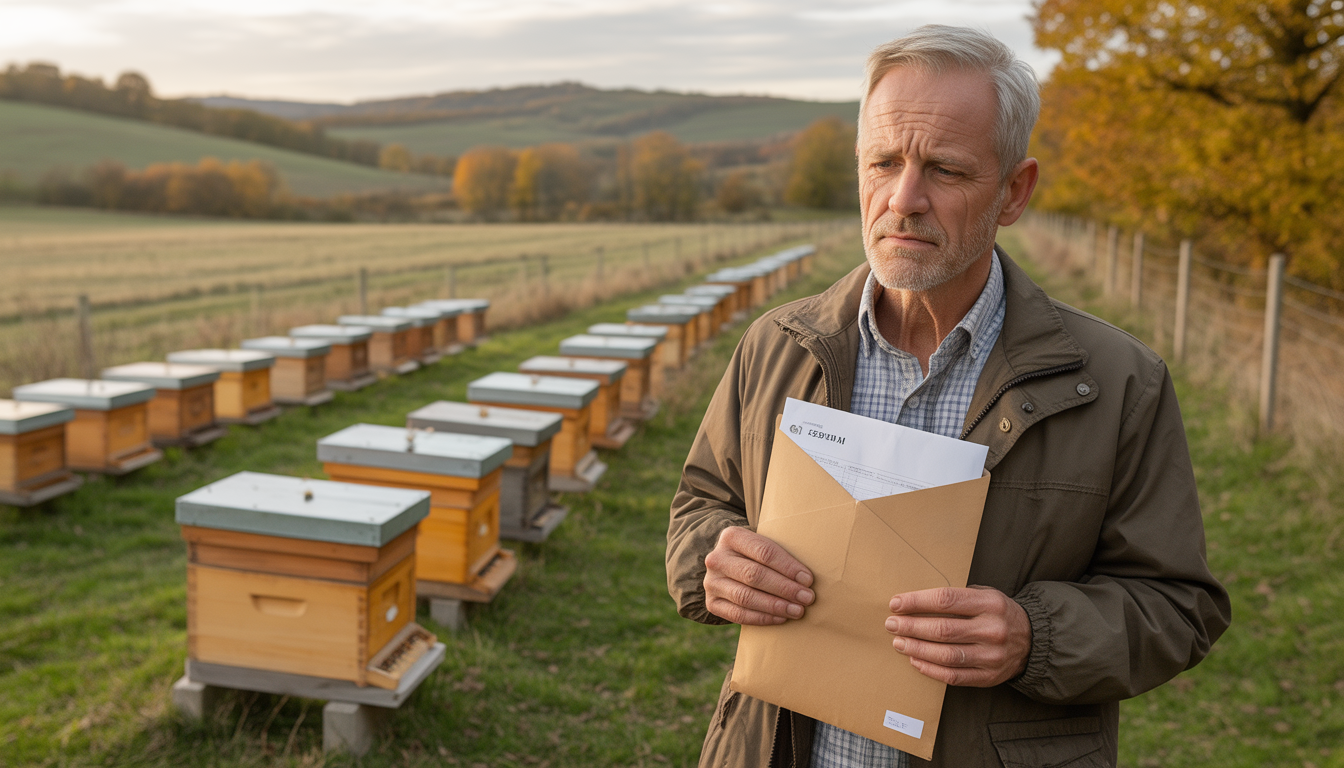
The old wooden gate creaks as Maurice walks along the edge of his quiet countryside plot. A few neatly aligned beehives hum softly in the autumn light. Years ago, when a young beekeeper from a nearby village asked to place his hives there, Maurice didn’t hesitate.
“It’ll help the bees. It’ll help the flowers. I’m not making any money from this,” he had said.
There was no contract. No rent. No paperwork. Just a handshake and the occasional jar of honey at Christmas.
For a retired man living on a fixed income, it felt like a harmless, even generous gesture. The land wasn’t being used for crops. It wasn’t farmed. It was simply there — quiet and unused.
Then came the letter.
Not a friendly reminder. Not a small note. But a formal notice from the tax office stating that his land had been reclassified. Because it was being used for agricultural purposes.
And farmland, even if you’re not the one farming it, can mean agricultural tax.
When “Helping Out” Becomes Agricultural Activity
Maurice’s confusion is easy to understand. Nothing about his land had physically changed. The soil was the same. The field looked the same. The beekeeper continued producing honey just as before.
The only thing that changed was how the administration viewed the situation.
From the tax authority’s perspective, the land was no longer idle. It was being used for professional agricultural activity. The fact that Maurice didn’t receive payment was irrelevant. What mattered was the use of the land, not the income of the owner.
This is where many landowners are caught off guard.
In legal and tax systems across many regions, classification depends on function. If a professional beekeeper operates hives as part of a registered agricultural business, the land supporting that activity may be considered agricultural land.
On paper, the reasoning seems straightforward. In reality, it feels deeply unfair to someone who simply wanted to help.
Why the Tax Office Looks at Use, Not Profit
One of the biggest misconceptions in cases like this is the belief that “no income means no tax consequences.”
Unfortunately, tax law rarely works that way.
Authorities often focus on:
- Whether the land is part of an economic activity
- Whether it supports agricultural production
- Whether it has shifted from private use to productive use
If a beekeeper declares honey production as a professional operation, the land where those hives are located can be considered part of that agricultural structure.
The landowner may not be selling honey. But the land is contributing to a business.
That distinction makes all the difference.
A Story That Divides Opinion
Maurice’s case has sparked debate among neighbors and retirees in similar situations.
Some argue that rules are rules. If the land is used for professional agriculture, then it should be taxed accordingly. Equal treatment ensures fairness.
Others see it as yet another example of bureaucracy clashing with rural solidarity. In many countryside communities, land is often lent informally. Farmers store hay on each other’s plots. Neighbors allow grazing. Beekeepers set up a few hives behind old barns.
These arrangements rarely involve contracts. They rely on trust.
When such gestures suddenly trigger administrative consequences, people feel betrayed — even if no one acted in bad faith.
How to Protect Yourself Before Lending Land
Maurice admits one thing openly now: “If I had known this could change my tax status, I would have asked more questions.”
That sentence holds the key lesson.
Before allowing hives, animals, or crops on your property, take time to clarify the implications.
1. Put the Agreement in Writing
Even a simple document signed by both parties can help. It doesn’t need to be complex or drafted by a lawyer.
Include:
- Who is responsible for declarations
- Who handles tax implications
- What happens if land classification changes
While the owner remains legally responsible for property tax matters, a written agreement can allow reimbursement arrangements if needed.
2. Check the Land’s Official Classification
Consult local land registry or cadastre records. Ask whether hosting professional activity could trigger reclassification.
A short appointment at the tax office before saying “yes” can prevent a costly surprise later.
Ask directly:
“Will this change my land’s tax status?”
Even if the answer isn’t perfectly clear, documenting the conversation can provide protection in case of dispute.
3. Don’t Rely on Informal Assumptions
Many landowners assume:
- It’s just a few hives.
- It’s too small for authorities to notice.
- No income means no issue.
But sometimes reclassification happens because:
- The beekeeper declares hive locations.
- Satellite or drone mapping updates land use records.
- Administrative data cross-references occur.
Modern tax systems are more interconnected than ever.
What To Do If You Receive a Tax Bill
If you find yourself in Maurice’s position:
- Keep the original envelope and note the date.
- Review deadlines carefully.
- File a written contestation if you disagree.
- Attach any agreements with the beekeeper.
- Request a detailed explanation of how the amount was calculated.
Even if the bill is legally justified, clarification can sometimes adjust the assessment or allow phased payment.
The Bigger Question: Will Generosity Become Risky?
Beyond legal technicalities, this story raises a broader concern.
If every informal rural favor carries potential administrative consequences, will people stop helping each other?
Beekeeping supports biodiversity. Pollination benefits nearby gardens and fields. Many retirees take pride in contributing quietly to local ecosystems.
If fear of tax complications replaces trust, small cooperative networks may weaken.
The debate isn’t simply about taxation. It’s about how systems interpret everyday generosity.
Key Lessons From Maurice’s Experience
| Key Point | Detail | Value for Landowners |
|---|---|---|
| Clarify land use | Professional activity can trigger reclassification | Avoid unexpected tax bills |
| Write simple agreements | Define responsibilities clearly | Protection in disputes |
| Consult tax office early | Ask about potential status change | Make informed decisions |
| Keep documentation | Save letters and communications | Strengthen contestations |
Frequently Asked Questions
Can I be taxed even if I don’t earn money from the beekeeper?
Yes. Tax authorities often evaluate how land is used rather than whether you personally profit from it.
Does a verbal agreement protect me?
Not effectively. A written agreement offers clearer proof if disputes arise.
Can the beekeeper reimburse me for the tax?
Yes, if you agree privately and put it in writing. Legally, the owner remains responsible, but reimbursement can be arranged.
Will one or two hives always trigger reclassification?
Not necessarily. It depends on local regulations and whether the beekeeper operates professionally.
What’s the safest first step?
Before allowing installation, consult your local tax authority and document the conversation.