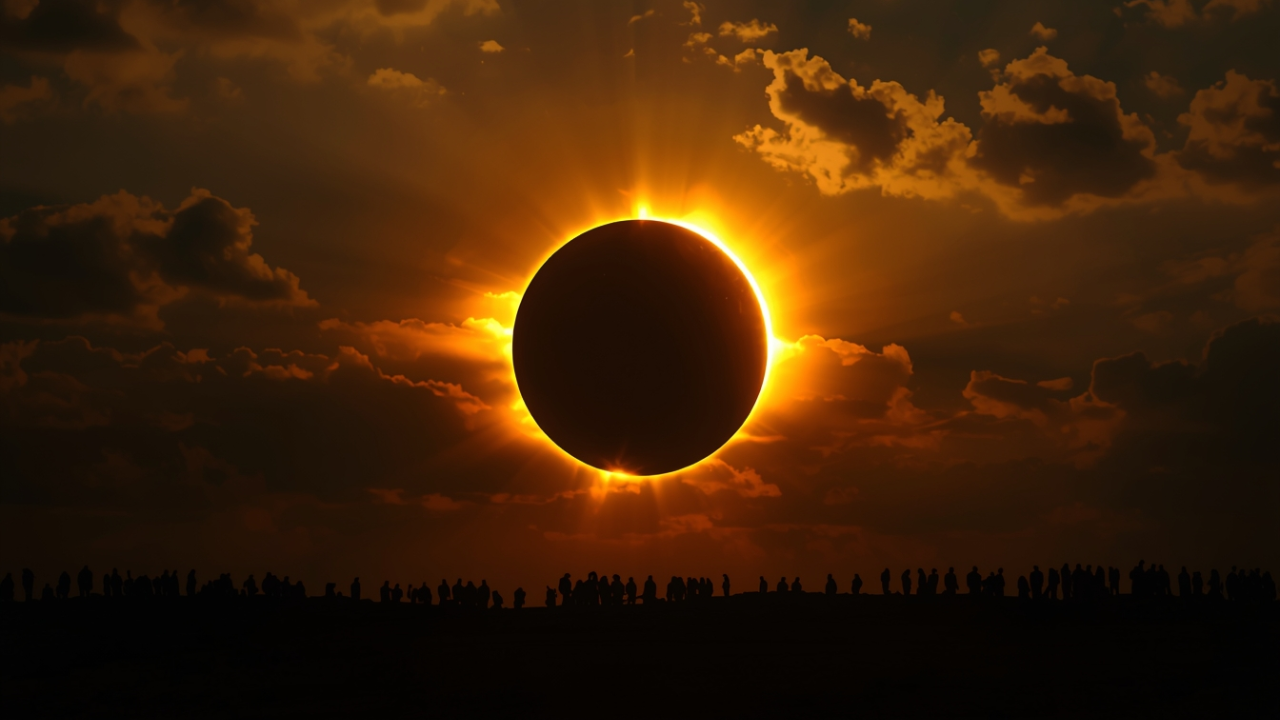
Astronomers have officially confirmed the date of what is being called the longest total solar eclipse of the 21st century, an extraordinary cosmic event that will briefly turn day into night across several parts of the world.
On August 2, 2027, the Moon will align perfectly between Earth and the Sun, blocking sunlight completely for several minutes. During this rare event, skies will darken dramatically, temperatures may drop, and wildlife behavior could temporarily change as nature responds to sudden darkness.
Experts believe this eclipse will be remembered as one of the most significant astronomical events of this century due to its unusually long duration and wide visibility path.
When and Where Will the Longest Solar Eclipse Occur?
Astronomical calculations confirm that the eclipse will occur on August 2, 2027, with total darkness lasting up to 6 minutes and 23 seconds at peak locations. This is significantly longer than most total solar eclipses, which typically last between two and three minutes.
Regions Inside the Path of Totality:
- Southern Spain
- Mediterranean coastal regions
- Morocco, Algeria, Tunisia, and Libya
- Egypt, including the Luxor region
- Parts of the Middle East and Arabian Peninsula
Observers located within this narrow geographic band will experience complete solar coverage, while nearby regions will witness only partial eclipses.
Why the 2027 Solar Eclipse Will Last So Long
The exceptional length of this eclipse is due to a nearly perfect astronomical alignment involving the Earth, Moon, and Sun.
Key Scientific Factors Behind the Extended Eclipse:
1. Moon’s Position Near Earth
The Moon will be near perigee, meaning it will appear slightly larger in the sky, allowing it to cover more of the Sun.
2. Earth’s Position Relative to the Sun
During this time, Earth will be near aphelion, its farthest point from the Sun, making the Sun appear slightly smaller from Earth.
3. Favorable Geographic Path
The eclipse path passes through regions known for clear summer skies, increasing the chances of unobstructed viewing.
This rare combination significantly extends the duration of totality, making the 2027 eclipse one of the longest observed in modern history.
What Happens During a Total Solar Eclipse?
A total solar eclipse creates dramatic environmental and visual changes that can be both scientifically fascinating and emotionally unforgettable.
Phenomena Observed During Totality:
- The Sun’s outer atmosphere, known as the corona, becomes visible
- Daylight fades into twilight conditions
- Stars and planets may become visible in the daytime sky
- Temperatures may drop suddenly
- Animals and birds often react as if night has arrived
Many astronomers describe witnessing totality as a deeply transformative experience, combining scientific wonder with emotional impact.
Why This Eclipse Matters to Scientists and Skywatchers
Solar eclipses provide rare opportunities for researchers to study solar activity and atmospheric behavior. The 2027 eclipse’s extended duration will allow scientists more time to analyze the Sun’s corona, solar magnetic fields, and plasma activity.
Additionally, eclipse events often inspire public interest in astronomy and science education. Many professional astronomers credit witnessing a solar eclipse as a key influence in their scientific careers.
Travel and Tourism Impact of the 2027 Eclipse
Experts predict that the 2027 solar eclipse will trigger massive global travel interest. Regions located directly within the path of totality are already preparing for increased tourism.
Popular destinations expected to attract large crowds include southern Spain and Egypt’s historic Luxor region, where visitors will experience the eclipse against the backdrop of ancient monuments.
Travel Planning Tips:
- Book accommodation and transportation early
- Choose locations slightly outside major tourist hubs
- Arrive at least one to two days before the eclipse
- Identify backup viewing locations in case of weather disruptions
- Carry essential viewing gear and protective equipment
Past eclipse events have caused hotel shortages, transportation congestion, and increased travel costs, making early planning essential.
Safety Guidelines for Watching the Solar Eclipse
Although solar eclipses are safe to observe during totality, improper viewing during partial phases can cause severe eye damage.
Safe Viewing Tips:
- Use certified solar eclipse glasses during partial phases
- Avoid looking directly at the Sun without protection
- Remove protective eyewear only during full totality
- Use indirect viewing methods such as pinhole projection
- Avoid relying solely on cameras or phones for viewing
Safety experts emphasize that eye protection is essential before and after the brief totality window.
Emotional and Cultural Significance of Solar Eclipses
Throughout history, solar eclipses have held cultural, spiritual, and scientific significance across civilizations. Ancient societies often associated eclipses with divine or cosmic events.
Today, eclipses continue to unite people worldwide, offering a shared moment of awe and reflection. Observers frequently describe the experience as a reminder of humanity’s connection to the universe.
Key Eclipse Highlights
| Key Point | Details | Reader Benefit |
|---|---|---|
| Eclipse Date | August 2, 2027 | Helps long-term planning |
| Totality Duration | Up to 6 minutes 23 seconds | Highlights rarity of event |
| Visibility Path | Spain, North Africa, Middle East | Identifies best viewing locations |
| Scientific Importance | Extended solar research opportunities | Explains research value |
| Viewing Preparation | Travel planning and safety guidelines | Ensures safe eclipse experience |
Frequently Asked Questions (FAQs)
1. Where will the 2027 solar eclipse be fully visible?
The path of totality includes southern Spain, North Africa, Egypt, and parts of the Middle East. Areas outside this path will only see partial coverage.
2. Why is this eclipse called the longest of the century?
The unique alignment of Earth, Moon, and Sun allows totality to last over six minutes, which is unusually long compared to most eclipses.
3. Is it safe to look directly at the eclipse?
It is safe only during the brief totality phase when the Sun is completely blocked. Proper solar viewing glasses must be used during partial phases.
4. When should I start planning to watch the eclipse?
Experts recommend planning travel arrangements several years in advance, especially for popular viewing destinations.
5. What if clouds block the eclipse view?
Even if clouds reduce visibility, observers may still experience darkness, temperature changes, and environmental effects during totality.
Conclusion
The total solar eclipse of August 2, 2027, represents one of the most extraordinary celestial events of this century. Its extended duration and wide visibility range make it a rare opportunity for both scientific discovery and public fascination.
As millions of people prepare to witness the Moon temporarily block the Sun, the event will serve as a powerful reminder of the universe’s precision and beauty. Whether viewed for scientific curiosity, travel adventure, or personal reflection, the 2027 eclipse promises to be an unforgettable global experience.