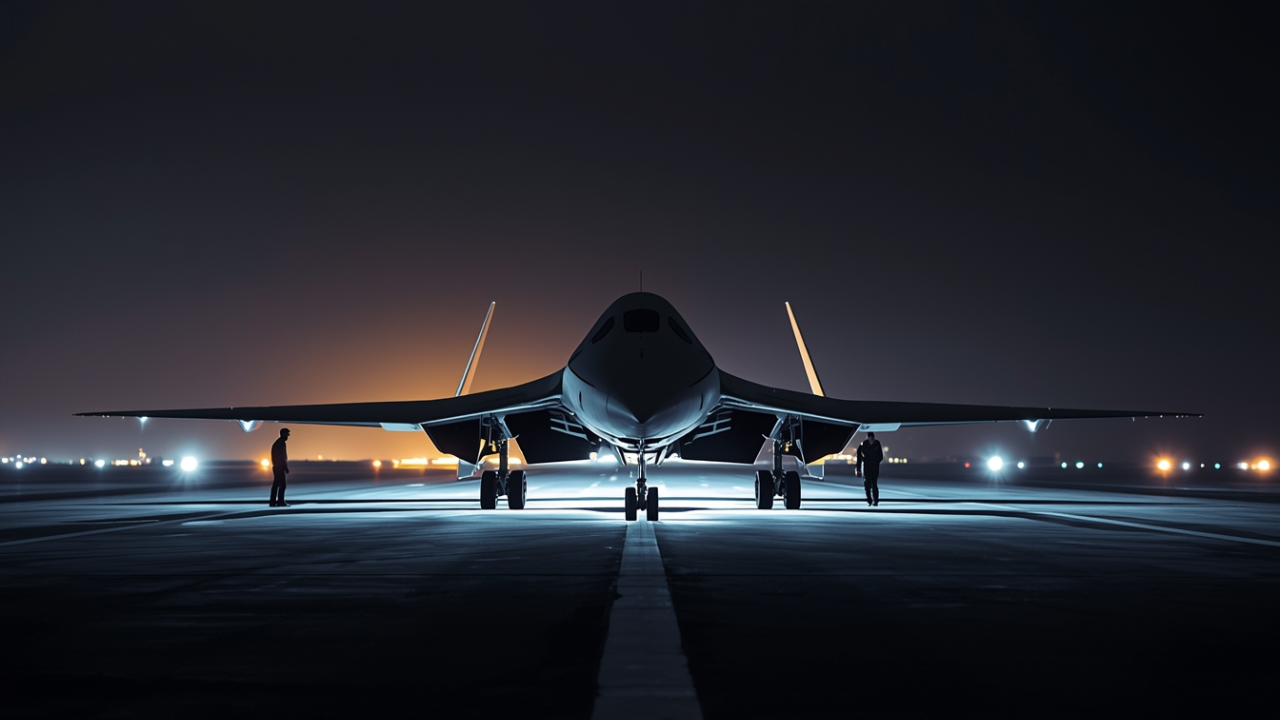
Under floodlights on a wind-swept runway somewhere in the English-speaking world, a shape rests that looks less like an aircraft and more like a promise.
Long. Needle-nosed. Almost unreal.
Technicians in high-visibility jackets move around it carefully, their breath fogging in the cold as hydrogen symbols glow faintly on its composite skin. Phones are raised. Someone laughs, a little too loudly. Another person just stands still, arms folded, watching.
Then the announcement comes through the speakers.
Altitude. Thermal envelope. Projected top speed.
24,501 kilometres per hour.
For a moment, the number doesn’t land. It sounds like a mistake — until it doesn’t.
Nobody says it out loud, but the thought is shared by everyone present:
This time, we’re not coming second.
Hypersonic hydrogen: when speed stops feeling real
To understand what 24,501 km/h means, your brain needs a reference reset.
That’s roughly Mach 20 — about twenty times faster than a long-haul passenger jet. At that velocity, distances collapse. Journeys once measured in days shrink to hours. Continents become neighbours.
Now add the part that really changes the story:
this speed isn’t driven by kerosene, but by liquid hydrogen.
Cleaner exhaust. Cryogenic fuel systems. Entirely new thermal challenges. And a geopolitical signal wrapped in climate language.
An Anglo-Saxon power has stepped forward and said, quietly but unmistakably:
we’re done watching from the sidelines.
A decade of failures hiding behind one perfect test
What looks like a sudden breakthrough is anything but.
Behind this debut lies more than ten years of stalled programs, burned-out prototypes, funding gaps, and engineers who kept going long after the headlines moved on. Early test vehicles reportedly failed seconds after ignition. Others survived long enough to teach brutal lessons about heat, airflow, and material limits.
This demonstrator is different.
According to sources close to the program, it completed a full-profile flight:
- Conventional take-off and climb
- Transition to hydrogen-powered hypersonic mode
- Sustained cruise in the upper atmosphere
- Controlled, high-energy re-entry tracked by multiple international sensors
At these speeds, success isn’t quiet. Satellites notice.
Why hypersonic speed changes everything
Hypersonic flight doesn’t just make things faster — it rewrites geography.
If an aircraft can reach any point on Earth in under two hours, the concept of “far away” stops meaning what it used to. Military planners know this. So do politicians. So do industries that move people, data, and high-value cargo.
Hydrogen adds a second, carefully chosen layer to the message.
While today’s hydrogen is not always green, the direction is clear: this nation wants to own the narrative where strategic dominance and future-facing energy sit side by side.
It’s power projection with a sustainability accent.
How you even build something like this
The unglamorous truth of hypersonic hydrogen flight is simple:
Your fuel wants to escape.
Your airframe wants to melt.
Engineers solved this by rethinking everything:
- Cryogenic hydrogen tanks buried deep inside the fuselage, wrapped in multi-layer insulation
- Air intakes sculpted to control shock waves, tuned millimetre by millimetre in extreme wind tunnels
- Multi-mode propulsion: turbines for take-off, combined-cycle engines to climb, then hydrogen-fed scramjets that burn air rushing in at supersonic speed
At Mach 20, air behaves less like a gas and more like plasma. Leading edges glow. Shock waves stack. Any shortcut is punished instantly.
That’s why this project isn’t just an aircraft — it’s an ecosystem: new alloys, ceramic-matrix composites, predictive software that models airflow physics once considered unknowable.
Only a handful of nations can even attempt this.
The human moments inside the machine
What sticks with people involved aren’t just the numbers.
One engineer keeps a charred fragment of composite pinned above their desk — a reminder of a Mach-5 test that failed spectacularly. Another recalls watching a simulation where cabin walls reached oven-level temperatures in under two minutes, forcing a full redesign overnight.
A flight test officer describes the first live hydrogen load: frost crawling across pipes, the hiss of ultra-cold fuel, the collective silence as everyone realised theory had just become reality.
No matter how advanced the software, there’s always that moment when you’re standing metres away from a vehicle that could become history — or debris.
What this means for future flights (and your news feed)
Officially, this is a military demonstrator.
Unofficially, design teams are already sketching what comes next: high-speed cargo platforms, elite government transport, and eventually niche civilian aircraft — perhaps 20–30 seats, point-to-point, under 90 minutes between major hubs.
The path will be gradual:
uncrewed → classified crewed → tightly controlled corridors → limited commercial use.
People will react differently.
Some will imagine breakfast meetings across oceans. Others will fixate on the words hypersonic and military and feel uneasy. Both reactions are valid.
This isn’t just a faster plane. It bends air-traffic rules, border logic, climate debates, and public tolerance for risk.
A nation refusing the back seat
Strip away the technical language, and the subtext is loud.
An Anglo-Saxon nation often described as “past its peak” has arrived with a machine that says otherwise. You don’t invest billions into hydrogen hypersonics if your ambition is managed decline.
This jet is confidence turned into metal and fire.
Every era has its symbol: ocean liners, Concorde, reusable rockets. This one is a hydrogen-breathing spear crossing continents faster than politics can keep up.
Whether it becomes a rare strategic weapon or the ancestor of future civilian flight, its impact is already real. It will shape defence planning, research funding, climate arguments, and how the next generation defines “normal” travel.
The question now isn’t just how fast we can go.
It’s who decides the speed — and who’s left watching the contrail fade into the stratosphere.
Key Takeaways
| Point | Detail | Why it matters |
|---|---|---|
| Hypersonic benchmark | 24,501 km/h (≈Mach 20) using hydrogen propulsion | Redefines global distance and response times |
| Technology shift | Scramjets, cryogenic fuel, extreme thermal protection | Shows this is a full ecosystem, not just faster engines |
| Strategic impact | Military now, potential civilian later | Affects future travel, defence, and geopolitics |
FAQ
How fast is 24,501 km/h compared to normal jets?
Around twenty times faster than long-haul airliners cruising near 900 km/h.
Is hydrogen really cleaner at hypersonic speeds?
There’s no CO₂ at the exhaust, but climate impact depends on hydrogen production and high-altitude water vapour effects.
Could civilians ever fly on this?
Possibly — first for government or ultra-premium routes, much later for limited commercial use.
Is this mainly military?
Yes, for now. Civilian potential often follows military breakthroughs.
Which nation is behind it?
The announcement avoids naming specifics, but countries like the US, UK, and Australia are all deeply invested in hydrogen and hypersonic programs, often together.