It starts the same way in most homes: you open the freezer, and a wall of frozen chaos stares back. Half-open bags. Frosted containers with mystery contents. A loaf of bread so icy it could double as a paperweight.
You’re looking for something specific — chicken you froze “just last week” — but everything is stuck together in one anonymous block.
Then you spot it.
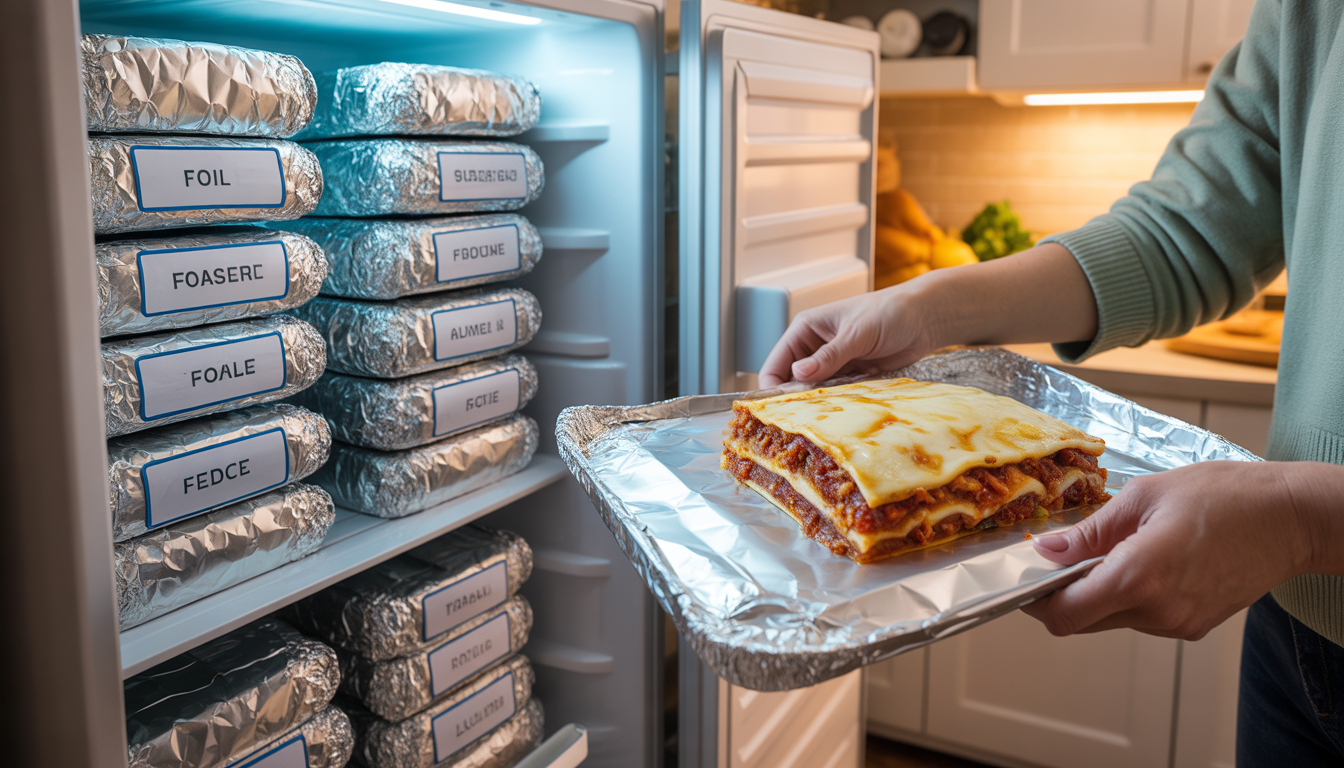
A neat, silver parcel. Tightly wrapped. Labeled with a date. You open it and find perfectly preserved lasagna: no ice crystals, no freezer smell, no dry edges.
That small silver packet feels like a win.
And it’s not luck.
More and more families are rediscovering aluminum foil as a serious freezer strategy — not just a quick wrap, but a method.
Why Aluminum Foil Works So Well in the Freezer
Frozen food doesn’t just need cold. It needs protection from air, moisture, light, and time.
Freezer burn isn’t mysterious. It happens when moisture escapes from food and forms ice crystals on the surface. The culprit? Air exposure.
Aluminum foil acts like a protective metal shield. When wrapped tightly, it:
- Blocks light
- Reduces air contact
- Limits odor transfer
- Slows moisture loss
Unlike loose plastic bags that leave pockets of air, foil can be pressed closely around food. The tighter the contact, the better the protection.
The magic isn’t just the foil itself — it’s how you use it.
The Science Behind the “Silver Packet” Effect
Aluminum foil is naturally impermeable to light and gases. That makes it particularly effective at preventing the drying process that leads to freezer burn.
Think about bread.
Wrapped loosely in a thin plastic bag, it dries out and develops that stale “freezer taste.” Wrapped tightly in foil, then placed inside a secondary bag or container, it keeps its softness far longer.
The principle is simple: less air, fewer ice crystals, better texture.
Families who batch cook are especially embracing this method. Instead of freezing entire casseroles in large dishes, they’re portioning meals into individual servings, wrapping them tightly in foil, and grouping them in labeled containers.
It’s organized. It’s practical. And it works.
How to Wrap Food Correctly in Foil for Freezing
The technique matters more than the material.
Here’s the right way to do it:
- Cool food completely first.
Wrapping warm food traps steam, which turns into ice and damages texture. - Place the food in the center of the foil.
Use a large enough sheet to fully cover it. - Fold tightly around the food.
Press the foil gently along contours to eliminate air pockets. - Seal edges securely.
Fold edges over at least twice to prevent gaps. - Add a second barrier if possible.
Place the wrapped item inside a freezer bag or airtight container. - Label and date clearly.
A simple marker or tape avoids future “mystery bricks.”
Flat portions freeze faster and defrost more evenly — a hidden time-saver on busy nights.
Common Mistakes to Avoid
Even good foil habits can fail if you overlook details.
Wrapping While Food Is Warm
This creates condensation inside the foil. The moisture turns into ice, leading to soggy results after defrosting.
Leaving Air Gaps
Loose wrapping defeats the purpose. Air is the enemy.
Using Foil Alone for Long-Term Storage
Foil can tear, especially with sharp bones or hard edges. Adding a second layer (bag or box) prevents punctures and odor exchange.
Forgetting to Label
Without dates, your freezer becomes a guessing game.
No one gets it perfect every time. But even using this method for your most important meals makes a noticeable difference.
Best Foods to Freeze in Foil
Foil works especially well for:
- Lasagna and casseroles
- Quiches
- Bread and baguettes
- Tortillas
- Pizza slices
- Cooked meats
- Grated cheese
- Cookies and unfrosted cakes
Foods That Need Extra Protection
Raw fish and fatty meats benefit from foil plus a freezer bag to reduce odor transfer and preserve texture.
Foods to Avoid Wrapping in Foil Alone
Highly acidic items (like tomato-heavy sauces or citrus) should be stored in glass or plastic containers first, with foil as a secondary wrap if needed.
The Double-Protection Strategy
Many families now use a simple combo method:
- Wrap tightly in foil.
- Group similar items in a labeled box inside the freezer.
For example:
- “Lunch portions”
- “Kids’ snacks”
- “Bread & breakfast”
This prevents the chaotic pile-up that leads to forgotten food and waste.
The result isn’t just better preservation — it’s a calmer freezer.
How This Small Habit Changes Everyday Life
Over time, the impact goes beyond food texture.
A freezer filled with neat silver parcels feels different. It feels intentional.
When you’re exhausted after work and tempted to order takeout, you remember that carefully wrapped meal waiting behind the peas. You take it out, reheat it, and eat something you prepared on a calmer day.
That silver packet becomes a small promise to your future self.
It protects:
- Your food
- Your budget
- Your time
- Your mental load
It’s not flashy. It won’t trend as a dramatic “life hack.” But families who adopt it often stick with it, tweaking their own system and sharing it quietly with friends.
Sometimes the most satisfying improvements are the least glamorous.
Key Points
| Key Point | Detail | Benefit |
|---|---|---|
| Tight wrapping reduces air exposure | Press foil closely around food | Less freezer burn, better texture |
| Double-layer protection works best | Add bag or container | Prevents tears and odor transfer |
| Portion smartly | Freeze in individual servings | Faster defrosting, less waste |
| Cool before wrapping | Avoid trapped steam | Prevents ice buildup |
FAQ
Can I freeze raw meat directly in aluminum foil?
Yes, if wrapped tightly and ideally placed inside a freezer bag or container to prevent tearing and odor transfer.
How long does foil-wrapped food last in the freezer?
For best quality:
- Cooked dishes and baked goods: 2–3 months
- Meats: up to 6 months
Beyond that, safety is usually fine, but texture and flavor decline.
Can I cook food straight from frozen foil?
Yes, for oven-safe foods. Place the foil pack on a tray and adjust cooking time. Make sure no plastic is attached.
Does it matter which side of the foil touches the food?
Not for freezing. The tightness of the wrap matters far more than shiny vs. dull side.
Can foil be reused?
Clean, undamaged foil can be reused for dry items like bread. For raw meats or strongly flavored foods, fresh foil is safer.