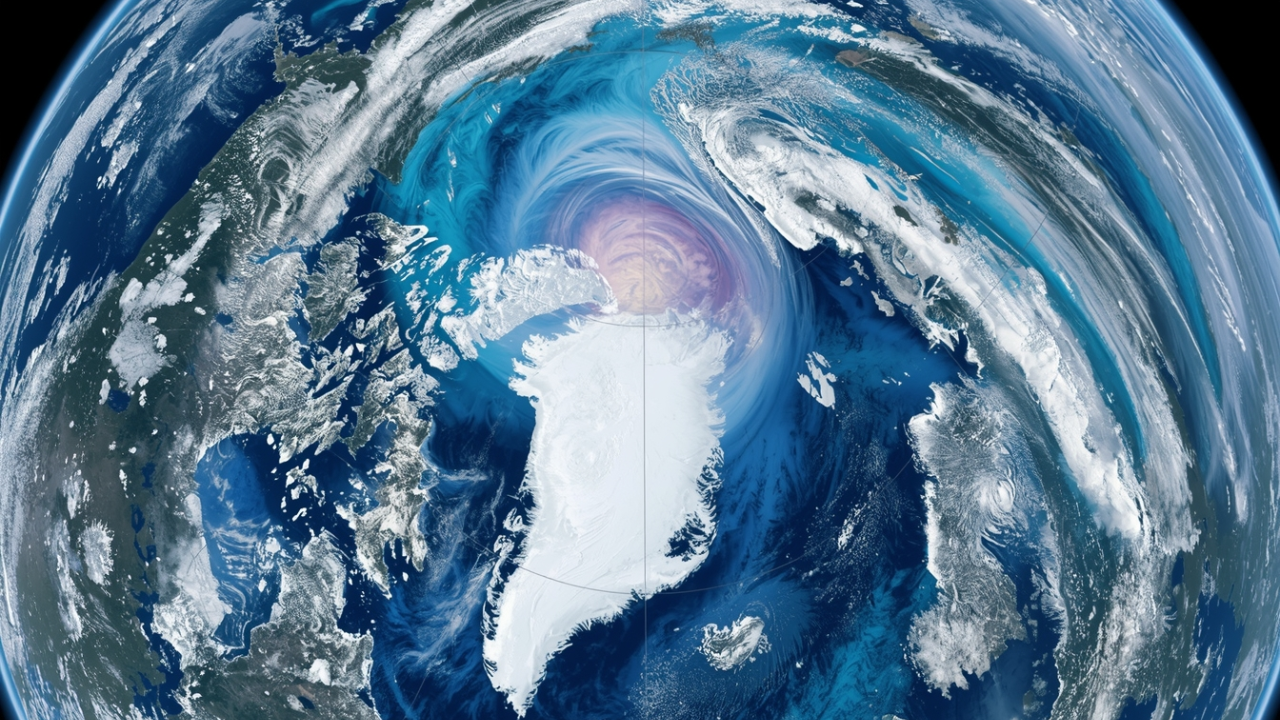
Weather experts worldwide are raising concerns after detecting an unusually strong polar vortex anomaly developing over the Arctic. While polar vortices are a normal winter phenomenon, scientists say the intensity and timing of this event are highly unusual for February.
Normally, by late winter, the polar vortex begins weakening as sunlight gradually returns to the Arctic. However, recent meteorological data shows the opposite pattern—stronger winds, colder upper atmospheric temperatures, and increased stability around the North Pole.
This unexpected strengthening could influence extreme weather patterns across Europe, North America, and parts of Asia. More importantly, it highlights how global climate systems are becoming increasingly unpredictable.
What Is a Polar Vortex?
The polar vortex is a large circular system of cold air and strong winds that rotates around the Earth’s poles. It forms high in the atmosphere, specifically in the stratosphere, approximately 15 to 50 kilometers above the surface.
During winter, the Arctic receives little sunlight, causing temperatures to drop dramatically. This creates a strong temperature contrast between the pole and lower latitudes. That contrast drives powerful winds that trap cold air near the Arctic.
When the vortex remains strong and stable, freezing air stays confined near the pole. However, when the vortex weakens or shifts, cold air can spill southward, causing severe winter weather.
Why This February Polar Vortex Is Unusual
Meteorologists are concerned because the vortex is behaving opposite to normal seasonal patterns. Instead of weakening as winter ends, high-altitude winds have intensified, exceeding speeds of 200 kilometers per hour in some regions.
This level of intensity is typically associated with peak winter months like January rather than late February. Satellite models also show extremely low temperatures in the stratosphere, forming a tightly compressed ring of cold air over the Arctic.
Scientists describe this phenomenon as a “vortex strengthening anomaly,” meaning the atmospheric system is operating outside its expected seasonal cycle.
The Science Behind the Strengthening Vortex
The polar vortex relies on a balance between cold Arctic air and comparatively warmer air further south. When that contrast remains sharp, the vortex spins faster and becomes stronger.
Several factors are currently contributing to this intensified vortex:
1. Persistent Arctic Cold
Large snow-covered regions reflect sunlight and maintain freezing temperatures. These cold surfaces help sustain the vortex’s strength.
2. Reduced Solar Heating
Despite increasing daylight hours, Arctic sunlight remains limited during February, allowing cold air to remain dominant.
3. Ocean and Atmospheric Patterns
Changes in Pacific and Atlantic Ocean temperature patterns influence jet stream behavior, which can reinforce vortex strength.
Together, these elements create a powerful and unusually stable cold air system over the North Pole.
How the Polar Vortex Affects Global Weather
A strong polar vortex does not always mean extreme cold everywhere. Instead, it creates a highly energized atmospheric system. If disturbances occur in the jet stream—the high-altitude air current controlling weather movement—cold Arctic air can rapidly move southward.
This process often results in sudden cold waves, heavy snowfall, and severe winter storms.
Potential Weather Impacts Include:
- Rapid temperature drops
- Snowstorms and blizzards
- Freezing rain and black ice
- Increased energy demand
- Transportation disruptions
Weather models currently suggest that parts of North America and Europe could experience temperature swings of 10 to 20 degrees Celsius within a few days if vortex fragments move southward.
The Role of the Jet Stream
The jet stream acts as a boundary between cold Arctic air and warmer southern air. When the polar vortex strengthens, it often tightens and accelerates the jet stream.
However, if the jet stream develops large waves or bends, sections of cold air can escape and travel into lower latitudes. These escaped cold regions are called “vortex lobes.”
These lobes are responsible for sudden extreme weather outbreaks, such as record-breaking cold spells or severe winter storms.
Climate Change and Polar Vortex Behavior
Scientists remain cautious about linking individual vortex events directly to climate change. However, long-term research suggests that warming Arctic temperatures may be influencing polar vortex stability.
The Arctic is warming faster than most parts of the planet. This reduces the temperature difference between polar and mid-latitude regions, which can disrupt atmospheric circulation patterns.
Some climate studies indicate that this warming may lead to:
- More frequent vortex disruptions
- Increased temperature fluctuations
- Greater weather unpredictability
- Irregular seasonal transitions
Instead of steady winters, regions may experience sudden swings between mild temperatures and extreme cold.
Why February Vortex Strengthening Is Concerning
Late winter vortex intensification challenges traditional seasonal weather expectations. February historically marks the gradual transition toward spring. Strong vortex activity during this period can delay seasonal warming and extend severe winter conditions.
This unexpected timing can create practical challenges such as:
Energy System Pressure
Heating demand can surge when temperatures suddenly drop after mild weather periods.
Infrastructure Stress
Pipelines, roads, and transportation systems may not be prepared for sudden freezing conditions.
Agricultural Impacts
Crops and livestock exposed to fluctuating temperatures face increased risk.
Public Safety Concerns
Rapid weather changes can increase accidents related to ice, snow, and extreme cold exposure.
How People Can Prepare for Polar Vortex Weather
Since polar vortex events create unpredictable cold waves, experts recommend focusing on short-term weather planning rather than relying on long-range forecasts.
Practical Safety Tips:
- Monitor 3 to 5-day weather forecasts regularly
- Maintain winter clothing and emergency kits
- Protect pipes and heating systems from freezing
- Keep vehicles prepared for snow and ice conditions
- Check on elderly or vulnerable individuals during cold waves
Flexibility is essential because weather conditions can change rapidly when polar vortex disturbances occur.
The Growing Pattern of Erratic Winters
Recent meteorological data shows that winter patterns are becoming less predictable globally. Some years bring unusually mild conditions, while others deliver sudden extreme cold periods.
Scientists describe modern winter behavior as increasingly variable rather than steadily changing. This means regions may experience alternating weather extremes rather than gradual seasonal shifts.
Such variability affects transportation, energy planning, agriculture, and public health systems worldwide.
What Researchers Are Studying Next
Meteorologists and climate scientists are closely monitoring this polar vortex anomaly to better understand its long-term implications.
Future research focuses on:
- Improved forecasting models
- Arctic temperature monitoring
- Jet stream behavior analysis
- Climate pattern prediction accuracy
Advances in satellite data and atmospheric modeling may help predict vortex disturbances earlier, allowing governments and communities to prepare more effectively.
The Human Side of Extreme Winter Patterns
Beyond scientific data, unusual winter events affect daily life in unexpected ways. Sudden cold waves influence travel plans, energy costs, work schedules, and emotional well-being.
Communities often respond by adapting habits, strengthening emergency planning, and paying closer attention to weather forecasts. These behavioral changes reflect how climate variability is reshaping daily routines around the world.
Conclusion
The developing polar vortex anomaly highlights how Earth’s atmospheric systems are becoming more dynamic and less predictable. Although polar vortices are natural winter features, the intensity and timing of this February event stand out as unusual.
While it may not guarantee extreme cold everywhere, it increases the likelihood of sudden weather swings and severe winter outbreaks. Scientists continue studying the relationship between Arctic warming and polar vortex behavior to better understand future climate risks.
For now, staying informed, prepared, and adaptable remains the best strategy for navigating an increasingly unpredictable winter climate.