For decades, it operated quietly, far from the public spotlight. Today, this Dutch company stands at the very center of the global technology ecosystem. By investing early in a technology that many believed was nearly impossible to make commercially viable, ASML Holding took one of the biggest technological gambles in modern industrial history.
That risk paid off.
Without ASML, the most advanced chips powering today’s smartphones, data centers, and artificial intelligence systems simply would not exist.
The Silent Powerhouse in Veldhoven
Headquartered in Veldhoven, ASML may not be a household name, but it holds something far more valuable than brand recognition: a near-total monopoly on the world’s most advanced chipmaking machines.
Specifically, ASML is the only company on Earth capable of producing Extreme Ultraviolet (EUV) lithography machines — the technology required to manufacture semiconductors at 7 nanometers and below.
These machines are the backbone of modern computing.
Why Taiwan — and the World — Depends on ASML
To understand ASML’s global importance, look at Taiwan.
Taiwan dominates advanced semiconductor manufacturing through companies like TSMC, whose foundries produce chips at 5nm, 3nm, and now 2nm process nodes.
TSMC’s clients include:
- Apple (iPhones and Macs)
- Nvidia (AI accelerators and GPUs)
- Qualcomm
- AMD
- MediaTek
- Intel
Every single one of these companies depends — directly or indirectly — on ASML’s machines.
Without ASML, there are no cutting-edge processors. No flagship smartphones. No advanced AI training clusters. No next-generation GPUs.
The Race to Extreme Ultraviolet
Photolithography is the process used to etch microscopic transistor patterns onto silicon wafers. The shorter the wavelength of light used, the smaller and more powerful chips can become.
Early machines used mercury vapor lamps emitting 436 nanometer light. Over time, this was reduced to 365 nanometers.
ASML took it further.
EUV technology uses a wavelength of just 13.5 nanometers, generated by a tin-based plasma source. That reduction unlocks an entirely new level of transistor density — enabling today’s ultra-powerful processors.
But EUV was once considered nearly impossible.
Decades of Doubt — and Billions in Investment
Founded in 1984 by ASM International and Philips, ASML initially lagged behind Japanese competitors like Nikon and Canon.
In the 1990s, ASML made a bold strategic choice: pursue EUV lithography.
The industry was skeptical. Many believed the physics were impractical. The engineering challenges were enormous:
- EUV systems must operate in a vacuum.
- Even air absorbs ultraviolet light at 13.5 nm.
- A single speck of dust can disrupt the entire process.
- Mirrors must be atomically smooth.
- Plasma sources must fire tens of thousands of times per second.
ASML built early prototypes in 2006. But it wasn’t until 2019 that the first consumer devices using EUV-produced chips reached the market — including Samsung’s Galaxy Note 10 series.
More than 20 years of research and billions of euros later, the gamble worked.
The $380 Million Machines
Today, ASML’s most advanced High-NA EUV system — the Twinscan EXE 5000 — costs roughly $380 million per unit.
These machines are:
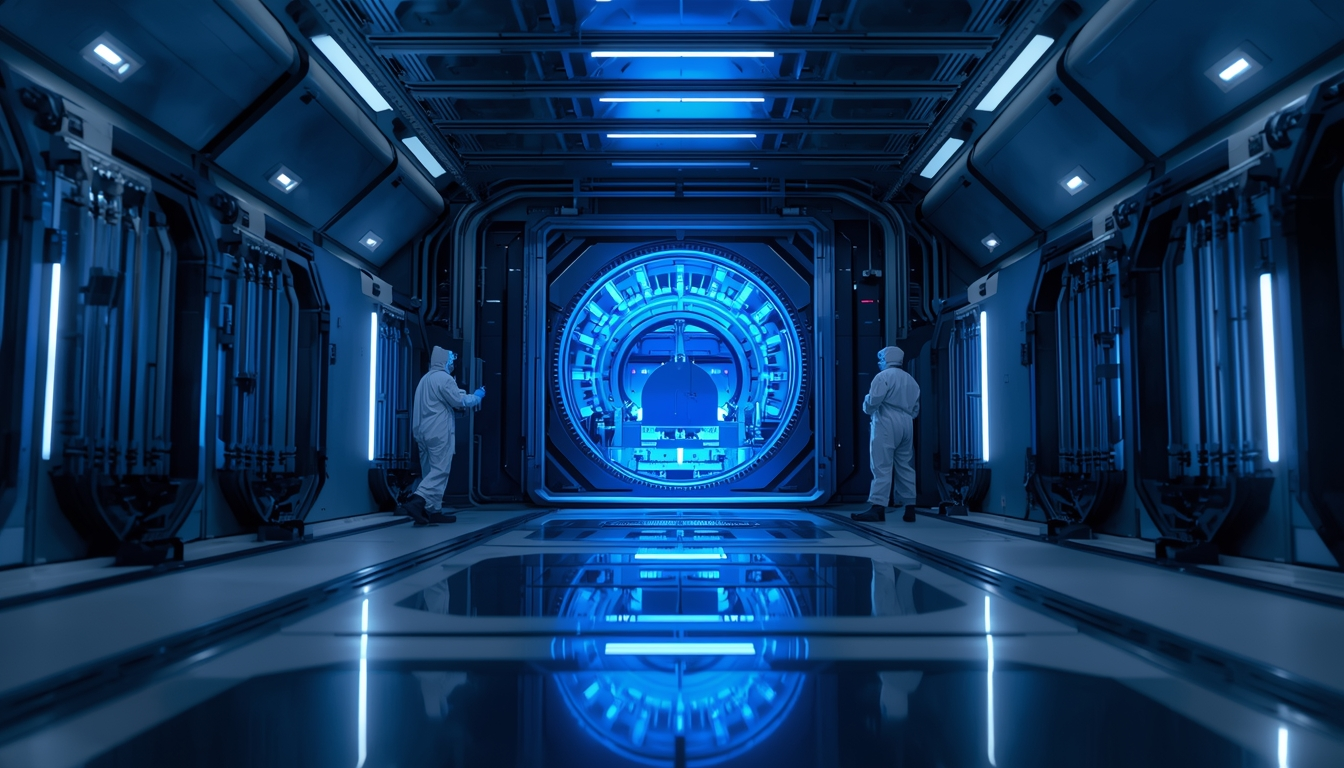
- The size of a bus
- Composed of over 100,000 precision parts
- Assembled from global supply chains
- Delivered in hundreds of crates
Only a handful of companies in the world can even afford them.
And no competitor currently matches ASML’s capability.
A Strategic Monopoly in a Geopolitical Storm
ASML now sits at the center of global geopolitical tensions.
- Western governments have imposed export controls limiting advanced machine sales to China.
- The United States and Europe are racing to expand domestic semiconductor production.
- China is attempting to develop its own EUV systems, with reports suggesting prototype development — though mass production remains years away.
Given the decades of research ASML invested, replicating its technology will not be easy.
Investing in the AI Future
ASML isn’t just building hardware. It is also positioning itself in artificial intelligence.
The company recently invested €1.3 billion in Mistral AI, creator of Le Chat, signaling that it understands where semiconductor demand is heading: advanced AI infrastructure.
From AI data centers to next-generation smartphones, demand for smaller, faster chips continues to surge.
And that demand flows back to ASML.
Why the iPhone and AI Depend on ASML
Modern devices — including Apple’s latest iPhones — use processors manufactured at advanced nodes only possible with EUV lithography.
Likewise, AI models powering large language systems, data centers, and generative AI platforms rely on GPUs and accelerators built using these same advanced processes.
No EUV → No 3nm chips → No high-performance mobile processors → No AI infrastructure at current scale.
ASML is the invisible foundation beneath the digital age.
The Bigger Lesson
ASML’s story proves something rare in business history:
Long-term technological vision — backed by patience, capital, and engineering discipline — can reshape the global order.
Thirty years ago, EUV was a scientific bet.
Today, it is the backbone of modern computing.
The world’s most advanced technology does not begin in Silicon Valley or Shenzhen.
It begins in a quiet Dutch city — inside machines that use light thinner than a virus to shape the future.
FAQs
What does ASML actually produce?
ASML manufactures advanced photolithography machines used to print microscopic circuits onto semiconductor wafers.
What is EUV lithography?
Extreme Ultraviolet lithography uses 13.5 nm wavelength light to create extremely small transistor patterns, enabling chips at 7nm, 5nm, 3nm, and below.
Why can’t other companies make EUV machines?
The technology requires decades of research, specialized optics, vacuum systems, plasma light sources, and ultra-precise engineering that few companies have mastered.
How much does an EUV machine cost?
ASML’s latest High-NA EUV system costs approximately $380 million per unit.
Could China replace ASML?
China is working on EUV technology, but producing commercially viable systems at scale could take many years.
Why is ASML so important for AI?
AI processors from companies like Nvidia and AMD rely on advanced chip manufacturing nodes that require EUV lithography.