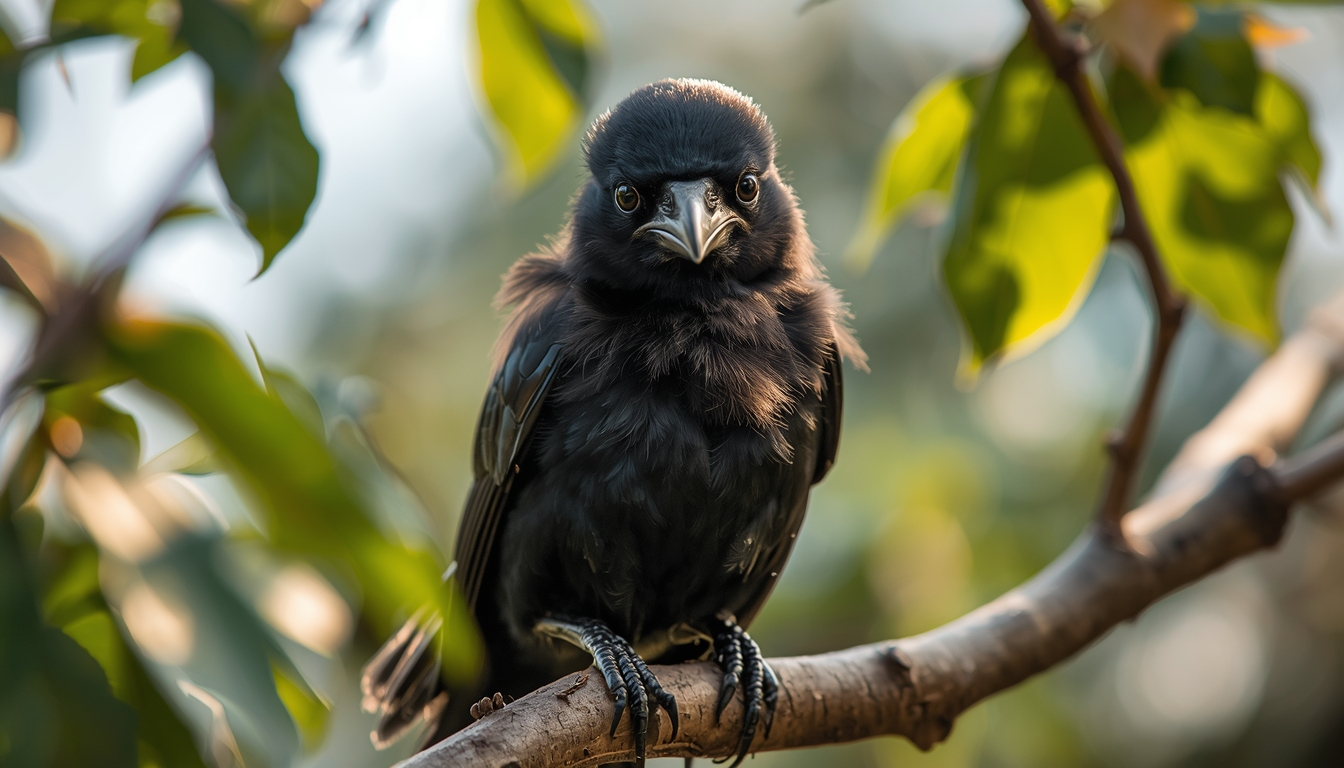
Crows rank among the most intelligent animals on Earth. They craft tools, recognize individual human faces, and even remember perceived threats for years. Yet despite their impressive abilities, the name for a baby crow is unexpectedly simple.
A baby crow is called a chick.
Not a “shadow,” not a “harbinger,” and certainly nothing as dramatic as the collective noun for adults. Just a chick — the same term used for young robins, sparrows, and most other birds.
Understanding the Crow Family
Crows belong to the genus Corvus, part of the corvid family, which also includes ravens, magpies, and jays.
In North America, the most widespread species is the Corvus brachyrhynchos, commonly known as the American crow. Recognizable by its glossy black feathers and sharp bill, it thrives in urban neighborhoods, farmland, and forests across the United States.
What truly distinguishes crows, however, is not their appearance — it is their cognitive sophistication.
From Helpless Chick to Skilled Problem Solver
Like most birds, a crow begins life vulnerable and dependent.
- First two weeks: The chick is blind, featherless, and fully reliant on its parents for warmth and food.
- Weeks two to four: Feathers develop, and mobility increases.
- Weeks four to five: The young bird fledges, leaving the nest but remaining close to its family.
Unlike many bird species, young crows do not immediately disperse. Instead, they often remain within their family group for months — sometimes even years. During this time, they learn essential survival skills such as food sourcing, predator awareness, and social communication.
Older siblings may assist in raising new broods, a behavior known as cooperative breeding. Scientists link this extended social structure to the advanced intelligence observed in corvids.
Crows typically reach sexual maturity between two and three years of age, meaning their formative years unfold within a complex and interactive social network.
Why Are Crows Considered So Intelligent?
Researchers continue to study crow cognition, and their findings are remarkable. Crows demonstrate:
- Tool use: Crafting or modifying objects, such as bending wire or using sticks to retrieve food
- Facial recognition: Identifying individual humans and responding differently based on past experiences
- Long-term memory: Retaining and sharing information about threats
- Multi-step reasoning: Solving sequential problems to obtain rewards
In the wild, crows live an average of 10 to 15 years. They form long-term pair bonds and communicate through a complex system of calls and social cues that scientists are still decoding.
Why Is a Group of Crows Called a Murder?
While a baby crow is simply a chick, a group of crows carries one of the most famous collective nouns in English: a murder.
The phrase dates back to 15th-century hunting traditions, when elaborate and poetic group names were created for animals. Similar examples include an “unkindness” of ravens or an “exaltation” of larks. These terms were designed to entertain rather than describe biological traits — and many have endured.
Young crows, however, received no such dramatic branding.
- Nestling: A chick still in the nest
- Fledgling: A young bird that has recently left the nest
Clear, practical terminology — no folklore required.
From Chick to One of Nature’s Sharpest Minds
The simplicity of the term “chick” contrasts sharply with what that young bird eventually becomes.
Within two years, a former nestling may be capable of recognizing faces in a crowd, teaching learned behaviors to offspring, and even using traffic patterns to crack open nuts by dropping them onto crosswalks.
The name may be ordinary.
The bird is anything but.
From a featherless chick to a master problem solver, the journey of a crow is one of the most fascinating developmental stories in the animal kingdom.