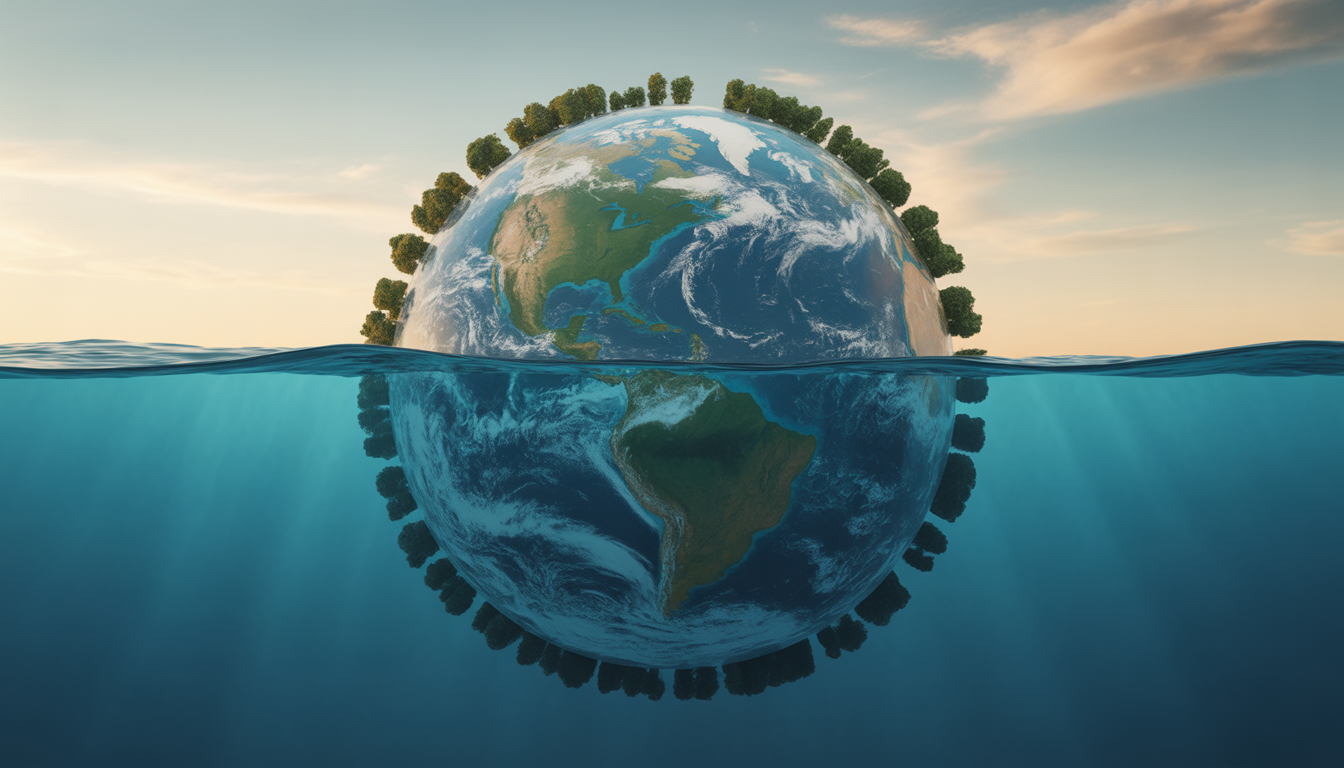
New research reveals a troubling shift in some of the world’s most important coastal regions: in many major river deltas, the land is sinking faster than the ocean is rising.
For millions of people, that means flood risk is increasing not just because of climate change — but because the ground beneath their homes is quietly dropping.
River Deltas That Feed the World Are Slowly Collapsing
River deltas are flat, fertile landscapes formed where major rivers meet the sea. They support enormous populations and agricultural systems.
Among the most critical:
- The Mekong Delta
- The Ganges–Brahmaputra Delta
- The Mississippi River Delta
- The Yangtze River Delta
These regions have always been naturally fragile. Built from soft river sediments, they settle slowly over centuries.
But what used to be gradual geological change has accelerated dramatically — largely because of human activity.
In many places, land subsidence now outpaces global sea level rise, meaning water levels are effectively rising even faster relative to the ground.
Why the Land Is Dropping So Fast
1. Groundwater Pumping: The Main Driver
The biggest culprit is excessive groundwater extraction.
When water is pumped from underground aquifers:
- Sediment layers lose support
- Grains of sand and clay compact
- The surface slowly sinks
This compaction can cause subsidence measured in centimetres per year — far exceeding global sea level rise, which is measured in millimetres per year.
In several deltas, soil compaction from pumping now exceeds:
- Natural subsidence
- Climate-driven sea rise
Combined.
2. Dams and Levees Starve the Delta
Historically, rivers replenished deltas with fresh sediment during seasonal floods.
Now:
- Dams trap sand and mud upstream
- Levees prevent sediment from spreading
- Floodplains no longer receive rebuilding layers
The result?
The delta becomes like a slowly deflating cushion — losing height without new material to replace it.
Global Hotspots Under Pressure
| Delta Region | Main Pressures | Impacts |
|---|---|---|
| Mekong Delta | Rice irrigation, sand mining, dams | Saltwater intrusion, farmland loss |
| Ganges–Brahmaputra Delta | Dense population, groundwater pumping | Chronic flooding, erosion |
| Mississippi River Delta | Oil & gas extraction, levees | Wetland loss, hurricane surge risk |
| Yangtze River Delta | Urban expansion, heavy pumping | Increased subsidence under cities |
Each region has unique pressures — but the pattern repeats:
The ground sinks. The sea reaches further inland.
What This Means for Everyday Life
More Frequent Flooding
In affected regions:
- Streets flood during normal high tides
- Drainage systems fail more often
- Infrastructure buckles
Areas once safely above sea level can fall to or below high tide within a single lifetime.
Saltwater Creeps Inland
In agricultural zones:
- Saltwater moves up rivers and canals
- Rice fields become less productive
- Drinking water becomes brackish
Farmers must shift crops, relocate, or abandon land entirely.
Cities Built on Sinking Platforms
Urban centres face particular risk.
In parts of Jakarta, Bangkok and Shanghai, land has subsided by several centimetres per year in past decades — far faster than sea rise alone.
That creates a compounding effect:
- Lower land
- Higher storm tides
- Reduced infrastructure safety margins
Even moderate storms can now overwhelm flood defences designed decades ago.
How Scientists Know the Land Is Dropping
Modern satellite systems can measure changes in land height with millimetre precision.
Using:
- Radar interferometry
- Satellite altimetry
Researchers can separate:
- Global sea level rise
- Local land movement
This allows them to calculate relative sea level rise — what residents actually experience.
In many deltas, the majority of relative rise is due to sinking land, not ocean expansion alone.
What Can Be Done?
1. Manage Water Extraction
Reducing groundwater pumping is crucial.
Cities can:
- Shift to surface water reservoirs
- Improve water recycling
- Increase efficiency in agriculture
- Monitor aquifer use
Where pumping has been reduced, subsidence has slowed.
2. Restore Sediment Flow
Allowing rivers to deposit sediment again can help rebuild land.
Options include:
- Controlled flooding zones
- Adjusting dam operations
- Wetland restoration
Natural sediment deposition once sustained these landscapes. Reintroducing it could slow collapse.
Key Terms Explained
Subsidence: Downward movement of the ground surface.
Relative Sea Level Rise: The combined effect of ocean rise and land sinking.
Even moderate sea rise becomes dangerous when paired with rapid subsidence.
The Next Decades: Two Possible Futures
High-Pumping Scenario
- Continued groundwater extraction
- Ongoing sediment starvation
- Large areas fall below high tide level
- Massive flood protection spending
Managed Scenario
- Reduced pumping
- Sediment restoration
- Slower land loss
- More time to adapt
Flood risk still grows — but not as quickly.
The Uncomfortable Reality
When we talk about rising seas, we often picture the ocean climbing higher.
But in many deltas, the story is more unsettling:
The land itself is sinking faster than the sea is rising.
That shift quietly accelerates risk in places that feed hundreds of millions of people and anchor global trade.
Maps may not change overnight —
but underfoot, the change is already happening.
And for some communities, the clock is moving faster than expected.