Jean was 64 when her doctor said something that surprised her more than her blood test results.
Her weight hadn’t changed much in a decade. She walked occasionally. She ate reasonably well. And yet her waistline had expanded by nearly 10 centimeters.
“You don’t need harder workouts,” her doctor told her gently. “You need a different kind of movement.”
That sentence followed her home.
Because after 60, many people discover the same frustrating truth: belly fat behaves differently than it used to.
The Quiet Shift That Happens After 60
Somewhere between the late fifties and early sixties, the body rewrites its rules.
Hormones change. Muscle mass gradually declines. Metabolism slows. Even if the scale stays stable, fat redistributes — and often settles around the abdomen.
Doctors call this central obesity.
Unlike fat stored under the skin, abdominal visceral fat wraps around internal organs. It’s metabolically active. It influences:
- Blood sugar regulation
- Cholesterol levels
- Blood pressure
- Inflammation
That’s why physicians often measure waist circumference, not just weight.
The frustrating part? Traditional “abs workouts” don’t specifically target this deep fat. Crunches and planks strengthen muscles — which is valuable — but they don’t directly burn visceral fat in isolation.
The body doesn’t do spot reduction.
It responds to overall energy use and hormonal balance.
The Exercise Experts Recommend — and Almost No One Talks About
When trainers and geriatric specialists are asked about the most effective exercise for reducing abdominal fat after 60, many land on the same answer:
Brisk walking.
Not casual strolling. Not punishing jogging. Not high-intensity bootcamps.
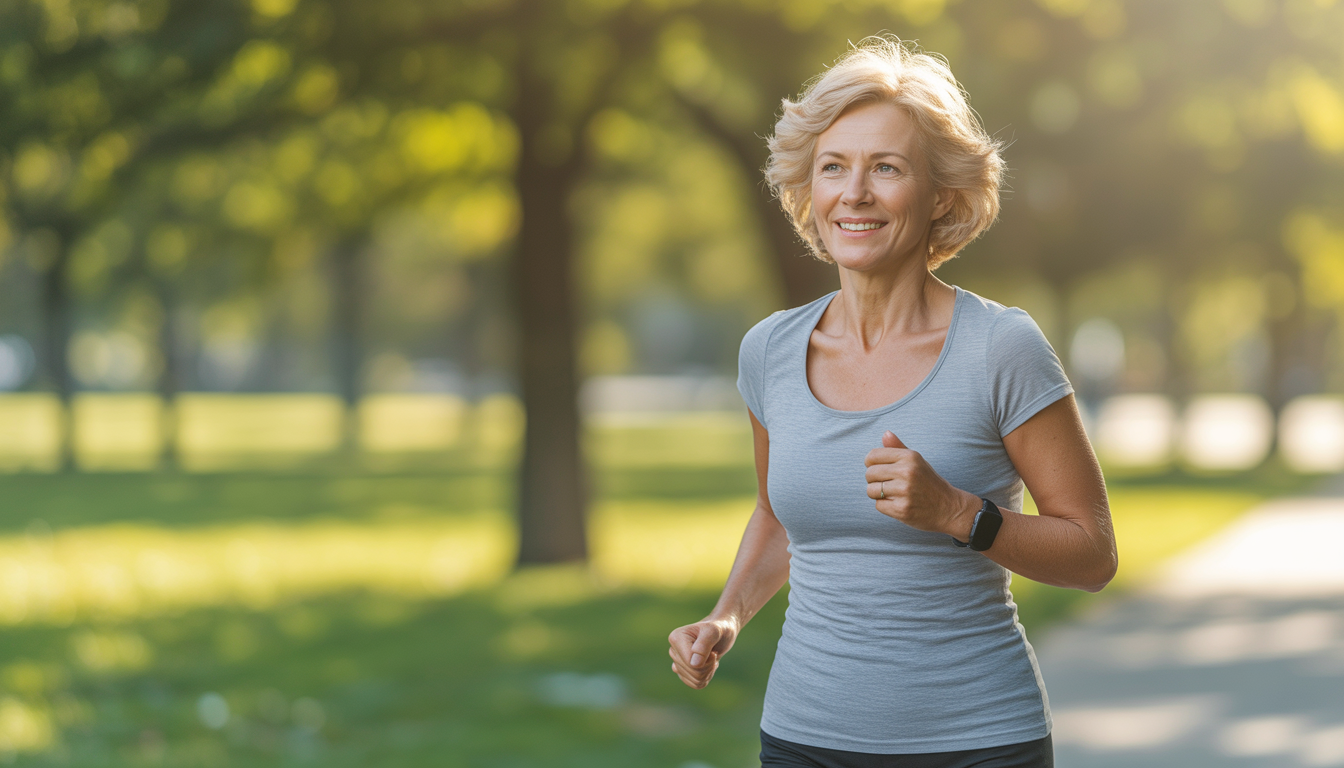
Brisk, purposeful walking.
The kind where:
- Your arms swing naturally
- Your stride lengthens
- Your breathing deepens
- You can speak in short sentences, but not sing
It sounds almost too simple.
And that’s precisely why it’s often overlooked.
Why Brisk Walking Works So Well After 60
The aging body needs consistent, repeatable movement — not extreme bursts followed by long recovery periods.
Brisk walking hits a metabolic “sweet spot”:
- Keeps heart rate in a moderate fat-burning zone
- Preserves muscle mass
- Reduces cortisol (stress hormone)
- Improves insulin sensitivity
- Protects joints
High-intensity workouts can be effective — but many people over 60 struggle to maintain them long term. Joint discomfort, fatigue, or injury often interrupt progress.
Walking, by contrast, is sustainable.
And sustainability is what reduces abdominal fat over months — not heroic effort for two weeks.
The Science Behind Belly Fat and Stress
After 60, cortisol plays a bigger role in stubborn belly fat.
Chronic stress signals the body to store energy centrally. Poor sleep compounds the problem. Intense workouts can sometimes raise stress hormones further if recovery is insufficient.
Brisk walking does something different.
It lowers stress while increasing energy expenditure.
That combination makes it uniquely powerful for visceral fat reduction.
It’s not dramatic. It’s metabolic.
How to Walk So It Actually Shrinks Belly Fat
Walking works best when it has structure.
Here’s a simple expert-backed format:
1. Warm-up (5 minutes)
Easy pace to loosen joints.
2. Brisk phase (10–20 minutes)
Walk as if you’re slightly late for a meeting.
Breathing heavier, but controlled.
3. Cool-down (5 minutes)
Return to relaxed pace.
Start with 20 minutes, three times a week.
Gradually increase toward 30–40 minutes, 4–5 days weekly.
If you track steps:
- Begin around 6,000 daily
- Progress toward 8,000 over time
The goal isn’t perfection.
It’s consistency.
Common Mistakes That Reduce Results
Many people walk — but not in a way that changes metabolism.
Here’s what often goes wrong:
- Walking too slowly
- Always using the same flat route
- Scrolling on the phone the entire time
- Pushing too hard too soon and quitting
To stimulate fat reduction, the pace must challenge you slightly.
Think: “energetic purpose,” not “leisurely wandering.”
If joints protest, shorten duration before increasing intensity. Softer surfaces like park paths can reduce impact.
Walking poles can also improve posture and engage the upper body.
A Real-Life Example
Marta, 67, disliked gyms. She felt awkward attempting mat workouts at home. Her cardiologist suggested walking “like you’re slightly late” for 30 minutes, five times weekly.
She started with 10 minutes twice daily.
Three months later:
- 4 kilograms lost
- 6 centimeters reduced at the waist
- Improved blood markers
- Better sleep
- Stronger balance
No crunches. No equipment. No gym membership.
Just consistency.
Beyond Belly Fat: The Hidden Gains
What starts as a waistline goal often becomes something larger.
Regular brisk walking improves:
- Balance and fall prevention
- Bone density support
- Mood stability
- Cardiovascular health
- Cognitive clarity
It can also naturally influence lifestyle shifts — better food choices, earlier bedtimes, more daily structure.
You don’t need to become “sporty.”
You need movement that fits into real life.
After 60, the body responds beautifully to consistency.
Expert Perspective
Geriatric exercise specialists emphasize one key principle:
“After 60, your muscles must keep communicating with your metabolism.”
Brisk walking maintains that conversation.
It tells the body:
We use this energy.
We keep muscle.
We don’t store everything centrally.
That signal, repeated weekly, shifts how the body handles fat.
Practical Walking Tips
- Swing your arms naturally to engage core and improve rhythm
- Break sessions into two 15-minute walks if needed
- Include slight inclines occasionally
- Anchor walks to daily habits (after breakfast, before dinner)
- Walk with a friend for accountability
The easiest exercise is the one you’ll still be doing six months from now.
For many people over 60, that’s walking.
Not because it’s easy — but because it’s sustainable.
Key Points
| Key Point | Detail | Benefit |
|---|---|---|
| Brisk walking reduces visceral fat | 20–40 minutes, moderate pace, multiple days weekly | Shrinks waistline safely |
| Low-impact consistency | Joint-friendly and repeatable | Higher long-term adherence |
| Hormonal support | Reduces stress and improves insulin sensitivity | Targets stubborn abdominal fat |
| Whole-body benefit | Improves heart, balance, mood, sleep | Protects independence |
FAQ
How fast should I walk?
Fast enough that you’re slightly breathless but still able to speak in short sentences.
How many days per week?
Start with 3 days, aim for 4–5 consistently.
Can shorter sessions work?
Yes. Two 15-minute brisk walks can equal one 30-minute session.
Do I need special equipment?
Supportive walking shoes are sufficient. Poles are optional for balance.
Will walking alone flatten my stomach completely?
It significantly reduces visceral fat and improves waist measurement. A completely flat stomach isn’t the goal — a healthier metabolic profile is.