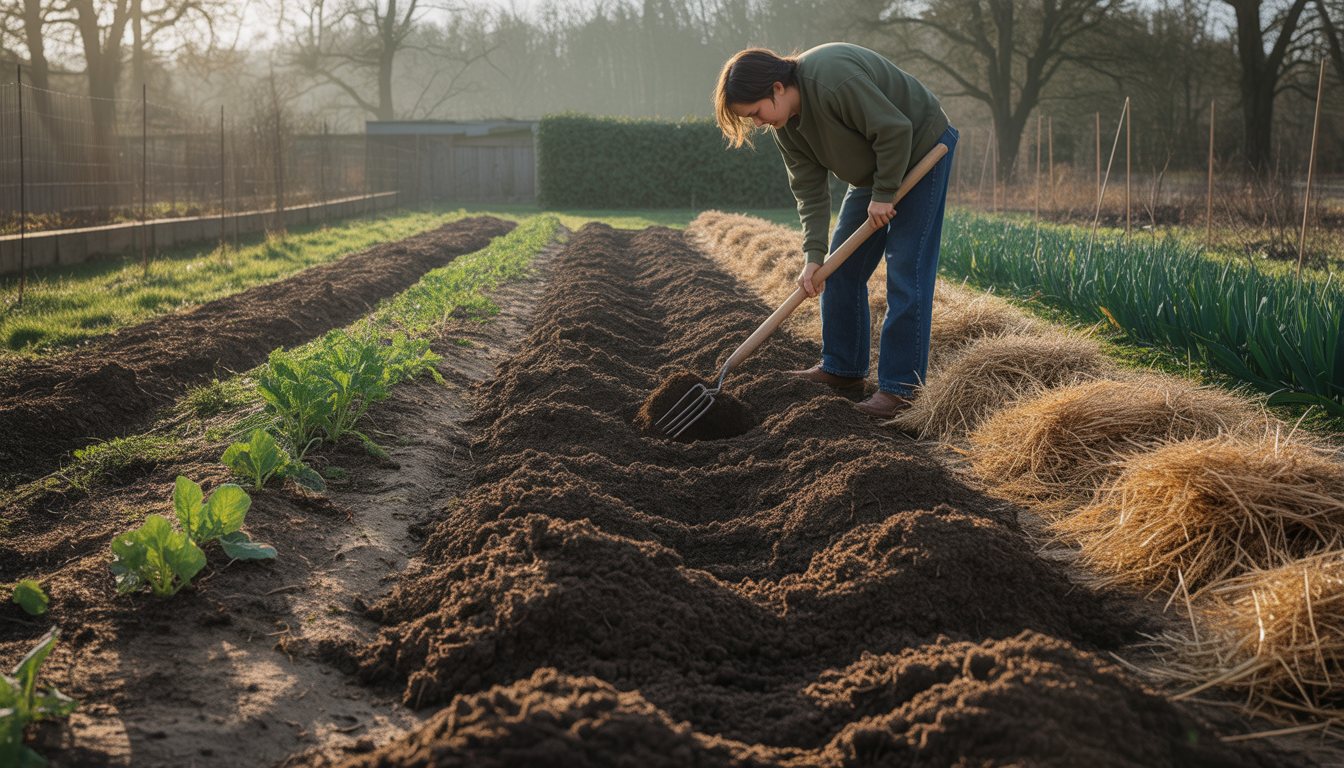
While the fields still looked asleep and frost lingered in the shade, experienced growers were already out there — not planting, not harvesting, but preparing. They understood something many modern gardeners overlook: what you do in February determines what you gather in July.
Long before fertilizers came in plastic bags and soil tests arrived by email, farmers relied on observation, timing, and a handful of deliberate actions. Done correctly, these late-winter rituals could dramatically increase yields — sometimes nearly doubling production from the same piece of land.
Why February Was So Important
By February, the deep freeze had usually begun to retreat. The soil wasn’t fully warm, but it was no longer locked in ice. Microbial life was slowly waking up. Weed seeds were mostly still dormant. Moisture levels were often ideal — not baked dry, not drenched by heavy spring rain.
In short, the soil was responsive but not chaotic.
Traditional growers treated this window as sacred. They believed that disturbing the earth too early damaged it, but waiting too long meant losing precious preparation time.
February offered three major advantages:
- Low weed pressure: Annual weeds had not yet taken hold.
- Rising soil activity: Microbes were starting to work again.
- Manageable moisture: Soil was workable without turning to mud.
Miss this window, and you risked compacted beds, hungry crops, and uneven growth. Use it wisely, and the foundation for abundance was set.
The Old Method, Step by Step
1. Reading the Soil Before Touching It
The first rule was simple: observe before acting.
Farmers didn’t rush in with tools. They picked up handfuls of earth, squeezed it, crumbled it between their fingers. They checked whether it clung heavily to boots or fell apart like dust.
If soil clumped tightly and shone with moisture, they waited. Working wet soil would compress it into hard slabs that roots struggled to penetrate.
If it looked pale and powdery, they scratched lightly at the surface to awaken air and life.
They noted where frost lingered, where water pooled, and where sunlight warmed fastest. This wasn’t called “soil analysis.” It was common sense developed over generations.
The quality of observation guided the quality of action.
2. Loosening, Not Flipping
Contrary to the popular image of deep ploughing, many experienced growers avoided turning the soil completely upside down.
They had learned that excessive digging exhausted the land.
Instead, they used long-tined forks or wooden tools to gently loosen the earth without flipping layers. The goal was aeration, not disruption.
This approach:
- Opened channels for water and oxygen
- Broke compaction in paths and high-traffic areas
- Allowed roots to travel downward easily
By preserving the natural layering of microorganisms and earthworms, they maintained a living system. Topsoil stayed rich and biologically active. Subsoil remained supportive rather than exposed.
Over time, this method improved structure rather than degrading it.
3. Feeding the Soil, Not Just the Plants
Fertility didn’t come from a store shelf. It came from farm life itself.
In February, growers spread organic materials in thin, even layers across their beds:
- Well-rotted manure
- Compost from kitchen and field waste
- Straw bedding
- Wood ash from winter fires
- Crushed shells or local minerals
The key was timing and depth. They did not bury these materials deeply. Instead, they left them near the surface where air and microbes could slowly transform them into humus.
Tomatoes, squash, and brassicas received richer compost. Tired plots got manure. Ash was applied lightly to fruiting beds.
The philosophy was simple: feed the soil so the soil can feed the plants.
Applied in February, organic matter had weeks to settle and integrate before the planting rush.
4. Keeping the Soil Covered and Alive
Bare soil was considered vulnerable soil.
Ancient growers observed that uncovered ground crusted under rain, eroded in wind, and dried rapidly in sun. So they protected it.
They used what was available:
- Straw
- Fallen leaves
- Small branches
- Reed mats
- Even old sacks
This protective layer reduced erosion, moderated temperature swings, and kept earthworms active near the surface.
In some regions, dark coverings were placed over specific beds to gently warm them. This allowed earlier sowing of peas, carrots, and leafy greens without greenhouses.
Covered soil woke up faster and stayed fertile longer.
5. Green Manures Before They Had a Name
Though they didn’t use modern terminology, traditional growers practiced what we now call green manuring.
They sowed fast-growing cover crops such as:
- Broad beans
- Vetch
- Clover
- Mustard
- Phacelia
These plants were not grown to harvest. They were grown to serve the soil.
Their roots penetrated compacted layers. Their leaves shielded the surface. Legumes added nitrogen. Nutrients that might have washed away during rain were captured and stored in plant tissue.
Before planting main crops, farmers cut these covers and left them on the surface or lightly incorporated them.
The result was a natural mulch and a flush of organic matter that boosted fertility.
Mistakes That Ruin February’s Potential
Generations passed down warnings about common errors:
- Working soil when it’s soaked
- Digging excessively deep
- Skipping organic inputs
- Leaving beds exposed
Compacted soil limits oxygen. Overturned layers disturb microbial balance. Starved soil produces weak plants. Bare ground erodes.
The ancients didn’t need scientific papers to understand this. They saw the outcomes year after year.
A Simple February Plan for Today
Modern gardeners can adapt these principles easily:
| Step | Action | Benefit |
|---|---|---|
| 1 | Test soil moisture by hand | Avoid compaction |
| 2 | Loosen gently with a fork | Improve aeration |
| 3 | Add 2–3 cm compost | Boost microbial life |
| 4 | Maintain or sow cover crops | Protect nutrients |
| 5 | Apply mulch or protective cover | Stabilize temperature |
This approach requires patience more than expense.
Why This Method Can Double Yields
The “twice as abundant” claim isn’t magic — it’s cumulative advantage.
When soil is:
- Looser
- Rich in humus
- Biologically active
- Protected from erosion
Plants experience fewer stress events. Roots travel deeper. Water retention improves. Nutrients remain available longer.
Each small improvement multiplies with the others.
In practical terms, two identical beds treated differently will often show dramatic contrast by midsummer. The prepared bed produces thicker stems, more blossoms, and heavier fruit.
Repeated yearly, this method builds long-term resilience. The soil becomes easier to manage and more forgiving during drought or heavy rain.
That steady accumulation of fertility is what earlier generations truly aimed for.
Managing Risks Wisely
Ancient methods are powerful but require balance.
- Fresh manure applied too late can burn roots.
- Thick mulch on cold soil may delay warming.
- Excess ash can alter pH too strongly.
Small test areas help fine-tune practices for your climate and soil type.
“Organic matter” simply means anything once alive that now enriches the soil as it decomposes. “Green manure” refers to crops grown for soil health rather than harvest.
Understanding these concepts prevents mistakes.
A Quiet Form of Wealth
In late winter, while others wait for spring to begin, the wise prepare quietly.
The February method is not dramatic. It doesn’t involve flashy tools or expensive inputs. It requires attention, timing, and respect for soil as a living system.
Year after year, that approach builds invisible wealth underground.
By the time tomatoes ripen and courgettes overflow baskets, the results appear almost miraculous.
But the miracle began months earlier — in the cold, grey light of February — when the ancients stepped into their fields and shaped the season before it even started.