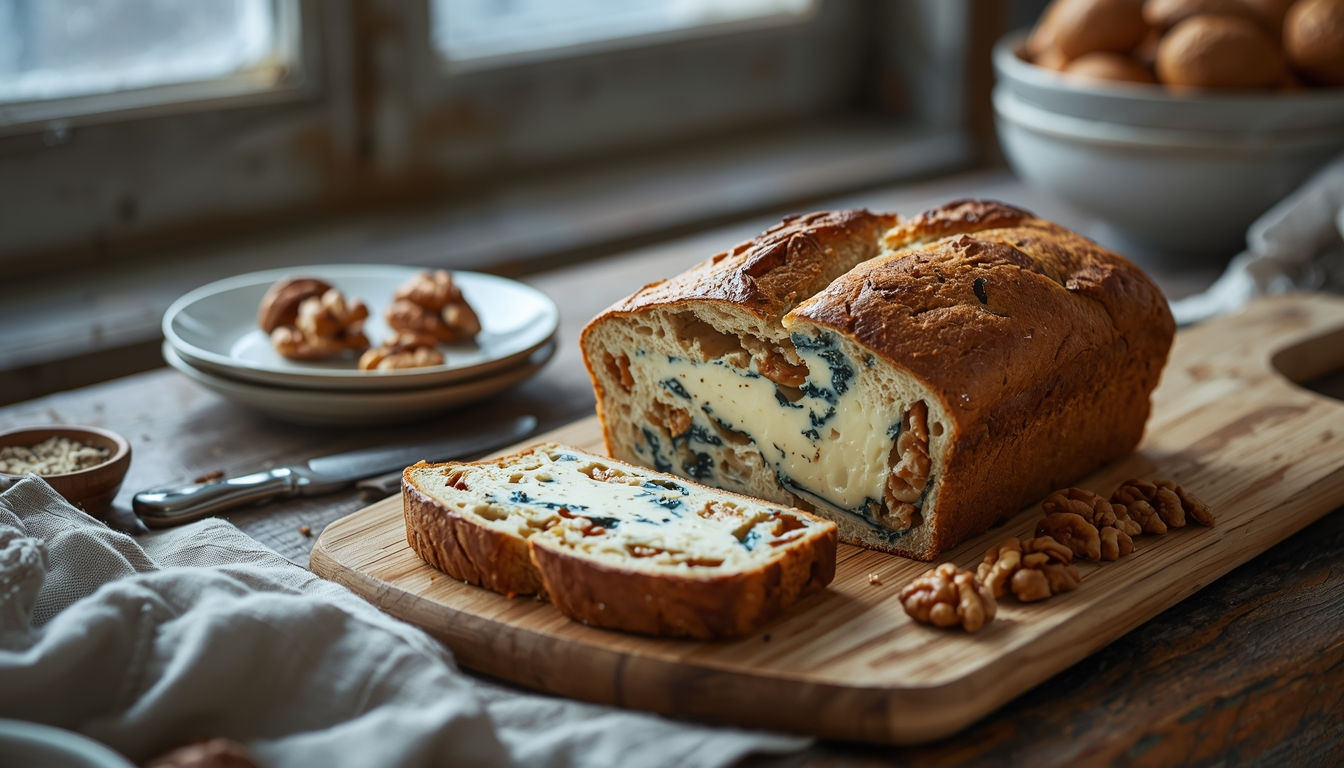
Last Tuesday, my neighbor Marie knocked on my door holding a warm loaf wrapped in a tea towel.
“Try this,” she said with a knowing smile. “It’s my new obsession.”
One bite into that dense, savory slice—packed with tangy blue cheese and crunchy walnuts—and it became immediately clear why her usual weekly quiche had been retired.
Across town, the same loaf started appearing at dinner tables. No delicate pastry. No soggy crust anxiety. Just a rustic, satisfying bake that feels both comforting and elegant.
This winter, the blue cheese walnut loaf is quietly becoming France’s favorite weeknight solution.
Why French Cooks Are Swapping Quiche for This Savory Loaf
Traditional quiche, while beloved, demands time and precision—rolling pastry, blind baking, and finding the perfect tart pan. The blue cheese walnut loaf simplifies everything.
All it requires:
- One loaf tin
- A mixing bowl
- Basic pantry ingredients
Chef Antoine Dubois explains:
“I used to spend forty minutes preparing pastry alone. Now I can have a warm, satisfying dinner ready in the same time—without the stress.”
The magic lies in the pairing of Fourme d’Ambert and toasted walnuts. The cheese melts into creamy pockets throughout the crumb, while walnuts bring earthy crunch and depth.
Think of it as a cheese board transformed into something sliceable, toastable, and hearty enough to stand alone.
The Complete Blue Cheese Walnut Loaf Recipe
Ingredients
| Ingredient | Quantity | Purpose |
|---|---|---|
| Plain flour | 150g | Structure |
| Eggs | 3 medium | Binding & richness |
| Whole milk | 100ml | Tender crumb |
| Neutral oil | 60ml | Moisture |
| Baking powder | 1 sachet (≈10g) | Lift |
| Fourme d’Ambert | 100g | Flavor |
| Walnuts | 60g | Texture |
| Black pepper | Pinch | Balance |
Method
- Preheat oven to 180°C (350°F). Line a loaf tin with baking paper.
- Whisk eggs until slightly frothy.
- Fold in flour and baking powder gently.
- Gradually mix in milk and oil to create a smooth batter.
- Crumble in the blue cheese and fold in roughly broken walnuts.
- Add a pinch of black pepper.
- Pour into the loaf tin and bake for 45 minutes, or until golden and a skewer comes out mostly clean.
Let cool slightly before slicing.
Why This Recipe Is Taking Over Weeknight Dinners
The shift isn’t just about flavor—it’s about lifestyle.
Unlike quiche, which can soften when reheated, this loaf improves after a day. The cheese settles into the crumb, deepening the flavor.
Families are discovering its versatility:
- Toasted slices for breakfast
- Paired with soup for dinner
- Packed in lunchboxes
- Served as appetizers with honey drizzle
Several bistros in Lyon and Bordeaux have even begun offering variations with caramelized onions or hazelnuts.
It’s rustic, practical, and effortlessly elegant.
Choosing the Right Blue Cheese
Not all blue cheeses behave the same in baking.
Fourme d’Ambert works particularly well because:
- It’s creamy
- Moderately salty
- Melts smoothly
- Doesn’t overpower the loaf
Stronger options like Roquefort can create overly salty pockets and dominate the flavor.
For best results:
- Break walnuts by hand for varied texture
- Use fresh nuts, not pre-chopped
- Avoid overly crumbly blue cheeses
Storage Tips
- Keeps up to 5 days wrapped at room temperature
- Refrigerate if your kitchen is warm
- Freeze for up to 3 months
- Toast slices directly from frozen
Many say it tastes even better on day two.
FAQs
Can I substitute the blue cheese?
Yes. Goat cheese or aged cheddar work, but you’ll lose the distinctive tangy character.
Is it supposed to be dense?
Yes. This loaf is intentionally rustic and firm, not fluffy like cake.
Can I make it gluten-free?
Yes. Use a quality gluten-free flour blend, though texture may vary slightly.
Can I add herbs or extra ingredients?
Absolutely. Chives, thyme, or caramelized onions work well. Keep additions under 50g total to maintain structure.
Should it be served warm or cold?
Both are excellent. Warm for comfort, room temperature for convenience.
Does it really replace quiche?
For many French households this winter—yes. It’s easier, sturdier, and just as satisfying.