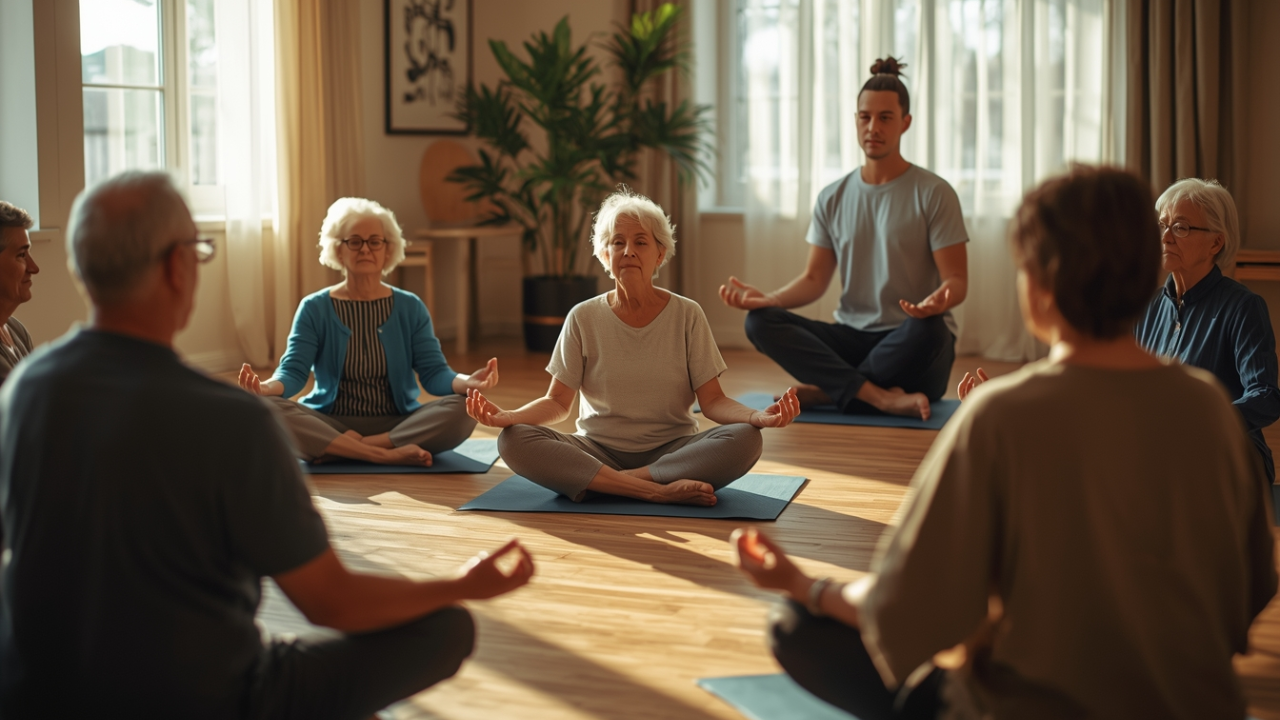
The room was calm — not sterile like a hospital, but peaceful in a way that felt intentional. A group of older adults sat quietly in a circle, their feet resting flat on the floor, hands relaxed on their knees, eyes softly closed. No gym equipment. No medical machines. Just the steady, soothing voice of a physiotherapist guiding them through a slow rhythm.
“Inhale… two… three… four… pause… exhale… two… three… four… five…”
Among them, a man in his early seventies casually glanced at his smartwatch. His expression shifted from curiosity to surprise. His resting heart rate, usually stuck around the high eighties, had dropped to 72. He stared at the number quietly, unsure whether to trust it. Then, slowly, he smiled.
It was a simple reminder that something as natural as breathing could quietly transform heart health — especially in older adults.
A Softer Approach to Heart Health
As people move into their sixties and seventies, conversations about heart health often bring anxiety. Doctors emphasize the importance of cardiovascular fitness, but the suggested solutions usually involve intense workouts, running routines, or complicated gym programs.
For many older adults, such recommendations feel unrealistic or intimidating. Physical limitations, joint pain, or long-term medical conditions often make traditional exercise difficult.
However, recent studies and clinical observations are highlighting a gentler alternative. Guided slow-breathing techniques, practiced while sitting comfortably, are showing measurable improvements in resting heart rate — one of the most important indicators of cardiovascular health.
Unlike high-intensity exercise, this breathing method requires no expensive equipment, fitness training, or physical strain. It focuses purely on controlling the breath to influence the body’s natural stress response system.
How Slow Breathing Changes the Heart
One example comes from Maria, a 74-year-old retired nurse who spent years believing she was “not the exercise type.” During her first guided breathing session, she felt slightly awkward, unsure how something so simple could help her health.
At the beginning of the session, her resting heart rate measured 86 beats per minute. After just 15 minutes of guided slow breathing, it dropped to 78. The change wasn’t dramatic, but it was noticeable. Encouraged by the result, she continued practicing daily for six weeks. Her doctor later recorded her average resting heart rate at 72 beats per minute.
The reason behind this improvement lies in the autonomic nervous system, which controls unconscious body functions such as heart rate and blood pressure. Slow breathing activates the parasympathetic system, often described as the body’s “rest and relaxation” mode.
A key player in this process is the vagus nerve, which connects the brain to several organs, including the heart. When breathing slows and deepens, signals from the vagus nerve encourage the heart to beat more slowly and efficiently. Blood vessels relax, blood pressure stabilizes, and overall cardiovascular stress reduces.
Researchers refer to this technique as “resonant breathing” or “coherent breathing,” usually involving around five to six breaths per minute. This breathing pattern appears to create a balanced rhythm between heart activity and nervous system responses.
The Step-by-Step Breathing Exercise
The breathing method is simple and accessible for most older adults. It can be performed at home without supervision, although beginners may benefit from guided sessions.
Start by sitting comfortably in a stable chair. Place both feet flat on the floor and rest your hands on your thighs. Close your eyes or focus softly on a point in front of you.
Slowly inhale through your nose for four to five seconds. Allow the air to expand not only your chest but also your lower ribs and stomach, as if filling a balloon inside your body.
Pause gently for one or two seconds without holding your breath forcefully. Then exhale slowly through slightly pursed lips for five to six seconds, similar to blowing out a candle.
This completes one breath cycle. Aim to repeat this pattern approximately five to six times per minute. Beginners can practice for five minutes, gradually increasing to 10 or 15 minutes as they feel comfortable.
Many participants initially try to force the breathing rhythm, which can cause tension or mild dizziness. Experts recommend starting with shorter breathing cycles, such as three seconds inhaling and four seconds exhaling, then gradually extending the duration as the body adjusts.
The focus should remain on smooth, relaxed breathing rather than strict timing.
Building a Daily Routine
Consistency is more important than perfection when practicing slow breathing. Health specialists recommend selecting a regular time each day, such as early morning or evening, when distractions are minimal.
Using a simple timer or breathing app can help maintain rhythm. Sessions should initially remain short to avoid fatigue or frustration. Monitoring resting heart rate once a week provides helpful progress tracking without creating unnecessary stress.
Most participants begin noticing small changes within a few weeks. Even practicing four to five sessions weekly can gradually improve cardiovascular regulation.
Benefits Beyond Heart Rate
Although the primary measurable benefit is a reduction in resting heart rate, many older adults report additional improvements in daily life.
Participants often describe climbing stairs with less breathlessness, experiencing fewer anxiety episodes before medical appointments, and enjoying deeper, more restful sleep. These changes suggest that slow breathing affects overall body tension rather than just heart function.
A lower resting heart rate typically indicates a more efficient cardiovascular system, allowing the heart to pump blood with less effort. Over time, this can contribute to improved energy levels, reduced stress, and enhanced emotional well-being.
While slow breathing cannot replace medication or intensive cardiac rehabilitation programs, it offers an accessible complementary tool for improving quality of life.
Safety and Medical Considerations
Most healthcare professionals consider slow breathing exercises safe for older adults. However, individuals with severe heart conditions, respiratory disorders, or blood pressure instability should consult their doctor before starting new breathing routines.
Feeling mild dizziness during early sessions is relatively common and usually results from over-breathing. If discomfort occurs, participants should return to natural breathing and restart slowly.
It is important to remember that breathing exercises support heart health but should not replace physical activity entirely. Walking, stretching, and light strength exercises remain essential components of healthy aging.
A Simple Way to Regain Control
Many older adults describe aging as a gradual loss of physical control. Slow breathing exercises provide a rare sense of empowerment by allowing individuals to directly influence their heart rhythm and stress response.
Watching heart rate numbers drop in real time — whether through a smartwatch or pulse monitor — often becomes motivating. It reminds participants that some aspects of physical health remain responsive to small daily actions.
In a world where aging often feels associated with medical complexity, slow breathing offers a refreshingly simple intervention. It requires only time, patience, and a willingness to focus inward.
Key Takeaways
Gentle and Accessible Exercise
Slow breathing can improve cardiovascular health without physical strain or equipment.
Improves Resting Heart Rate
Consistent practice may gradually lower heart rate, supporting overall heart efficiency.
Supports Daily Well-Being
Participants often report reduced anxiety, better sleep, and improved energy levels.
FAQ
How long does it take to see results?
Most people notice gradual improvements within four to six weeks of consistent practice.
Is it safe for people with heart disease?
Generally yes, but individuals should consult healthcare providers before starting.
Is dizziness normal at first?
Mild dizziness can occur if breathing is forced. Slowing down and relaxing usually resolves it.
What if I cannot maintain the breathing rhythm?
Start with shorter inhale and exhale counts, then gradually increase.
Can breathing replace other heart exercises?
No. It complements physical activity but should not replace walking or other recommended exercises.