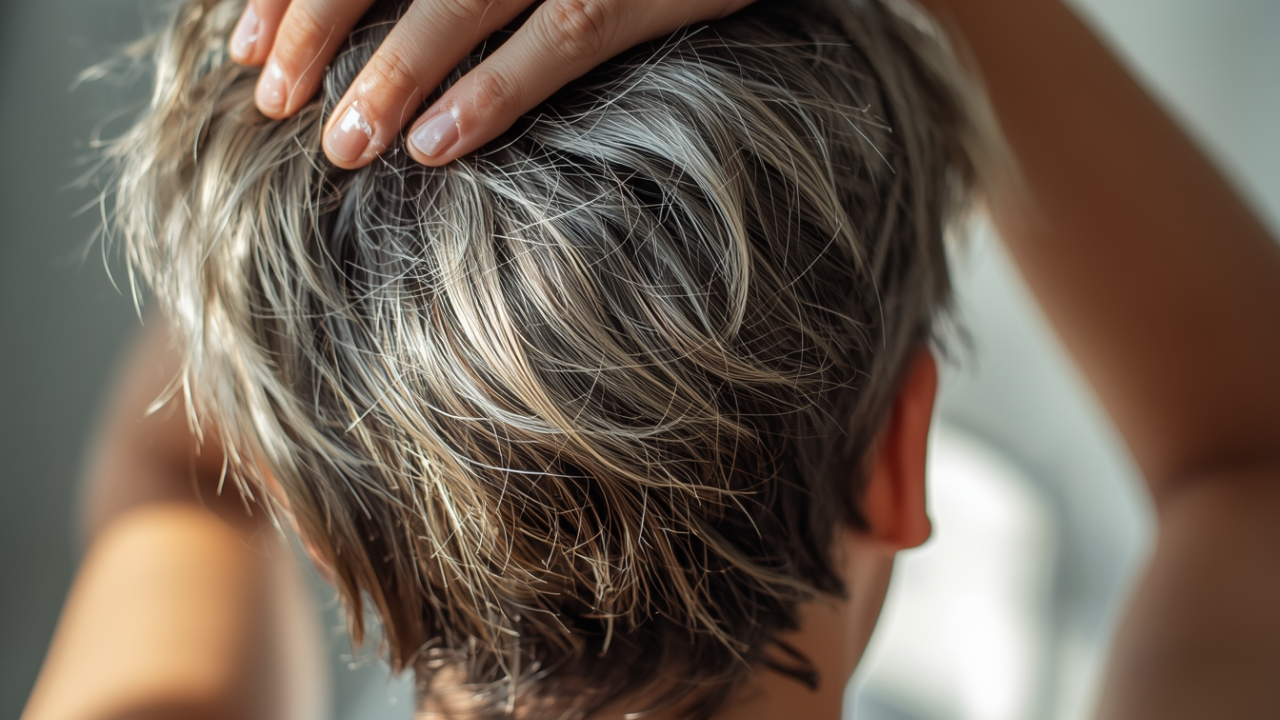
Grey hair is often seen as a natural sign of ageing, but for many people, it also brings changes in hair texture, shine, and manageability. While traditional colouring methods like salon dyes or root touch-ups remain popular, a growing number of people are turning toward gentler, low-maintenance alternatives. One such method gaining attention involves adding a simple kitchen ingredient—unsweetened cocoa powder—into regular conditioner to help soften the appearance of grey strands.
Unlike permanent dyes, this approach focuses on subtle blending rather than dramatic colour transformation. It offers a budget-friendly, low-impact option for people who want to reduce the contrast of grey hair without committing to chemical colouring treatments.
Understanding Why Hair Turns Grey
Hair turns grey when pigment-producing cells in hair follicles gradually reduce melanin production. While ageing is the most common cause, several other factors can accelerate greying, including genetics, stress, smoking, and nutritional deficiencies.
Grey hair is not only different in colour but also in texture. Many people notice that silver strands feel coarser, drier, or more brittle. This happens because ageing hair follicles produce less natural oil, making the outer hair layer rougher and more prone to frizz or breakage.
Traditional colouring methods can mask grey hair effectively, but they often involve chemical processes that may further dry or weaken ageing hair. This has led many individuals to explore gentler alternatives that enhance appearance while maintaining hair health.
The Cocoa Conditioner Trick Explained
The cocoa conditioner technique involves mixing unsweetened cocoa powder into regular conditioner to create a lightly tinted treatment. Cocoa naturally contains plant compounds such as flavonoids and tannins, which can cling to the outer surface of hair strands.
Instead of penetrating deep into the hair shaft like permanent dyes, cocoa forms a gentle colour layer that creates a soft brown tone. This helps grey strands blend more naturally with surrounding hair while also improving shine and smoothness.
Another advantage is cocoa’s antioxidant properties, which may help protect hair from environmental stressors like pollution and UV exposure. Additionally, cocoa can slightly enhance conditioning benefits, helping coarse grey strands feel softer and more manageable.
How to Prepare and Apply Cocoa Conditioner
This treatment is simple to prepare and can easily be incorporated into a weekly haircare routine.
Step-by-Step Method:
- Wash hair with your regular shampoo.
- Gently towel-dry hair until it remains slightly damp.
- Place a portion of silicone-free conditioner into a clean bowl.
- Add 2–4 tablespoons of unsweetened cocoa powder, depending on hair length and thickness.
- Mix thoroughly until the conditioner becomes smooth and evenly coloured.
- Section hair and apply the mixture, focusing on visible grey areas such as roots and temples.
- Comb through using a wide-tooth comb for even distribution.
- Leave the mixture on for 20–30 minutes.
- Rinse thoroughly using lukewarm water.
The results appear gradually. With repeated use, many individuals notice grey strands becoming less stark and developing a muted beige or smoky brown tone.
Think of this technique as similar to tinted moisturiser for skin—it softens contrast rather than completely covering colour.
Who Benefits Most from This Method?
The effectiveness of cocoa conditioning varies depending on natural hair colour and grey coverage.
Hair Types and Expected Results
| Hair Profile | Likely Outcome |
|---|---|
| Mostly grey, fine hair | Soft beige-brown tone and smoother texture |
| Salt-and-pepper medium brown hair | More balanced and blended appearance |
| Dark hair with scattered greys | Added warmth and shine, reduced brightness of grey strands |
People with scattered greys often see the most noticeable blending effect. Those with fully white hair may experience conditioning benefits but only subtle colour changes.
What Cocoa Does to the Hair Structure
Grey hair often feels rough because its outer cuticle layer is slightly raised. Conditioner helps smooth this layer, making hair softer and easier to manage.
When cocoa is added, tiny pigment particles sit on top of the smoothed cuticle. Over time, repeated application builds a gentle tint that enhances colour depth without altering internal hair structure.
Importantly, cocoa does not restore natural melanin or reverse greying from within. Instead, it creates a visual softening effect that makes silver strands less noticeable.
Comparing Cocoa with Other Grey Hair Solutions
Several methods claim to reduce or conceal grey hair. Each option offers different benefits and limitations.
Coffee or Tea Rinses
- Provide light staining effects
- May cause dryness with frequent use
Permanent or Semi-Permanent Dyes
- Deliver strong, immediate colour changes
- Can weaken ageing hair and irritate sensitive scalps
Tinted Conditioners
- Combine conditioning with colour deposit
- Often contain synthetic dyes or fragrances
Cocoa Conditioning
- Affordable and widely available
- Gentle on hair structure
- Provides gradual, natural-looking blending
- Results vary depending on hair type
Safety Tips and Precautions
Although cocoa is food-safe, it can still cause skin reactions in sensitive individuals. Before applying the treatment to the entire scalp, performing a patch test behind the ear is recommended.
Other important precautions include:
- Avoid using sweetened cocoa or chocolate products.
- Rinse thoroughly to prevent residue build-up.
- Stop use if scalp irritation occurs.
Additionally, individuals expecting dramatic colour changes may find results too subtle. Cocoa works best as a blending and conditioning method rather than a full colouring solution.
Lifestyle Factors That Influence Greying
While genetics largely determine when hair turns grey, lifestyle choices can influence how quickly the process progresses.
Research suggests connections between premature greying and factors such as:
- Chronic stress
- Smoking
- Nutritional deficiencies
- Excessive sun exposure
Maintaining a balanced diet rich in antioxidants, protecting hair from UV damage, and reducing heat styling may support overall hair health and slow visible ageing changes.
Many people who adopt cocoa conditioning also introduce deeper hydration treatments, natural oil masks, or UV-protection sprays, which together help improve shine and softness.
When This Trick Works Best
The cocoa conditioner method is particularly helpful in certain scenarios:
- Individuals growing out permanent hair dye
- People with early or scattered grey strands
- Those transitioning toward embracing natural grey hair
- Seasonal haircare during dry winter months
Because the treatment is temporary and reversible, it offers a flexible way to experiment without long-term commitment.
The Growing Appeal of Gentle Haircare Solutions
Modern beauty trends increasingly favour low-maintenance and natural-looking results. Rather than completely hiding signs of ageing, many people now seek solutions that enhance natural appearance while maintaining hair health.
Cocoa conditioning reflects this shift. It allows individuals to soften grey hair gradually, improve texture, and maintain shine without harsh chemical treatments or frequent salon visits.
Conclusion
Grey hair is a natural part of ageing, but that does not mean individuals must choose between harsh colouring treatments and doing nothing at all. Adding unsweetened cocoa powder to regular conditioner offers a simple, affordable, and gentle way to soften grey strands while improving hair texture.
Although results are gradual and vary between individuals, this method provides a practical alternative for those seeking subtle colour blending and healthier-looking hair. Combined with balanced nutrition, proper hydration, and protective haircare habits, cocoa conditioning can help grey hair look smoother, shinier, and more naturally blended.