Clogged kitchen sinks rarely happen at convenient times. It usually begins with a slow swirl of water after washing dishes, followed by an unpleasant gurgling noise and greasy residue floating on the surface.
Most people try quick fixes like poking the drain, running the tap harder, or using harsh chemical cleaners. But surprisingly, one of the most effective solutions might already be sitting next to your sponge — dishwashing liquid.
This simple kitchen staple can help loosen grease, soap buildup, and food particles without scrubbing or damaging your pipes.
Why Dish Soap Works as a Natural Drain Cleaner
Dishwashing liquid is specifically designed to break down grease and food residue on plates. The same grease-fighting properties work inside your plumbing system.
How Dish Soap Helps Clear Clogs:
- Breaks down grease buildup inside pipes
- Loosens food scraps and soap residue
- Coats pipe walls, allowing debris to slide away
- Works safely without harsh fumes or chemical reactions
Most kitchen drain clogs are caused by hardened grease combined with food waste and soap scum. Dish soap helps dissolve this sticky combination, allowing water to flush it away naturally.
Step-by-Step Method to Unclog Your Drain Using Dish Soap
Follow this simple method to clear mild or moderate kitchen drain blockages.
Step 1: Remove Standing Water
If water is already collecting in your sink, remove as much as possible using a bowl or cup. The drain does not need to be completely dry.
Step 2: Pour Dishwashing Liquid into the Drain
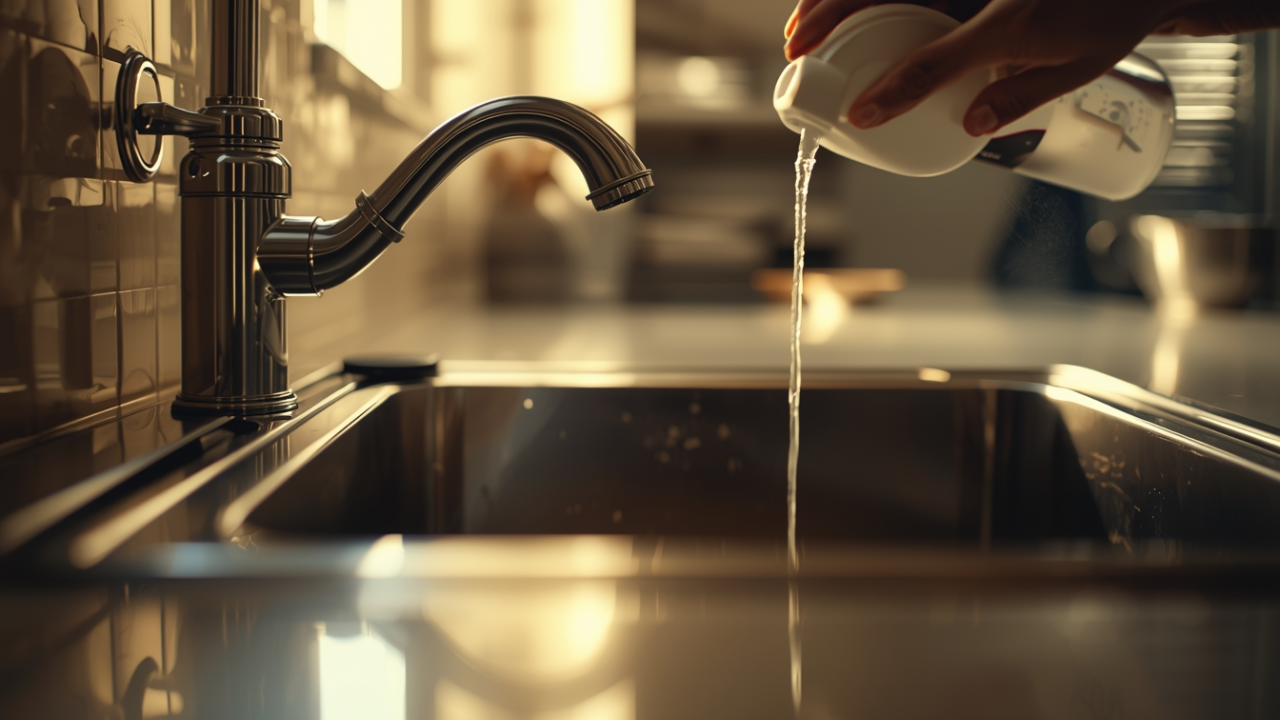
Pour approximately ½ cup of liquid dish soap directly into the drain opening. You can use slightly more if the clog is severe.
Allow the soap to sit for 5–10 minutes so it can coat and penetrate the blockage.
Step 3: Add Hot Water Slowly
Heat water until hot but not boiling. Slowly pour the hot water into the drain. The heat helps activate the grease-breaking properties of the dish soap.
Avoid pouring extremely boiling water into older or PVC pipes, as it may damage them.
Step 4: Allow Time for the Soap to Work
Wait 15–20 minutes. During this time, the soap softens grease and allows debris to loosen naturally.
Step 5: Test the Drain
Run hot tap water gently and observe whether water flows faster. If the drain still moves slowly, repeat the process once or twice.
When This Method Works Best
Dish soap works effectively for clogs caused by:
- Grease and oil buildup
- Food residue
- Soap scum accumulation
- Minor hair or organic debris
However, it may not work for:
- Solid objects stuck in pipes
- Severe blockages deep inside plumbing
- Structural pipe damage
In these situations, professional plumbing assistance may be required.
Why This Method Is Safer Than Chemical Drain Cleaners
Many chemical drain cleaners contain strong corrosive ingredients that can damage pipes and surfaces.
Benefits of Using Dish Soap:
- Safer for plumbing systems
- No toxic fumes
- Eco-friendlier option
- Cost-effective household solution
- Safe for regular preventive maintenance
Using gentle cleaning solutions helps maintain pipe durability over time.
How to Prevent Kitchen Drain Clogs
Prevention is often easier than unclogging drains later. Consider adopting these habits:
Drain Maintenance Tips:
- Avoid pouring cooking oil or grease into sinks
- Use sink strainers to catch food particles
- Run hot water after washing greasy dishes
- Perform a dish soap flush weekly or bi-weekly
- Rinse plates before washing to reduce debris buildup
These simple routines help maintain smooth water flow and reduce plumbing emergencies.
Common Mistakes to Avoid
Many homeowners accidentally worsen drain clogs through common cleaning mistakes.
Avoid:
- Pouring grease directly into drains
- Mixing chemical cleaners with natural remedies
- Using extremely boiling water in plastic pipes
- Ignoring slow drainage warning signs
- Overusing chemical drain solutions
Responding early to slow drainage often prevents serious blockages.
Key Takeaways
| Key Point | Details | Reader Benefit |
|---|---|---|
| Dish Soap Removes Grease | Breaks down fat buildup inside pipes | Provides easy and safe clog removal |
| Simple Cleaning Method | Dish soap plus hot water treatment | Quick household solution |
| Preventive Maintenance | Weekly soap flush reduces buildup | Avoids future plumbing problems |
| Safer Alternative | Avoids harsh chemical cleaners | Protects pipes and indoor air quality |
Frequently Asked Questions (FAQs)
1. Can any dishwashing liquid be used?
Yes. Most standard liquid dish soaps designed to remove grease work effectively.
2. How often should I flush drains with dish soap?
Once every one to two weeks is usually enough for maintenance in busy kitchens.
3. Is this method safe for old pipes?
Yes, dish soap is generally safe. Just avoid pouring boiling water into fragile or aging pipes
4. What if the clog does not clear?
If multiple attempts fail, the blockage may be deeper or solid. A plunger, drain snake, or plumber may be required.
5. Can dish soap be combined with baking soda or vinegar?
It can be, but dish soap with hot water alone often works effectively. Avoid mixing natural methods with chemical cleaners.
Conclusion
Clogged kitchen drains are a common household inconvenience, often caused by grease and food residue. Fortunately, dishwashing liquid offers a simple, affordable, and safer solution for mild drain blockages.
By using this method correctly and maintaining preventive cleaning habits, homeowners can reduce plumbing issues while avoiding harsh chemical treatments.