The first time I cooked chicken breast for guests, I remember the sound more clearly than the taste. Forks scraping plates. Polite smiles hiding disappointment. People chewing slowly, reaching for extra sauce like it was a rescue operation.
Everything looked perfect. The seasoning smelled great. The side dishes were colorful. The photos looked impressive enough to post.
But the chicken itself? Dry, rubbery, and slightly heartbreaking.
A week later, I tried again. Same oven. Same baking tray. Same grocery-store chicken. The only difference was one tiny step — I let the chicken sit in a quick marinade while the oven heated up.
The result didn’t just taste better. It felt softer, juicier, and almost restaurant-quality.
Sometimes, cooking success doesn’t come from doing more. It comes from pausing for just a few minutes.
The Small Pause That Changes Everything
Chicken breast carries a strange reputation. It’s known as healthy, lean, and easy to cook. That reputation is also the reason many people accidentally ruin it.
Weeknight cooking usually looks like this: open the package, add salt and pepper, place it on a tray, and push it into the oven. Twenty minutes later, the chicken looks golden and promising — until you cut into it and find dryness hiding inside.
Most people assume they overcooked it or used the wrong seasoning. But the real issue often starts before cooking even begins.
A short marinade — even just 15 minutes — can dramatically improve the texture and flavor of chicken breast. And surprisingly, it barely adds any extra effort.
Why Chicken Breast Dries Out So Easily
Chicken breast contains very little fat compared to other cuts of meat. It is packed with tightly structured protein fibers. When exposed to high heat, those fibers tighten and squeeze out moisture.
That’s why chicken breast can turn dry even when it isn’t technically overcooked.
A quick marinade helps solve this problem in three important ways:
- Salt helps the meat hold onto moisture
- Acid gently softens the outer protein layers
- Fat protects the surface during cooking
Together, these elements prepare the chicken to handle oven heat without losing its natural juiciness.
A Simple Juicy Baked Chicken Breast Recipe That Works Every Time
This method is designed for real-life cooking — simple ingredients, minimal preparation, and reliable results.
Ingredients
- 2 to 4 boneless, skinless chicken breasts
- 3 tablespoons plain yogurt
- 1 tablespoon olive oil
- Juice of half a lemon
- 2 grated garlic cloves
- 1 teaspoon salt
- 1 teaspoon paprika
- Black pepper (to taste)
Step 1: Prepare The Chicken
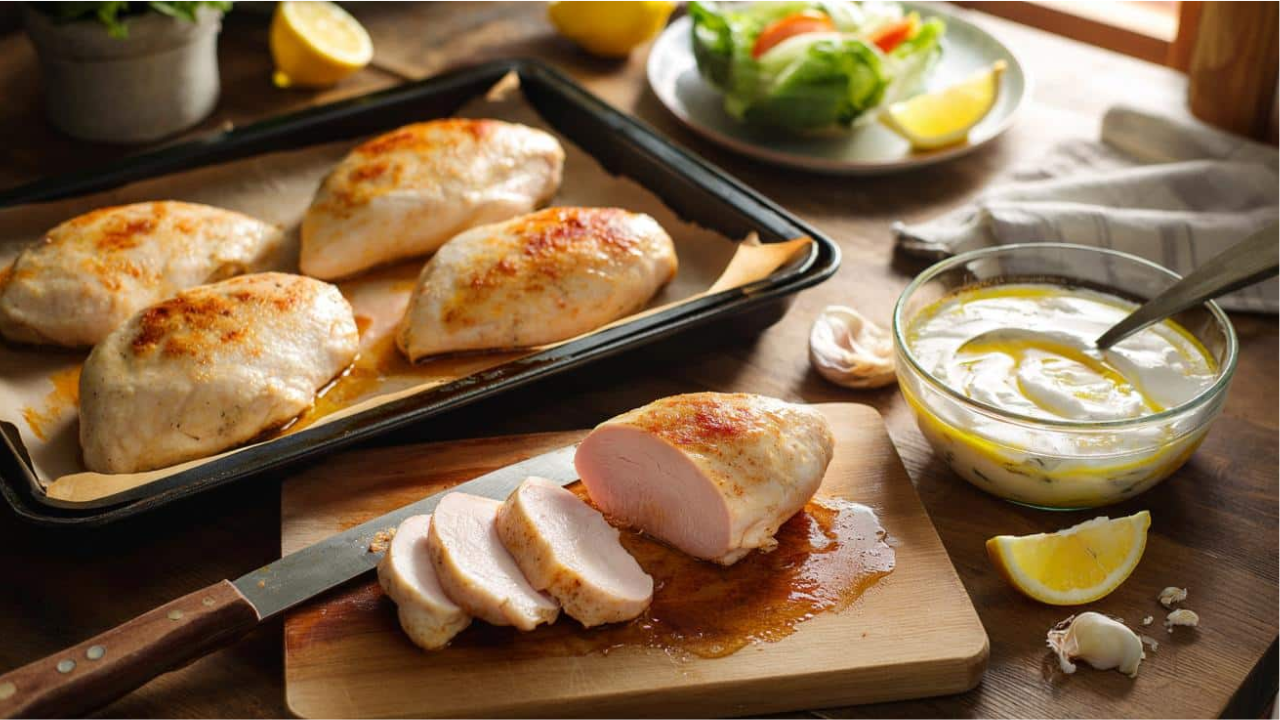
Pat the chicken breasts dry using paper towels. If the pieces are thick, slice them horizontally to create thinner portions. This helps them cook evenly.
Step 2: Make The Quick Marinade
In a bowl, mix yogurt, olive oil, lemon juice, garlic, salt, paprika, and pepper until combined.
Add the chicken and coat it evenly with the marinade.
Let it rest for 15 to 25 minutes while you preheat the oven to 200°C (400°F).
Step 3: Bake The Chicken
Place the marinated chicken on a lined baking tray. Do not remove excess marinade — it adds flavor and helps retain moisture.
Bake for 15 to 18 minutes, depending on thickness.
Step 4: Let The Chicken Rest
After removing it from the oven, allow the chicken to rest for 5 minutes before slicing. This step allows the juices to redistribute throughout the meat.
The Science Behind This Quick Marinade
Dry seasoning mainly flavors the outer surface of chicken. A wet marinade allows salt, fat, and acid to interact with the meat before cooking begins.
Salt helps retain water within protein fibers.
Fat slows moisture evaporation and enhances flavor.
Acid tenderizes the outer layer without damaging texture when used briefly.
Baking at 200°C creates a balance — hot enough to develop color and flavor but gentle enough to prevent moisture loss.
Common Mistakes That Lead To Dry Chicken
Skipping The Marinating Step
Even a short marinade makes a noticeable difference. Think of it as a small preparation investment that guarantees better results.
Overbaking “Just To Be Safe”
Many cooks leave chicken in the oven slightly longer out of fear of undercooking. Unfortunately, even two extra minutes can dry out lean meat.
Removing chicken when it is just cooked and letting it rest ensures both safety and tenderness.
Cooking Uneven Pieces
Thicker chicken breasts take longer to cook and often dry out on the outside before the inside finishes cooking. Slicing them evenly prevents this issue.
Tips To Make This Recipe Foolproof
Use Yogurt Or Buttermilk
Both ingredients gently tenderize chicken while adding flavor and moisture.
Don’t Wash Off The Marinade
Leaving the marinade on the chicken helps create better color and richer taste during baking.
Season Properly
Under-seasoned chicken tastes bland even if cooked perfectly. Salt plays a crucial role in both flavor and moisture retention.
Always Rest Before Cutting
Resting prevents juices from escaping when sliced, helping the chicken stay tender.
Why This Recipe Fits Easily Into Daily Life
The beauty of this method lies in its flexibility. You can adjust flavors based on what you have available.
- Replace yogurt with mayonnaise or buttermilk
- Swap paprika for cumin, curry powder, or chili flakes
- Use vinegar instead of lemon juice
Once you learn the structure — quick marinade, hot oven, short bake, rest time — you can create endless variations.
Over time, this recipe becomes less about measuring ingredients and more about cooking with confidence.
How This Technique Helps With Meal Prep
This baked chicken method works extremely well for weekly meal preparation. The marinade helps the chicken remain soft even after refrigeration.
Cooked chicken can be stored in the refrigerator for 3 to 4 days and used in:
- Salads
- Sandwiches
- Wraps
- Rice bowls
- Pasta dishes
Unlike many baked chicken recipes, this version maintains tenderness when reheated or eaten cold.
Key Takeaways From This Cooking Method
| Key Point | Detail | Reader Benefit |
|---|---|---|
| Quick Marinade | 10–30 minutes using yogurt, oil, and acid | Prevents dryness and improves flavor |
| High Oven Temperature | Bake at 200°C (400°F) | Even cooking with light browning |
| Resting Time | 5 minutes before slicing | Keeps juices inside the meat |
Frequently Asked Questions
How long should chicken be marinated?
For this recipe, 15 to 30 minutes is ideal. Longer marinating is possible but not necessary.
Can I make this recipe without yogurt?
Yes. Olive oil, salt, spices, and a mild acid like lemon or vinegar can still produce juicy chicken.
Should chicken be covered while baking?
No. Baking uncovered helps develop color and flavor while the marinade protects moisture.
How can I check if chicken is cooked without a thermometer?
Slice the thickest portion. The meat should be white with clear juices and no pink center.
Can this recipe be used for weekly meal prep?
Yes. The chicken remains tender for several days when stored properly in the refrigerator.
Conclusion
Baked chicken breast often gets a bad reputation for being dry and flavorless. However, the difference between disappointing and delicious chicken usually comes down to one small step — a short marinade before cooking.
This quick preparation allows the meat to retain moisture, absorb flavor, and cook more evenly. It requires very little extra time but delivers significantly better results.
Sometimes, the best cooking techniques are the simplest ones — small pauses that quietly transform ordinary meals into reliable favorites.