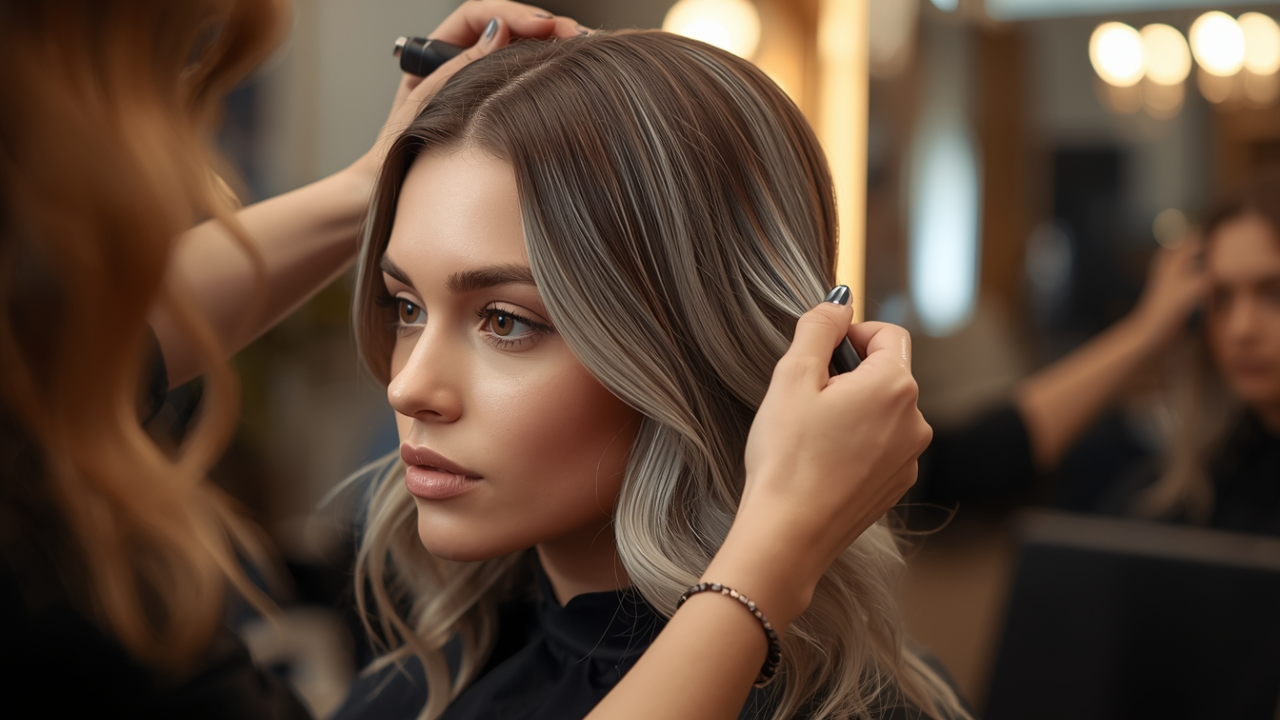
At the salon, she stares into the mirror before even removing her coat. Not because she’s tired — but because of the stubborn silver stripe slowly creeping along her parting. Her colourist suggests another balayage refresh. She sighs quietly.
“I feel like I live here now.”
A stylist nearby gently suggests something different.
“What if we melt it instead?”
Not cover. Not hide. Melt.
And just like that, one of the fastest-rising hair colouring trends quietly steps into the spotlight.
Why “Melting” Is Replacing Balayage in Modern Salons
Walk into trend-forward salons today and you’ll notice something subtle but powerful. Harsh colour contrasts are disappearing. Bold streaks and sharply defined highlights are slowly being replaced with softer, more natural gradients.
This new technique, called hair melting, blends multiple shades so seamlessly that it becomes nearly impossible to tell where one tone ends and another begins.
Unlike balayage, which focuses on lighter ends and darker roots, melting creates a fluid transition across the entire length of the hair. Instead of fighting grey hair, it blends it into a softer, more natural overall appearance.
The result? Grey hair doesn’t disappear — it simply stops drawing attention.
How Hair Melting Works Differently from Balayage
Balayage revolutionised colouring by offering natural-looking highlights. But it still creates noticeable contrast between roots and ends, which can highlight grey regrowth quickly.
Hair melting takes the blending concept further by using multiple closely matched tones layered across the hair shaft.
Colourists typically use:
- Your natural base shade
- A slightly lighter “bridge” colour
- Subtle highlight or accent tones
The shades are blended using feathered brush strokes, allowing the colours to merge naturally rather than sit in visible sections.
This layered blending tricks the eye into seeing harmony rather than individual colour lines.
Why Hair Melting Makes Grey Hair Less Noticeable
Grey hair often becomes noticeable because of contrast. When natural silver strands grow beside solid dyed colour, the sharp difference highlights regrowth.
Melting softens this contrast by integrating grey tones into a multi-shade gradient. Instead of appearing as isolated streaks, silver strands become part of the overall colour dimension.
Many clients report that their regrowth feels less dramatic and less urgent to correct.
The Real Advantage: Lower Maintenance Colour
One of the biggest reasons melting is gaining popularity is maintenance flexibility.
Traditional colouring often requires touch-ups every four to six weeks. Melting techniques typically allow longer intervals between appointments because regrowth blends gradually rather than forming harsh lines.
Many people can extend salon visits to eight or even twelve weeks.
This approach reduces:
- Time spent in salons
- Colour maintenance stress
- Long-term colouring costs
- Hair damage from frequent treatments
What Happens During a Hair Melting Appointment
Melting starts with detailed consultation rather than immediate colouring.
Colourists examine:
- Where grey hair is most visible
- Natural hair colour and undertones
- Lighting conditions affecting colour visibility
- Desired maintenance level
They then design a personalised colour gradient tailored to the client’s natural growth pattern.
Application involves extremely fine sectioning and overlapping colour placement, often blended using feathered brush strokes or smudging techniques.
The final look appears soft, natural, and slightly dimensional rather than uniform.
How Hair Melting Changes Your Relationship with Grey Hair
Many people describe colouring grey hair as an ongoing battle. Solid dyes attempt to completely hide natural growth, which can create constant pressure for maintenance.
Hair melting offers a more relaxed approach. It allows grey hair to exist naturally while reducing its visual impact.
Many stylists describe the technique as a “colour truce” — balancing enhancement with acceptance.
Instead of trying to look younger, clients often say the goal becomes looking refreshed and natural.
Common Mistakes That Can Ruin Hair Melting
One of the biggest risks after switching to melting is using box dyes at home. Solid permanent dyes can destroy the blended gradient and create flat, block-colour results.
Colourists usually recommend:
- Colour-safe gentle shampoos
- Occasional purple or blue toning shampoos for brassiness
- Styling methods that add texture or movement
Loose waves, soft layers, or natural partings help maintain the blended effect.
Is Hair Melting Suitable for Heavily Grey Hair?
Yes, but colourists often adjust the technique by using more translucent shades and subtle highlights. The goal remains blending rather than full coverage.
Even individuals with over 50% grey hair can achieve natural-looking colour transitions using melting.
Why This Trend Reflects Changing Beauty Standards
Hair melting represents a broader cultural shift. Instead of treating grey hair as something to erase, the trend focuses on integrating natural ageing into personalised beauty.
Many clients now prioritise:
- Natural colour harmony
- Reduced maintenance pressure
- Healthier hair preservation
- Authentic personal style
Melting allows people to move gradually between full colour and natural grey without drastic changes.
Key Takeaways
- Hair melting blends multiple tones to soften grey hair naturally
- The technique creates smoother regrowth compared to balayage
- Maintenance appointments are often less frequent
- Melting focuses on dimension rather than full grey coverage
- The trend supports a more natural ageing aesthetic
Frequently Asked Questions
Is hair melting better than balayage?
It depends on personal goals. Melting offers softer regrowth and lower maintenance, while balayage creates brighter highlight contrast.
Does melting damage hair less?
Often yes, because it typically uses softer colour formulas and less intense bleaching.
How often does melted colour need refreshing?
Most people refresh every 8–12 weeks, depending on hair growth and colour preference.
Can melting be done at home?
True melting requires professional blending techniques and is difficult to achieve with home colouring products.
Is melting suitable for all hair colours?
Yes. Colourists can adapt the technique for brunettes, blondes, red tones, and naturally grey hair.