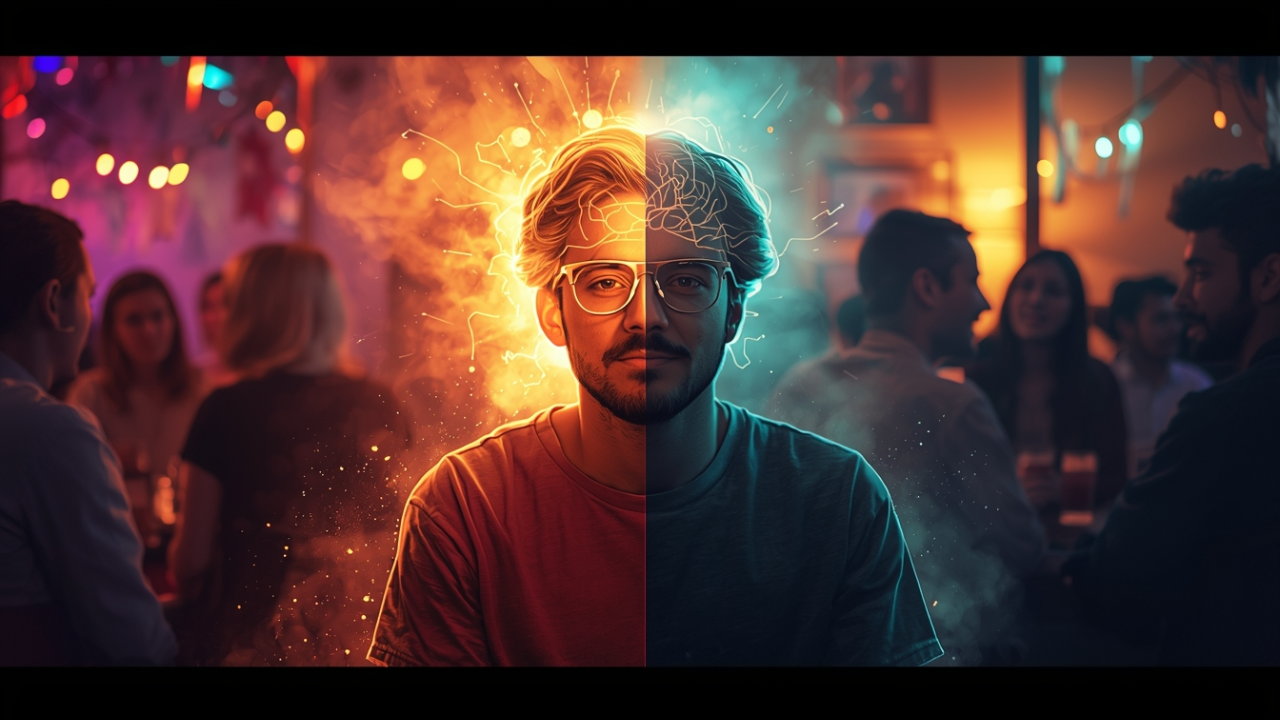
The group chat lights up with plans for Friday night. Half the friends instantly start joking about drinks, music, and finally catching up after a long week. The other half quietly calculates how loud the place will be, how long the conversations might last, and whether they’ll need a full day alone afterward just to recover.
It’s the same invitation. The same people. The same plan.
Yet one person leaves the night glowing with energy, while another returns home feeling emotionally exhausted.
Why does socializing recharge some people but completely drain others?
Psychology suggests the answer lies deeper than simple labels like introvert or extrovert. It often comes down to how individual nervous systems process social interaction and emotional stimulation.
Your Social Energy Works Like a Hidden Fuel Tank
Every person has an internal energy system that determines how they respond to social interaction. For some, conversations and group gatherings act like emotional charging stations. Being around others stimulates their brain’s reward centers, releasing chemicals such as dopamine and oxytocin that create feelings of connection and excitement.
For others, social interaction consumes mental energy instead of restoring it. Even enjoyable conversations require constant attention to facial expressions, tone, timing, and emotional responses. Their brain is essentially multitasking throughout the interaction, which gradually drains mental resources.
Both types of people may enjoy social events equally. The difference appears afterward — one feels energized, while the other needs solitude to recover.
The Role of Brain Stimulation and Sensory Overload
Social environments are filled with sensory information. Conversations overlap, music plays in the background, phones buzz with notifications, and multiple emotional signals occur simultaneously.
For individuals who thrive on stimulation, this sensory input feels exciting and motivating. Their brain interprets it as rewarding and socially fulfilling.
For others, the same environment creates cognitive overload. Their brain processes every detail intensely, leading to mental fatigue similar to running multiple programs simultaneously on a computer.
This overload does not indicate social anxiety or dislike for people. It simply reflects differences in neurological processing.
Why Emotional Safety Changes Everything
Another key factor influencing social energy is emotional comfort. When individuals feel safe, accepted, and authentic in social environments, interactions usually feel energizing.
However, when someone feels pressure to perform, hide emotions, or maintain a specific social image, their stress response activates. This invisible tension increases cortisol levels and accelerates mental exhaustion.
Psychologists often summarize this concept simply:
Connection restores energy. Pretending consumes energy.
The Difference Between Enjoyment and Energy Cost
Many people assume that enjoying a social event automatically means it should feel energizing. However, enjoyment and energy consumption are separate experiences.
Someone may genuinely love spending time with friends but still feel mentally tired afterward. This is particularly common among individuals who are highly empathetic or socially observant.
They often focus intensely on others’ emotions, reactions, and comfort levels, which increases emotional labor during interactions.
How to Manage Social Life Using an Energy Budget
Instead of judging social plans based on availability alone, psychologists recommend thinking in terms of energy cost versus emotional reward.
For example:
- A crowded party with acquaintances may be high energy cost and low emotional return.
- A quiet coffee meeting with a close friend may be low energy cost and high emotional return.
This mindset allows individuals to adjust social plans rather than avoiding them entirely.
Small changes such as shorter visits, smaller group sizes, or calmer environments can significantly reduce emotional fatigue.
Practical Ways to Prevent Social Burnout
Adjust Social Formats
Suggest quieter or more comfortable settings instead of loud or crowded environments.
Plan Arrival and Exit Times
Allow yourself to join gatherings later or leave earlier without guilt.
Choose Anchor People
Having one trusted person at social events can provide emotional stability and reduce social pressure.
Schedule Recovery Time
Plan quiet time before and after social events to help your nervous system reset.
Keep One Evening Free Each Week
Maintaining unscheduled time helps balance social stimulation and emotional recovery.
Why Guilt and Fear of Missing Out Make Social Fatigue Worse
Many people agree to social invitations out of obligation or fear of missing opportunities. Attending events while already emotionally drained often leads to resentment and deeper exhaustion.
Another common coping strategy involves using alcohol or constant phone scrolling to reduce social discomfort. While these behaviors provide temporary relief, they often prevent genuine connection, leaving individuals overstimulated yet emotionally disconnected.
Understanding Extroverts’ Social Needs
People who gain energy from social interaction also face challenges. Isolation or limited interaction can cause emotional fatigue and loneliness for them.
Extroverted individuals often benefit from intentionally planning social activities, such as group hobbies, co-working sessions, or regular social gatherings, to maintain emotional balance.
Recognizing these differences allows friendships and relationships to become more supportive and flexible.
Rethinking What a “Healthy Social Life” Means
Society often promotes the idea that more social interaction equals better emotional health. However, psychological research shows that quality of connection matters far more than quantity.
Some individuals feel fulfilled with a small circle of deep relationships. Others thrive in large social networks and frequent group activities.
Neither style is superior. They simply reflect different emotional survival strategies shaped by personality, upbringing, and life experiences.
How Honest Communication Improves Social Relationships
Understanding personal social energy patterns encourages healthier communication. Instead of questioning why someone avoids social gatherings, people can begin asking more supportive questions.
For example:
- “What type of social plans feel most comfortable for you?”
- “Would you prefer a smaller group or quieter setting?”
This approach builds stronger relationships based on emotional understanding rather than social pressure.
Finding Your Personal Social Balance
A balanced social life does not require constant interaction or complete isolation. The goal is identifying which types of social experiences genuinely restore emotional well-being.
Pay attention to how you feel after different social activities. Over time, these observations help create a schedule that supports both connection and mental health.
The most important question is not how often you socialize, but whether your social experiences leave you feeling emotionally supported and energized.
Key Takeaways
- Social energy varies based on neurological and emotional processing differences
- Enjoying social events does not always mean they restore energy
- Emotional safety and authenticity strongly influence social fatigue
- Adjusting social formats and recovery time reduces burnout
- Healthy social life depends on personal energy patterns rather than social expectations
Frequently Asked Questions
Why do I feel tired after spending time with people I like?
Enjoying relationships and processing social stimulation are separate experiences. You may emotionally value social time but still require solitude to recharge.
Does social exhaustion mean I am introverted?
Not necessarily. Many people fall between introversion and extroversion or experience social fatigue due to stress or emotional overload.
Can I improve my social energy tolerance?
You can gradually build tolerance by choosing supportive environments, maintaining boundaries, and scheduling recovery time.
How can I decline social invitations politely?
Be honest and specific without overexplaining. Suggest alternative plans that match your comfort level.
What if I need more social interaction than my friends do?
Balance your social needs across multiple relationships and communicate openly about your preferences.