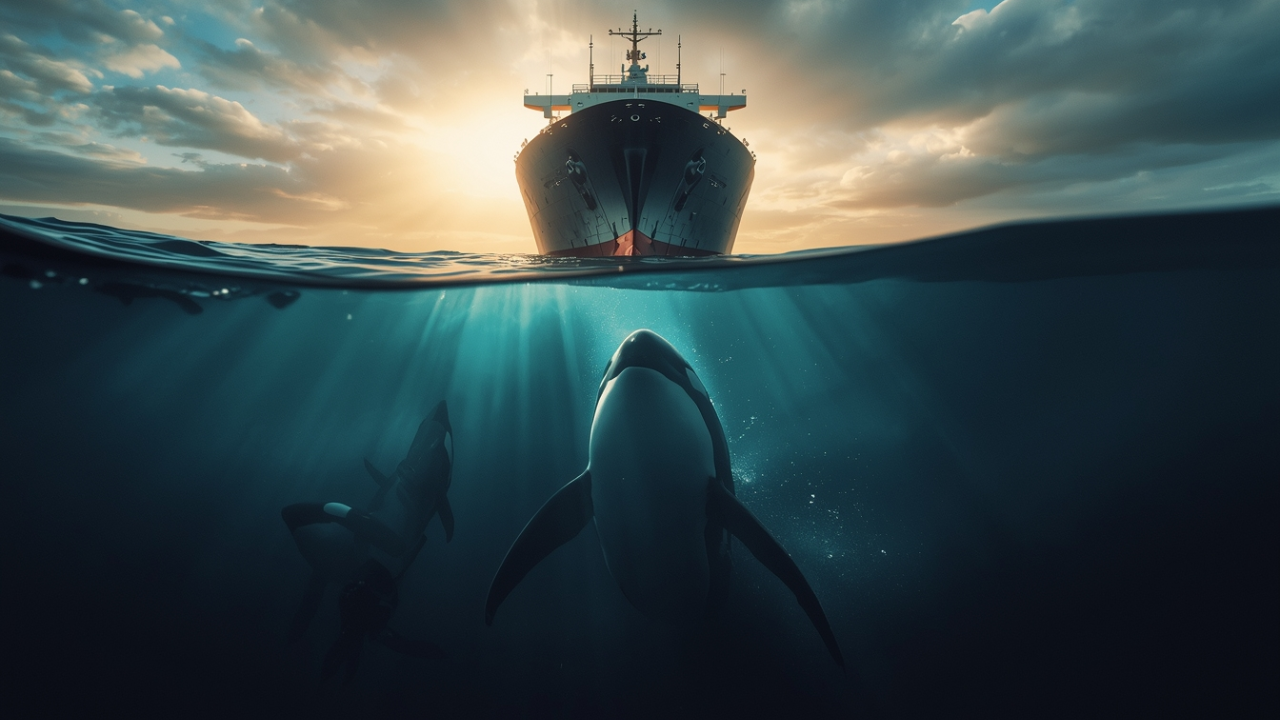
The ocean appeared peaceful that afternoon. A Spanish sailing boat drifted across calm waters as passengers laughed and enjoyed the view. The engine hummed softly — barely noticeable in the quiet sea air.
Then everything changed.
A sudden jolt shook the vessel. Crew members shouted warnings while the camera shook wildly. Beneath the water’s surface, a black-and-white shape glided past with surprising speed and purpose.
Moments later, another impact struck the rear of the boat. The steering wheel jerked violently as the captain ordered passengers to grab life jackets. Dark fins surfaced again — closer, faster, and almost coordinated.
Observers later described the encounter as strange, almost unsettling. The orcas did not appear confused or aggressive without reason. Instead, they seemed focused, deliberate, and organized.
Marine researchers and sailors across Europe are now witnessing a phenomenon that is raising serious questions about human activity in the ocean.
The Growing Fear of the “Orca Zone”
Along the coasts of Spain, Portugal, and extending into parts of the North Atlantic, sailors have begun using a new phrase: the “orca zone.”
It refers to regions where encounters between vessels and pods of killer whales have become increasingly frequent. Reports of orcas striking boat rudders — the part responsible for steering — have surged dramatically since 2020.
What began as isolated incidents near the Strait of Gibraltar has grown into a recurring pattern. Commercial fishing vessels, sailing yachts, and even small cargo ships have reported similar attacks.
Unlike accidental collisions with marine animals, these incidents show a disturbing level of precision. Orcas appear to target the steering systems directly, leaving vessels drifting helplessly at sea.
Are Orcas Learning to Disable Boats?
Marine biologists are cautious about using emotional or sensational terms like “revenge” or “war.” However, many researchers believe these interactions demonstrate learned behavior spreading through orca social groups.
Evidence suggests that certain pods are teaching younger members to strike rudders repeatedly. Videos show adult female orcas initiating contact while juveniles observe and imitate the technique.
Some scientists theorize that these behaviors may have originated from negative past experiences, such as injuries caused by fishing gear or vessel collisions. Orcas are known for their intelligence, memory, and ability to transmit knowledge socially.
If one orca developed defensive behavior, it may have gradually spread across entire pods.
Why Rudders Are Being Targeted
The rudder is one of the most vulnerable parts of any ship. Damaging it disables steering without necessarily destroying the entire vessel.
Many sailors describe the attacks as methodical rather than chaotic. Orcas repeatedly ram or bite the rudder, sometimes working in coordinated groups.
For decades, ships have dominated marine ecosystems, disrupting migration routes, producing intense underwater noise, and competing for fish resources. Orcas, as apex predators, may be responding to these environmental pressures.
Their actions highlight how marine species can adapt when their habitat becomes threatened.
How Shipping Routes Are Quietly Changing
The growing frequency of orca encounters is forcing shipping companies and maritime authorities to reconsider traditional sea routes.
Captains now slow down when traveling through known orca corridors. Fishing fleets adjust operations to avoid peak whale migration periods. Some sailing schools have even cancelled routes used safely for decades.
Insurance companies are also recognizing orca-related vessel damage as a new operational risk, alongside storms and mechanical failures.
Ports across southern Europe are sharing real-time orca sighting data, allowing vessels to avoid high-risk areas. For the first time, shipping lanes are being influenced by wildlife behavior rather than only human logistics.
The Ocean Is Not an Empty Highway
For centuries, global trade treated the ocean as an open transportation network with unlimited capacity. Orca interactions are challenging that assumption.
These highly intelligent marine mammals operate in family groups, communicate through complex vocalizations, and demonstrate advanced hunting strategies. Their ability to disrupt vessels reveals how little humans truly control ocean ecosystems.
Experts increasingly describe the situation as ecological feedback — nature reacting to industrial pressure rather than deliberate aggression.
New Safety Strategies Being Tested
Ship operators are experimenting with several methods to reduce orca interactions.
Some vessels reduce engine speed or temporarily shut down propulsion when whales are nearby. Others adjust sonar usage, as loud underwater signals may disturb marine animals.
Engineers are developing protective rudder designs and quieter propulsion systems to reduce attraction or irritation to orcas.
Meanwhile, sailors have shared improvised strategies such as making loud metallic noises or dropping floating materials to distract curious pods. However, none of these techniques guarantee safety.
The Risk of Escalating Conflict
Some maritime groups have suggested using stronger deterrent technologies such as powerful sonar or acoustic devices. However, marine scientists warn that aggressive deterrence could harm entire whale populations and escalate conflict.
Underwater noise pollution already affects communication and navigation among whales and dolphins. Increasing acoustic disturbances could damage delicate marine ecosystems.
Most researchers agree that long-term solutions must balance shipping operations with wildlife protection rather than attempting to dominate marine species.
What Orca Behavior Reveals About Human Activity
The rising number of ship encounters reflects deeper environmental changes. Overfishing reduces prey availability, forcing orcas to adapt their hunting behavior. Increased shipping traffic disrupts migration routes and produces constant underwater noise.
The phenomenon forces humanity to confront an uncomfortable truth: the ocean is not passive infrastructure. It is a living ecosystem with species capable of adapting, learning, and responding to threats.
Orca interactions remind global industries that natural systems cannot always be controlled through technology or regulation.
How These Events Could Shape Future Maritime Policies
Governments and international maritime organizations are now studying whale interaction patterns to develop new shipping guidelines.
Possible future measures include:
- Mandatory speed reductions in whale migration zones
- Designated wildlife-safe shipping corridors
- Stricter monitoring of fishing equipment and sonar use
- Increased funding for marine conservation research
Such policies may reshape global shipping practices and environmental regulations over the coming decades.
What Ordinary People Can Learn from This Ocean Warning
Although most individuals never encounter orcas directly, human consumption habits influence marine ecosystems. Demand for long-distance seafood and global shipping increases ocean traffic and fishing pressure.
Supporting sustainable seafood choices, marine conservation programs, and cleaner shipping policies can reduce stress on marine wildlife.
The story unfolding in the North Atlantic is not simply about ships and whales. It represents a larger conversation about how humanity interacts with natural ecosystems.
Key Takeaways
- Orcas have shown repeated behavior targeting ship rudders in parts of the North Atlantic
- Scientists believe the behavior may spread through social learning
- Shipping companies are adapting routes and speeds to reduce encounters
- The phenomenon highlights environmental pressure on marine ecosystems
- Future maritime policies may increasingly consider wildlife movement patterns
Frequently Asked Questions
Are orcas intentionally attacking ships?
Scientists avoid labeling it as deliberate aggression. The behavior likely involves curiosity, learned responses, or reactions to previous negative encounters.
Have orcas caused ships to sink?
Most interactions disable steering systems rather than destroying vessels. However, smaller boats have occasionally suffered severe damage.
Why are encounters concentrated near Spain and Portugal?
These regions combine heavy shipping traffic, tuna migration routes, and active fishing zones, increasing orca exposure to vessels.
Can ship designs prevent orca interactions?
Protective rudder designs and quieter propulsion systems may reduce encounters but cannot completely eliminate wildlife interactions.
How can individuals help protect marine ecosystems?
Supporting sustainable seafood consumption and marine conservation policies helps reduce environmental pressure on ocean wildlife.