At first glance, it was just a line on a map — too straight, too neat to belong to the chaotic texture of the ocean floor. But that line, hidden beneath cold Atlantic water off the French coast, has turned into one of the most intriguing archaeological discoveries in years.
Nine metres below the waves, archaeologists have identified a massive stone wall built roughly 7,000 years ago, at a time when the land it stood on was still dry. Its builders were not farmers. They were not metalworkers. According to the evidence, they were hunter-gatherers — and that single fact is forcing researchers to rethink what early coastal societies were capable of organising, planning, and building.
A human structure hiding beneath the Atlantic
The wall lies off the island of Sein, at the western edge of Brittany — a place better known for treacherous waters and strong tides than prehistoric monuments.
It was first noticed not by divers, but on high-resolution sonar maps of the seabed. French geologist Yves Fouquet spotted a long, suspiciously straight feature cutting across an otherwise irregular rocky bottom. Natural formations rarely behave so neatly.
That anomaly triggered a series of underwater surveys and dives between 2022 and 2024. What researchers found beneath roughly nine metres of water was unmistakable: a deliberately constructed stone wall, built on what had once been open land.
A monument built with effort — and intent
The structure stretches for about 120 metres, rises up to 2 metres high, and measures nearly 20 metres wide at its base. Along its upper surface, large granite blocks are arranged in two almost parallel rows.
These are not stones casually dropped by waves. Many weigh several hundred kilograms and are positioned with clear regularity. The scale alone rules out chance. This was a planned project, requiring coordination, labour, and shared purpose.
Using radiocarbon dating combined with regional sea-level models, researchers estimate the wall was built between 5800 and 5300 BC. At that time, sea levels were around seven metres lower than today. The island of Sein itself would have been vastly larger — possibly more than ten times its current size.
Only centuries later did the rising Atlantic flood the low-lying coastal plain, sealing the wall beneath the sea.
Hunter-gatherers who didn’t live “lightly”
This timing places the wall at the end of the Mesolithic period, just before agriculture reached western France. Traditionally, Mesolithic hunter-gatherers are imagined as small, mobile groups leaving little permanent mark on the landscape.
The wall challenges that image.
Its size, the weight of its stones, and its careful alignment suggest something very different: communities capable of organising large workforces, planning over long periods, and passing down technical knowledge.
That level of social coordination sits uneasily with the old idea of loosely connected bands constantly on the move. Instead, it points to semi-settled coastal lives, anchored by reliable fishing grounds, tidal knowledge, and repeated seasonal camps.
What was the wall actually for?
Researchers publishing their findings in the International Journal of Nautical Archaeology outline several possible functions. None can yet be confirmed, but a few stand out:
- Coastal fish trap
The wall may have guided fish into shallow enclosures during falling tides, allowing large catches with minimal effort. - Wave barrier or shoreline defence
It could have softened wave energy, protecting a lagoon or sheltered landing area behind it. - Territorial marker
The structure may have defined access rights to valuable fishing zones or safe landing places.
Large stone fish weirs are known from later periods in Europe and North America. In those systems, walls running across tidal zones funnel fish into traps as the water recedes. The Breton wall could represent an early version of this strategy, built by people deeply familiar with tides, currents, and seasonal fish movements.
Another possibility is that it reflects an early response to rising sea levels. Post-glacial meltwater was still raising oceans slowly but relentlessly. A wall may have helped slow erosion or protect a shallow lagoon — at least for a few generations.
A landscape the sea quietly erased
Seven thousand years ago, the area around Sein would have looked nothing like today’s jagged shoreline. Instead of open ocean, there were dunes, wetlands, tidal flats, and shallow bays rich in fish, shellfish, and seabirds.
Small communities likely moved between inland forests and the coast, following seasonal rhythms. As sea levels rose, those lowlands flooded. Campsites, hearths, burial grounds, and work areas disappeared beneath the water.
Wooden structures decayed. Only stone endured.
The ocean didn’t destroy this history in a single dramatic moment. It erased it slowly, centimetre by centimetre — until entire chapters of human life slipped out of sight.
It’s no coincidence that Breton folklore is filled with stories of drowned lands and lost settlements beyond the modern coast. Some archaeologists suspect these legends may echo very real memories of retreating shorelines, passed down long after the land itself vanished.
How underwater archaeology is changing prehistory
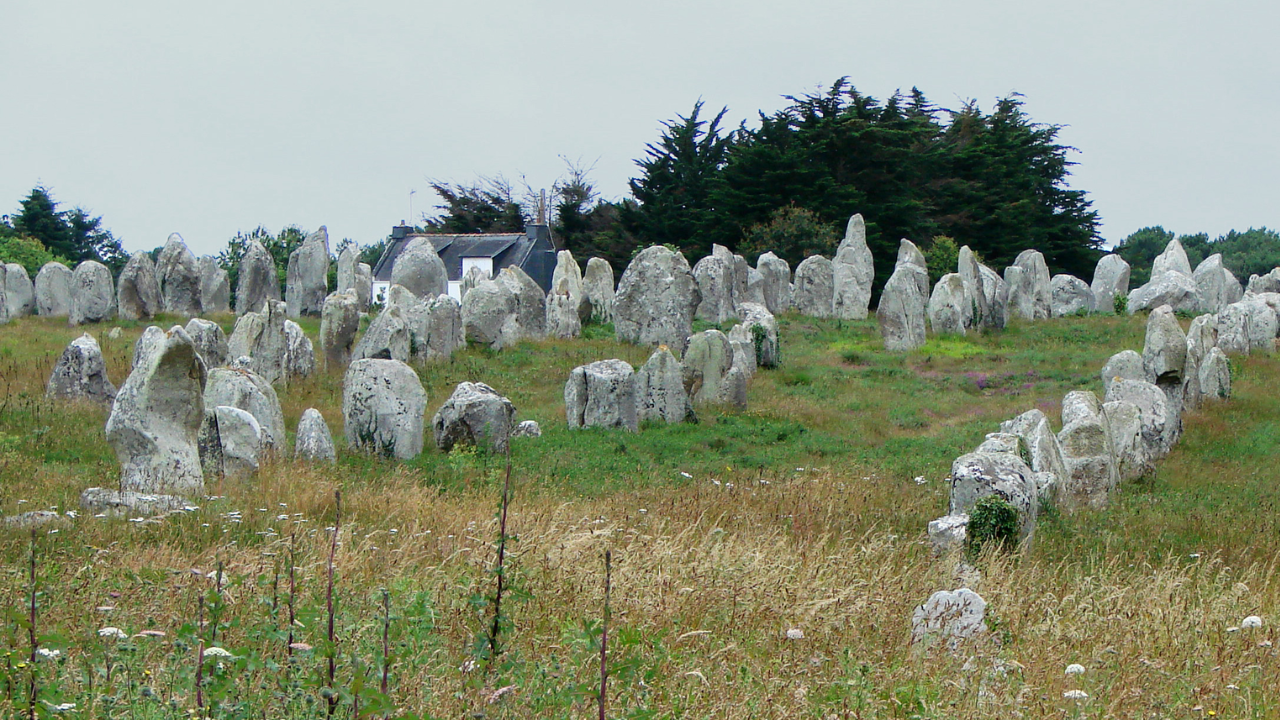
For decades, prehistoric research focused mainly on caves, inland plains, and famous monuments like Carnac’s standing stones. Submerged landscapes were simply too difficult to study.
That is changing.
Advances in sonar mapping, photogrammetry, and underwater surveying are turning drowned coastlines into some of the most promising archives of early human life — especially for fishing, seafaring, and climate adaptation.
From sonar line to stone monument
The investigation of the Sein wall followed a now-classic underwater archaeology pathway:
| Stage | What Happened |
|---|---|
| Remote mapping | Sonar data revealed an unusually straight seabed feature |
| Targeted dives | Divers confirmed stone alignment and human construction |
| 3D recording | Photogrammetry reconstructed the wall’s layout |
| Dating & analysis | Sea-level curves and regional data established age and context |
Each submerged structure adds to a growing picture of how people once lived along coasts that no longer exist.
Why this discovery matters today
The stone wall off Sein offers a deep-time perspective on a problem we are again facing: rising seas.
Mesolithic communities had no concrete, no satellites, no climate models. What they did have was close observation, collective labour, and flexible lifeways. They adapted — shifting camps, adjusting food strategies, and sometimes building structures to delay the inevitable.
The wall hints at a moment of resistance before retreat. For a time, stone and shared effort may have held the sea at bay. Eventually, the ocean won.
That same slow, persistent force is now reshaping modern coastlines.
Standing on the cliffs of Brittany today, it’s striking to realise that just beyond the breaking waves lies proof that humans here were already organising major projects, reading tides, and reshaping stone seven millennia ago. The distance between their world and ours suddenly feels much smaller.
Key Takeaways
| Key Point | Detail | Why It Matters |
|---|---|---|
| Submerged monument | 120-metre stone wall under 9 m of water | Rare survival of Mesolithic construction |
| Unexpected builders | Likely hunter-gatherers | Challenges old views of early societies |
| Possible function | Fish trap, barrier, or marker | Shows advanced coastal planning |
| Modern relevance | Built during rising seas | Offers lessons for climate adaptation |