You can hide a messy bedroom by closing the door.
You can dim the lights in the living room and distract guests with conversation.
But the kitchen? The kitchen always tells the truth.
It’s where people make coffee, rinse a glass, glance around while waiting for dinner. In just a few seconds, they form an impression — not about wealth or style, but about habits. Cleanliness. Care. Attention to basics.
A kitchen doesn’t need to look like a magazine shoot. A lived-in space is normal and comforting. But certain objects and habits quietly send the wrong signal. They create a sense of neglect, even when everything is technically “clean”.
Here are 10 things that should never be in a kitchen if you want the room to feel welcoming, hygienic, and calmly run — and why guests notice them faster than you think.
Why the kitchen reveals more than any other room
The kitchen is practical by nature. Food safety, smells, surfaces, and order matter here in a way they don’t in other rooms.
A cluttered shelf in the living room feels decorative.
The same clutter near food feels careless.
People may not say anything, but they register it. And once they do, it colours everything else — even the meal itself.
This isn’t about perfection. It’s about avoiding signals of neglect.
1. Piles of plastic bags and old packaging
Almost every household has a “bag of bags”. The problem begins when it multiplies.
Plastic bags spilling out of drawers, hanging from handles, or stuffed between appliances instantly make a kitchen look chaotic. Old takeaway boxes, mismatched lids, and cracked food containers add to the impression.
Beyond appearances, these piles:
- Trap grease and crumbs
- Collect dust quickly
- Attract insects and pantry pests
Better habit
- Keep only what you’ll reuse in the next week or two
- Recycle torn or greasy bags immediately
- Switch to a few sturdy reusable bags or storage boxes
Less plastic on display = calmer visual space.
2. Open or overflowing rubbish bins
An open bin is one of the fastest ways to ruin a kitchen atmosphere. Even if you no longer smell it, guests do.
An overflowing bin sends a clear message:
“Basic maintenance isn’t happening here.”
Food waste, packaging, and moisture create odours long before the bin looks “full”.
Better habit
- Use a bin with a lid, preferably pedal-operated
- Empty it before it reaches the top
- Wipe the rim and surrounding floor weekly
Five minutes of bin care can make the entire kitchen feel fresher.
3. Medicines and random chemicals on the counter
Painkillers next to the kettle. Antibiotics near the coffee machine. Cleaning sprays beside the chopping board.
It’s common — and it’s a bad look.
Kitchen counters should be for food and food tools only. Mixing medication, chemicals, and cooking spaces feels unsafe and disorganised.
Why it matters
- Safety risk for children and pets
- Cross-contamination concerns
- Visual confusion and stress
Better habit
- Store medicines in a dry cupboard, away from heat
- Keep cleaning products separate from food areas
- Clear counters immediately after use
A clear counter reads as calm, adult, and intentional.
4. Cracked, chipped, or burnt cookware
A pan with a warped base.
A mug with a chipped rim.
A pot with a loose handle or scorched bottom.
These items quietly undermine trust.
Beyond looks:
- Cracks can harbour bacteria
- Scratched non-stick coatings may shed particles
- Warped cookware cooks unevenly and wastes energy
Guests may not comment, but they notice.
Better habit
Replace one or two damaged items per year. Gradual upgrades prevent clutter and avoid sudden expenses.
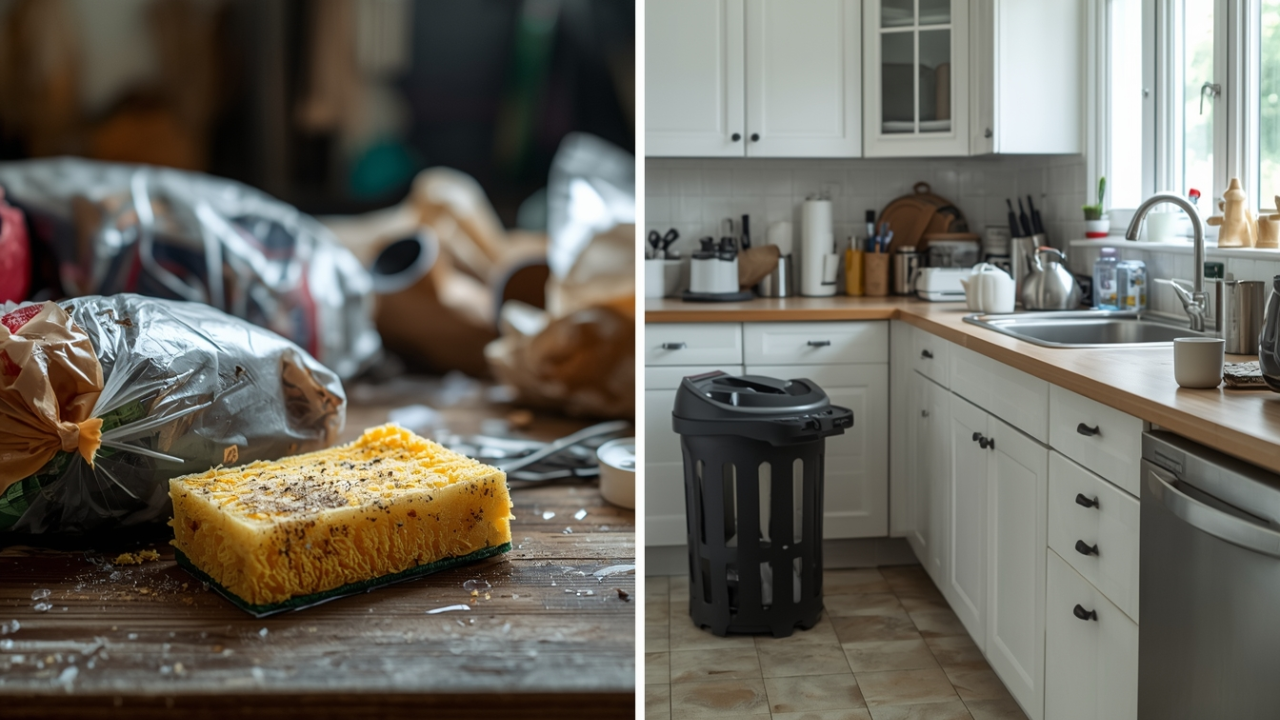
5. Old sponges and grimy dishcloths
Few smells are as instantly recognisable — and unpleasant — as a tired sponge.
Grey, soggy sponges and permanently damp dishcloths spread bacteria every time they touch a surface. A clean counter wiped with a dirty cloth is still dirty.
Why this stands out
The eye goes straight to it, just like a mouldy shower curtain in a bathroom.
Better habit
- Rotate cloths daily
- Wash them at high temperature
- Replace sponges frequently or use washable brushes
- Always let them dry fully between uses
This single change dramatically improves kitchen hygiene.
6. Food far past its best-before date
One forgotten jar is normal.
Rows of expired sauces, dusty spices, and mystery packets are not.
A cluttered pantry makes the kitchen feel neglected and raises real health concerns.
| Item | Common issue | Simple fix |
|---|---|---|
| Spices | Lose flavour, gather dust | Check yearly |
| Sauces | Mould after opening | Label opening date |
| Dry goods | Attract moths | Use sealed containers |
Better habit
Do a quick fridge and cupboard check once a month. It takes 10 minutes and instantly makes the space feel more controlled.
7. Unused appliances crowding the counter
Juicers, bread makers, air fryers, ice cream machines — wonderful tools, but not all of them deserve permanent counter space.
Crowded worktops:
- Look messy even when clean
- Make cooking stressful
- Reduce usable space
Better habit
Keep only daily-use appliances out:
- Kettle
- Toaster
- Coffee machine (maybe)
Everything else goes into cupboards, storage, or out of the house if unused. Clear surfaces signal competence and ease.
8. Decorative items coated in grease and dust
Fake plants above cupboards. Figurines near the hob. Picture frames close to steam and oil.
In kitchens, decoration quickly turns into grime.
Cooking releases microscopic fat particles that settle on nearby objects, creating sticky dust that’s hard to clean.
Better habit
- Limit décor to a few wipeable items
- Keep them away from the hob
- Avoid anything that can’t be cleaned easily
Decoration should add warmth, not dirt.
9. Lingering smells that never leave
Old oil. Stale smoke. Fish that seems to haunt the room. Damp cupboards.
Scent is often the first thing guests register — and the hardest to ignore.
Covering smells with candles or sprays only masks the problem temporarily.
Real fixes
- Ventilate during and after cooking
- Clean extractor filters regularly
- Wipe cupboard doors near the hob
- Wash bins weekly with hot water
Fresh air beats fragrance every time.
10. Paper clutter and non-kitchen items everywhere
Bills near the toaster.
Keys on the table.
Makeup, tools, pet toys on the counter.
Many households turn the kitchen into a dumping ground. The result is visual noise that makes the room feel chaotic, even if surfaces are clean.
Better habit
- One small tray or bowl for keys
- One clip or magnet for current papers
- Everything else belongs elsewhere
A kitchen should feel like a place for food and conversation, not storage.
What a “good” kitchen really signals
Guests don’t judge brands, gadgets, or décor. They notice:
- Smell
- Surfaces
- Order
If the air is fresh, counters are mostly clear, and there’s no old food lying around, the impression is positive — even in a tiny flat.
Small habits speak louder than expensive upgrades.
Small changes that make the biggest difference
Feeling overwhelmed? Don’t overhaul everything.
Try this:
- Pick one category per week (sponges, expired food, plastic bags)
- Set a 15-minute timer
- Stop when it rings
Over a month, the kitchen transforms.
Another powerful trick is the doorway test:
Stand at the entrance and look in as if you’re visiting for the first time. The first three things that bother you are the ones guests notice too.
Why this matters beyond appearances
There are real health and financial consequences:
- Dirty cloths spread bacteria
- Old dry goods attract pests
- Clutter leads to forgotten food and waste
On the positive side, an organised kitchen:
- Reduces food waste
- Encourages home cooking
- Makes daily life calmer
A well-run kitchen isn’t about showing off. It’s about creating a space that feels safe, functional, and quietly reassuring.
When those basics are in place, hospitality comes naturally — no matter what’s on the menu.