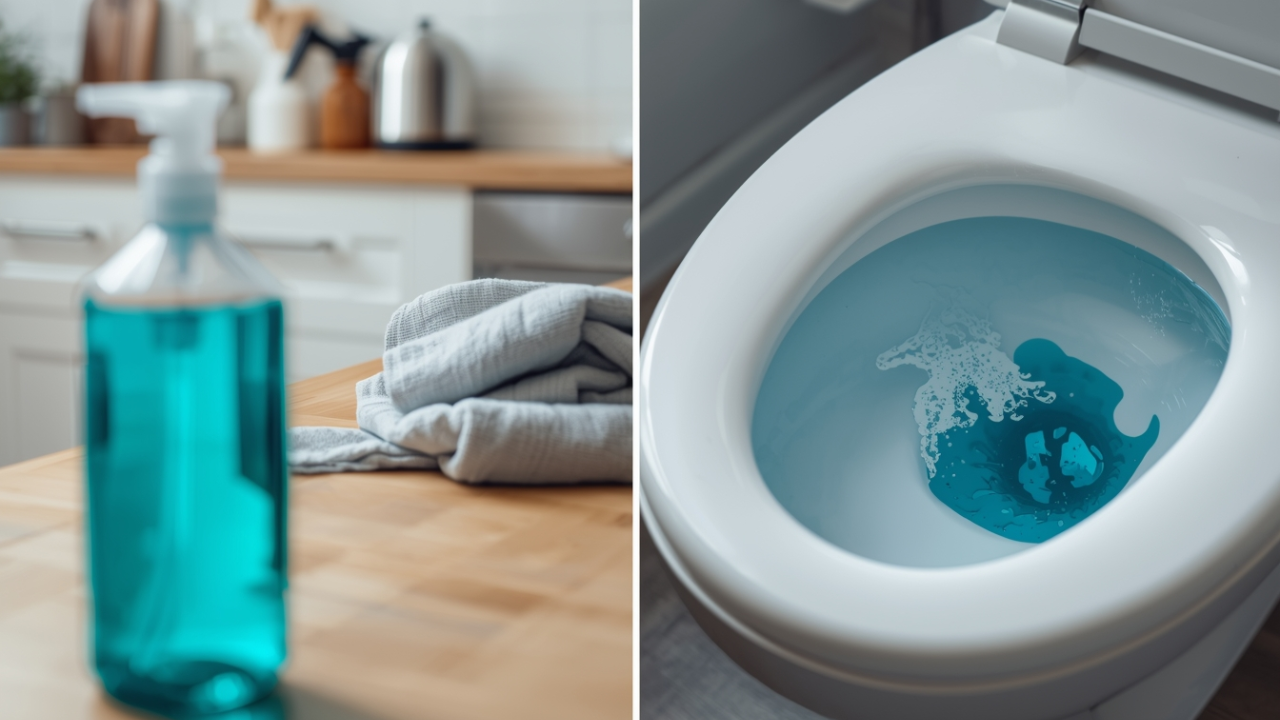
The first time I watched someone pour washing-up liquid into a toilet, I genuinely thought they were joking. A friend disappeared into my bathroom, came back into the kitchen, grabbed the bottle from beside the sink, and vanished again with a casual “trust me.” No plunger. No gloves. No frantic mopping of the floor. Just a squeeze of blue detergent and a calm wait while I stood there, half embarrassed, half intrigued.
A few minutes later came the sound every panicked homeowner longs to hear: a clean, confident whoosh. The water level dropped. The bowl cleared. Crisis over.
One small squirt of dish soap had succeeded where repeated, desperate flushes had only made things worse.
It sounds silly at first. But once you understand why it works, you start to see your kitchen sink bottle very differently. That cheap, everyday liquid isn’t just for greasy pans. In the right situation, it can quietly rescue your bathroom — and your dignity.
Why toilets clog the way they do
Most toilet blockages aren’t dramatic disasters. They’re rarely caused by some solid object lodged deep in the pipes. More often, they’re a stubborn combination of toilet paper, organic waste, and friction.
Inside your toilet’s trap and drain, water doesn’t move in a straight drop. It swirls through curves designed to prevent smells from rising back into the room. Those curves are usually helpful — until something catches and refuses to slide.
When that happens, every extra flush adds more water pressure on top of the same obstruction. Instead of pushing the clog away, you’re often compressing it, making the blockage tighter and more resistant. That’s why panic flushing tends to raise the water level rather than fix the problem.
What the clog usually needs isn’t force.
It needs slip.
The quiet science behind dish soap
Washing-up liquid works because it’s a surfactant. That’s a fancy word for a substance that reduces surface tension and friction.
In the kitchen, surfactants help water spread across greasy plates instead of beading up and sliding off. In a toilet, they do something similar: they coat the pipe walls and the clog itself, making everything slicker.
This has two effects:
- Lubrication – The clog becomes less “sticky” and more likely to slide through bends.
- Loosening fats and residues – Dish soap is designed to break down oils and organic matter, which often help bind toilet paper together.
In simple terms, the soap doesn’t magically dissolve the blockage. It persuades it to move.
A plumber once described it to me like this:
“Most toilet clogs aren’t bricks. They’re more like damp cardboard. Make them slippery, and gravity finishes the job.”
Why this trick often works when plunging doesn’t
Plungers rely on pressure changes: pushing and pulling water to dislodge the blockage. When used correctly, they’re excellent. But many people use them badly — too aggressively, too briefly, or when the clog is just far enough down the pipe to resist.
Dish soap works differently. It’s passive. It doesn’t fight the clog; it softens the environment around it.
That’s why this method can succeed even after frantic plunging has failed. It’s not about strength. It’s about patience and chemistry.
How to use washing-up liquid in the toilet (step by step)
The key to this trick is doing it calmly. Rushing is how bathrooms get flooded.
Step 1: Stop flushing
If the water level is high, leave it alone for a few minutes. Often it will drop slightly on its own.
Step 2: Add the soap
Pour a generous squeeze of washing-up liquid directly into the bowl. Aim for the water, not the porcelain sides. About one to two tablespoons is usually enough.
Avoid dumping half the bottle. More soap does not mean better results — just more foam later.
Step 3: Wait
Give the soap at least 10–15 minutes to work its way down and coat the blockage. This is the hardest part psychologically. Doing nothing feels wrong in a crisis, but it matters.
Step 4: Add hot (not boiling) water
Heat a kettle or pan until the water is hot but not boiling. Boiling water can crack a cold porcelain bowl.
Pour the hot water steadily into the toilet from waist height. The falling water adds gentle force without shock.
Step 5: Wait again
Another 5–10 minutes. Watch the water level. If it starts to drop, you’re winning.
Step 6: One calm flush
When the level has lowered, try a single flush. No repeated yanking of the handle. One test is enough.
In many cases, the blockage clears quietly, almost anticlimactically.
What usually goes wrong
This trick fails most often because of impatience.
Common mistakes include:
- Flushing repeatedly before the soap has time to work
- Using boiling water and damaging the bowl
- Adding so much detergent that the toilet turns into a foam machine
- Trying the method when the bowl is already on the brink of overflowing
If the water is dangerously close to the rim, stop. At that point, a plunger or professional help is safer.
When this method won’t help
Dish soap is not a miracle cure. It works best on soft clogs — toilet paper, organic waste, grease-based buildup.
It won’t fix:
- Solid objects stuck in the trap
- Repeated blockages caused by pipe damage
- Main sewer line problems
- Multiple drains backing up at once
If several sinks, showers, or toilets are slow at the same time, skip the soap and call a plumber. That’s a sign of a deeper issue.
Why plumbers don’t advertise this trick
Professional drain cleaners make their living solving problems people can’t. But many plumbers quietly admit that dish soap is a perfectly reasonable first step for minor toilet clogs.
They don’t advertise it because:
- It doesn’t fix serious issues
- It’s not a replacement for proper maintenance
- People tend to overuse it once they learn about it
Used occasionally, it’s harmless. Used daily as a “cleaner,” it can create excessive suds in plumbing systems, especially septic tanks.
Think of it as a first-aid move, not a lifestyle.
The strange comfort of tiny household hacks
There’s something oddly reassuring about this trick. In a world of expensive gadgets, emergency call-outs, and “specialist” products, it’s comforting to know that an ordinary bottle from under the sink still has unexpected power.
Household knowledge used to work this way. A bit of vinegar for limescale. Baking soda for smells. Soap for stubborn pipes. These aren’t miracles — they’re quiet tools that work because they respect how things actually behave.
Knowing them doesn’t just save money. It reduces panic.
When a toilet threatens to overflow five minutes before guests arrive, panic is the real enemy. A simple method turns chaos into a checklist: squeeze, wait, pour, flush.
A small habit that changes how you see your home
Once you’ve watched dish soap rescue a toilet, you start to notice how many domestic “emergencies” are really just misunderstood systems.
Most of our homes aren’t fragile. They’re predictable. They respond to patience better than force.
That blue swirl disappearing into the bowl isn’t dramatic. It doesn’t make noise. It doesn’t demand attention. It just does its quiet work out of sight — which, when you think about it, is exactly how good household fixes should behave.
Key Takeaways
| Key Point | What It Means | Why It Helps |
|---|---|---|
| Dish soap acts as a lubricant | Surfactants reduce friction inside pipes | Helps soft clogs slide through |
| Patience is essential | Waiting allows soap to coat the blockage | Prevents overflow and mess |
| Hot, not boiling water | Adds force without damaging porcelain | Protects fixtures |
| Not a cure-all | Serious plumbing issues need professionals | Sets realistic expectations |
Frequently Asked Questions
Does any washing-up liquid work?
Most standard dish soaps do. Basic liquids designed to cut grease work best. Very thick gels or heavily perfumed formulas may create extra foam.
Can dish soap damage pipes or septic tanks?
Occasional use in small amounts is generally safe. Repeated large doses are not recommended.
How long should I wait before flushing?
At least 10–15 minutes after adding soap, and another 5–10 minutes after hot water.
What if the water level is already very high?
Stop flushing and wait. If it’s near overflowing, use a plunger or call a professional.
When should I call a plumber immediately?
If multiple drains back up, sewage smells appear, or the problem keeps returning, the issue is likely deeper than a simple clog.