The petrol station screens were flashing ads for oversized luxury SUVs when the 2026 Toyota Camry Hybrid rolled in beside me almost silently. No engine growl, no drama — just the soft crunch of tyres on concrete. The driver glanced at the fuel price, smiled, and shook his head in a way that suggested he’d already made peace with a problem the rest of us were still fighting.
This wasn’t a futuristic concept or a tech experiment. It was a clean, sharp-looking sedan with a child seat in the back, a bike rack folded neatly in the boot, and groceries tucked into the door pocket. Real life, in other words. And yet, the numbers this car delivers are quietly unsettling rivals across the segment.
The Camry hasn’t just evolved. It has reintroduced itself.
The Camry That Finally Shook Its Old Reputation
For years, the Toyota Camry carried a reputation that was hard to escape: sensible, reliable, and painfully forgettable. The 2026 Camry Hybrid changes that narrative the moment you see it.
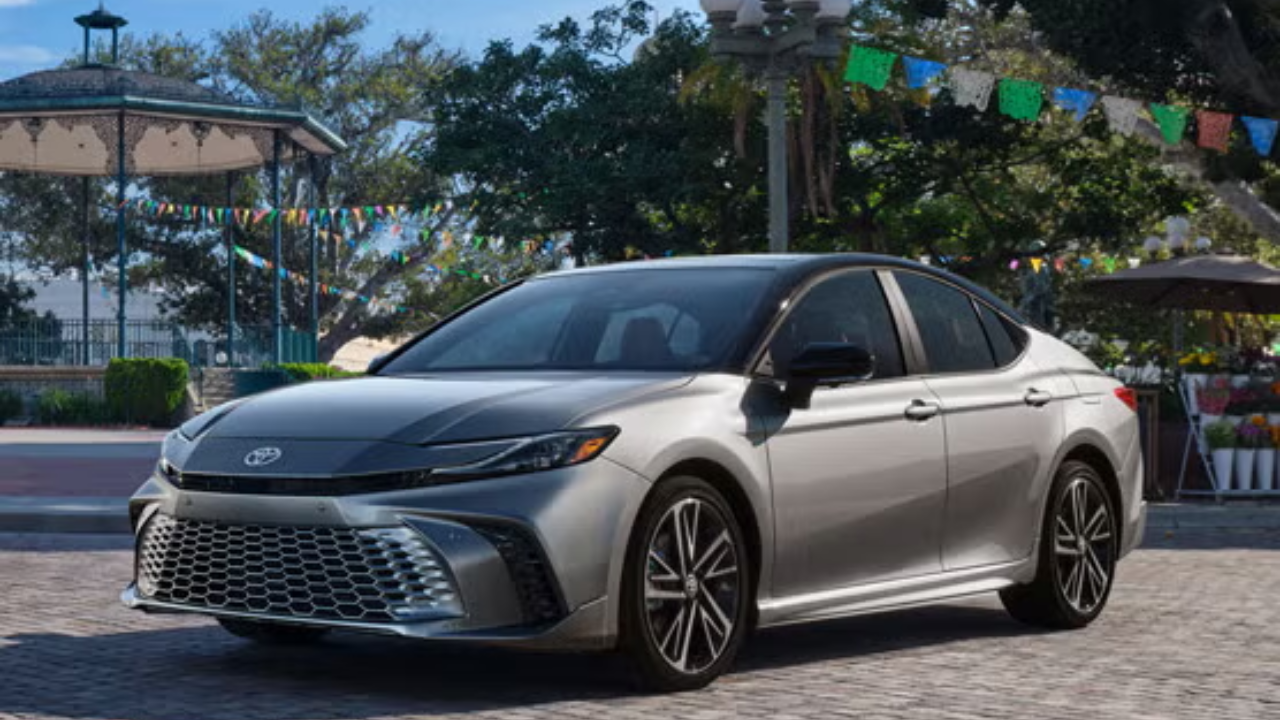
The proportions are lower and wider, giving the car a planted, confident stance. The nose is sharper, the body lines cleaner, and the overall silhouette feels more athletic than utilitarian. Thin LED headlights sweep across a bolder grille, while the rear adopts a slightly coupe-like curve that feels intentional rather than conservative.
In a parking lot full of tall crossovers and bulky SUVs, the Camry’s low profile almost feels rebellious — a reminder that sedans still make sense in the real world.
One Los Angeles rideshare driver who recently upgraded from an older petrol Camry put it best:
“People get in and ask me every day — this is a Camry? Since when do they look like this?”
Hybrid Efficiency That Actually Shows Up in Real Life
Under the sleek exterior is where the 2026 Camry Hybrid really starts to unsettle expectations. Toyota has refined its hybrid system to the point where efficiency feels less like a compromise and more like a daily advantage.
The Camry Hybrid targets around 48–51 mpg combined, depending on trim and wheel size. In real-world driving, that translates to 600+ miles of range per tank without any special effort.
At low speeds, the car often runs purely on electric power. You pull away from home, roll through traffic, or creep along in congestion with little to no fuel use. When more power is needed, the petrol engine joins seamlessly — no jerks, no drama, just smooth momentum.
There’s no plugging in, no charging schedules, and no behavioural gymnastics required. You drive. The system does the thinking.
A first-time hybrid owner from Phoenix admitted she spent her first week nervously watching the eco gauge, afraid she’d “drive it wrong.” By the second week, she stopped caring — and noticed her fuel stops becoming rare enough to forget.
That’s the quiet magic here. The technology fades into the background.
Designed to Reduce the Mental Load of Driving
One Toyota engineer described the philosophy simply:
“We put the complexity into the car so the driver doesn’t have to think about it.”
That idea carries through the entire Camry Hybrid experience. Less engine noise in city traffic. Smoother starts at lights. Regenerative braking that quietly recovers energy without demanding attention. Over time, the car feels calmer than traditional petrol sedans — and that calm adds up.
It’s not about saving the planet with a speech. It’s about saving energy — yours.
Interior: Familiar, Modern, and Genuinely Livable
Inside, the 2026 Camry Hybrid strikes a careful balance. The cabin feels more premium than previous generations, but it doesn’t try to intimidate or overwhelm.
Materials are improved where it matters most, with soft-touch surfaces, clean stitching, and a layout that feels modern without being experimental. The infotainment screen is large and responsive, supporting full smartphone integration, while physical controls remain for climate and volume — a small detail that earns big appreciation over time.
Seats are shaped for long drives rather than showroom poses. Road noise is well controlled at highway speeds, making conversations easy and fatigue less noticeable on long trips.
This is a car designed for thousands of kilometres, not just the test drive.
Pricing That Forces an Uncomfortable Question
The real disruption comes when you look at the price. The 2026 Camry Hybrid is expected to start in the mid-to-upper $20,000s, with hybrid trims typically landing in the low-to-mid $30,000s, depending on configuration.
That’s not “cheap,” but it becomes compelling when compared to similarly priced crossovers that burn far more fuel and offer little more space in daily use.
For a driver covering around 15,000 miles a year, moving from a 25 mpg vehicle to something averaging close to 50 mpg effectively halves fuel costs. Over five years, that can mean thousands of dollars saved — not theoretical savings, but money that stays in your account.
One family near Chicago shared their experience after comparing their ageing V6 SUV with the new Camry Hybrid. The five-year fuel cost difference alone was enough to reshape their budget. As the father joked, “It’s like a raise I didn’t have to ask for.”
Reliability and Resale: The Camry’s Quiet Advantage
Beyond fuel savings, the Camry Hybrid leans heavily on something Toyota has spent decades earning: trust. The brand’s hybrid systems have a long track record for durability, and maintenance costs tend to be predictable rather than surprising.
Strong resale values further protect the investment, making the Camry Hybrid appealing not just to first owners, but to the next one as well.
In an era where many cars feel disposable or overly complex, the Camry’s promise is refreshingly simple: it won’t surprise you in a bad way.
Why the 2026 Camry Hybrid Makes So Much Sense Right Now
Sedans were supposed to be fading away, replaced entirely by SUVs. And yet, the Camry Hybrid arrives as a reminder of why four-door cars still matter.
They’re easier to park. More efficient. Quieter on the highway. And now — finally — they’re stylish again.
The 2026 Camry Hybrid doesn’t ask buyers to choose between looks, efficiency, and affordability. It quietly offers all three, wrapped in a package that feels modern without being flashy.
That forces a serious question for anyone shopping in the $30,000 range:
If you can have this balance, what exactly are you giving up by choosing something else?
Key Highlights at a Glance
| Key Point | Details | Value for Buyers |
|---|---|---|
| Hybrid efficiency | ~48–51 mpg combined, 600+ mile range | Fewer fuel stops, long-term savings |
| Modern design | Sharper exterior, refined interior | A sedan that feels current and confident |
| Easy ownership | No plugging in, smooth hybrid operation | Stress-free daily driving |
| Pricing | Low-to-mid $30Ks for hybrid trims | Strong value versus fuel-hungry SUVs |
| Reliability | Proven Toyota hybrid systems | Predictable costs and strong resale |