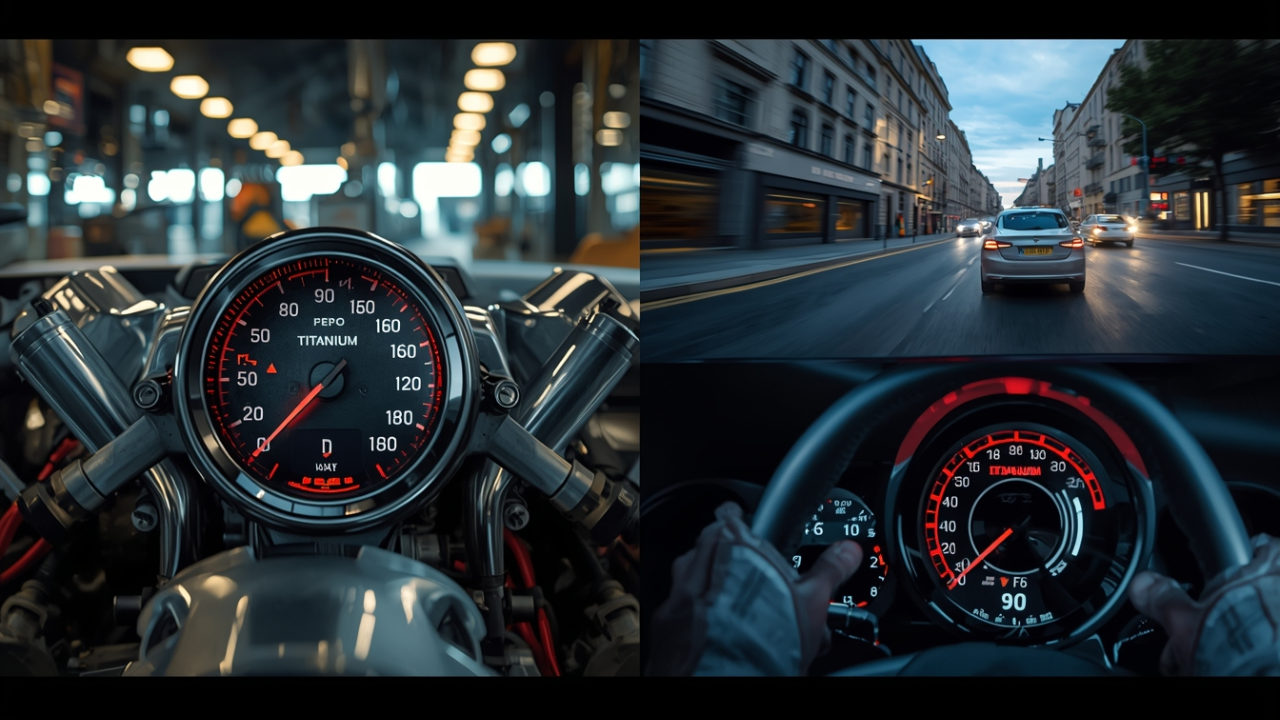
The dyno room smells of hot oil and scorched metal, the kind of scent that never really leaves your clothes. The rollers slow, the engine settles, and for a heartbeat everything goes quiet. Then the technician nods. The throttle opens.
What follows isn’t the familiar thunder of a V8 or the busy rasp of a turbo four. It’s sharper. Higher. Almost metallic. A sound that feels less like combustion and more like controlled violence. The needle climbs: 12,000 rpm. 14,000. 16,000. The screen flashes the headline number — 240 horsepower — extracted from a five-cylinder engine small enough to fit where a city car motor normally lives.
In that moment, a heretical thought creeps in.
Maybe petrol isn’t finished yet.
A quiet continent — and a very loud rebellion
Walk through most European cities today and you’ll hear the same muted soundtrack. Electric crossovers glide past with a whirr. Hybrids murmur at low speed. Scooters hum like household appliances. The noise of traffic has faded into something polite, almost anonymous.
But far from the boulevards, in specialist workshops and test cells, another sound is being engineered. A sound that doesn’t whisper. A 1.25-litre, five-cylinder petrol engine that spins to 16,000 rpm without help from electric motors, batteries or torque fill. It doesn’t apologise for being mechanical. It celebrates it.
This isn’t nostalgia. It’s defiance.
While much of the industry races toward full electrification, a small corner of Europe’s engineering culture is asking a different question: what if petrol survives — not by pretending to be clean and quiet, but by becoming smaller, smarter and more extreme?
Why five cylinders, and why now?
Five-cylinder engines have always lived in the margins. Too odd for mass production, too characterful to disappear completely. They sit between the symmetry of fours and the smoothness of sixes, producing an offbeat rhythm that enthusiasts recognise instantly.
In this case, five cylinders aren’t about nostalgia — they’re about physics.
A five-cylinder layout allows smaller individual pistons, shorter strokes and lower reciprocating mass than a comparable four-cylinder pushing the same power. That matters when you’re chasing extreme revs. Each piston only displaces around 250 cc, reducing stress at high rotational speeds and allowing the crankshaft to survive forces that would tear a conventional engine apart.
The result is an engine that behaves less like a traditional car motor and more like a racing motorcycle — but with enough torque spread to be usable on the road.
The cold logic behind the madness
On paper, a naturally aspirated petrol engine revving to 16,000 rpm sounds irresponsible in 2026. But look closer and a colder logic appears.
High-revving, small-capacity engines can be surprisingly efficient under light load. When you’re cruising at 2,500–3,000 rpm, this five-cylinder behaves like a modest commuter engine. Modern direct injection, variable valve timing and ultra-low internal friction allow it to sip fuel gently during everyday use.
The madness only arrives when you ask for it.
Unlike the turbocharged monsters of the early 2000s — heavy, thirsty and permanently boosted — this engine keeps its wild side locked away. The full 16,000-rpm crescendo appears only during brief moments of hard driving. The rest of the time, it operates within emissions limits strict enough to satisfy regulators — at least on paper.
This dual personality is the engine’s real trick.
How engineers stretch the rulebook without snapping it
Building an engine like this isn’t about one miracle part. It’s about obsessing over everything.
The stroke is ultra-short. The pistons barely travel, reducing stress and allowing insane rotational speeds. The valves are made from titanium, not for bragging rights but because steel simply wouldn’t survive. Bearings are narrower. Balancing tolerances are measured in microns. Every gram saved matters.
The intake doesn’t just feed air — it resonates. At high rpm, pressure waves are timed so precisely that airflow almost supercharges itself. The exhaust is tuned not just for sound, but to help pull spent gases out of the cylinders at ridiculous speed.
The ECU is the silent hero. Hundreds of calculations per second juggle ignition timing, fuel delivery, emissions control and mechanical safety. This isn’t a dumb screamer. It’s a highly educated one.
Regulators don’t care about sound — they care about averages
European emissions rules don’t ban petrol engines outright. They punish fleet averages. That’s the loophole engineers are trying to slip through.
If most cars are electric or hybrid, a manufacturer can theoretically afford a small run of highly specialised combustion engines — provided those engines are efficient at low load and produced in limited numbers.
This five-cylinder concept fits that logic perfectly. It’s light. It’s compact. It can run on synthetic or low-carbon fuels without redesign. And crucially, it doesn’t encourage constant high-rev abuse in everyday traffic.
In other words, it’s not trying to save petrol everywhere. It’s trying to save it somewhere.
Living with a 16,000-rpm engine in the real world
Here’s the uncomfortable truth: an engine like this won’t make sense to everyone. In fact, it won’t make sense to most people.
Short-shifting at 2,000 rpm will feel uneventful. You won’t impress anyone at traffic lights. The magic lives higher up the tachometer, in a zone that feels outrageous at first. You have to work for it. Choose gears carefully. Let the engine breathe. Accept that the best moments arrive in short, intense bursts.
Fuel consumption follows the same rule. Drive gently and it’s reasonable. Chase the redline everywhere and it drinks like a track car. This isn’t hypocrisy — it’s honesty. The engine gives back exactly what you ask of it.
Many owners of high-revving engines eventually learn an unspoken rhythm: calm most days, celebration on special ones. That balance is what keeps the relationship joyful instead of exhausting.
Why this isn’t just a toy for collectors
It’s tempting to dismiss this concept as a niche indulgence, a last gasp for petrolheads. But it represents something bigger.
Europe has always balanced contradiction. Efficient public transport alongside passionate car culture. Strict regulation alongside wild engineering experiments. This engine sits in that tension.
It doesn’t deny electrification. It accepts it — and then asks for a small exception. A corner of the future where mechanical engagement still matters. Where sound, vibration and effort are features, not flaws.
Think of it less as mass transport and more as mechanical culture preservation.
What would a road-legal version actually look like?
If this engine ever reaches production, it won’t be cheap or common. Expect compromises — and protections.
- Limited production numbers to protect emissions averages
- Synthetic-fuel compatibility from launch
- Aggressive cooling and lubrication for short bursts of extreme use
- Active exhaust systems to keep cities quiet
- Driver aids that encourage efficient everyday habits
This wouldn’t be a disposable hot hatch. It would be a rationed experience. Something you choose deliberately, knowing exactly why you want it.
As one engineer involved reportedly put it:
“We’re not fighting electrification. We’re fighting silence.”
A question mark shaped like an engine
Zoom out, and this five-cylinder stops being just hardware. It becomes a question.
Do we want a future where driving is only about efficiency and convenience? Or is there still room for machines that stir something physical, irrational and deeply human?
This engine doesn’t pretend to be the answer for everyone. It simply refuses to disappear quietly.
If you’ve ever turned your head not to look at a car, but to listen to it — you already understand why this matters.
Key Points at a Glance
| Aspect | Detail | Why It Matters |
|---|---|---|
| Radical design | 1.25-litre, 5-cylinder, 240 hp | Shows how far petrol tech can still go |
| Extreme revs | Up to 16,000 rpm | Delivers emotion without large displacement |
| Dual personality | Efficient cruising, explosive top end | Makes daily use plausible |
| Regulation-aware | Low CO₂ potential, synthetic fuel ready | Keeps petrol legally alive |
Frequently Asked Questions
Is a 16,000-rpm road engine realistic?
Technically yes, with modern materials and precise control. Longevity depends on careful use and limited production.
Why five cylinders instead of four?
Smaller pistons, smoother delivery at high rpm, and better balance for extreme revving.
Will engines like this survive EU regulations?
Only in small numbers, paired with electrification and low-carbon fuels.
How does fuel use compare to EVs?
Less efficient overall, but acceptable at low load. This is about experience, not efficiency supremacy.
Is this just a track toy?
Not necessarily. The concept aims to be road-usable — but only for drivers who want involvement.